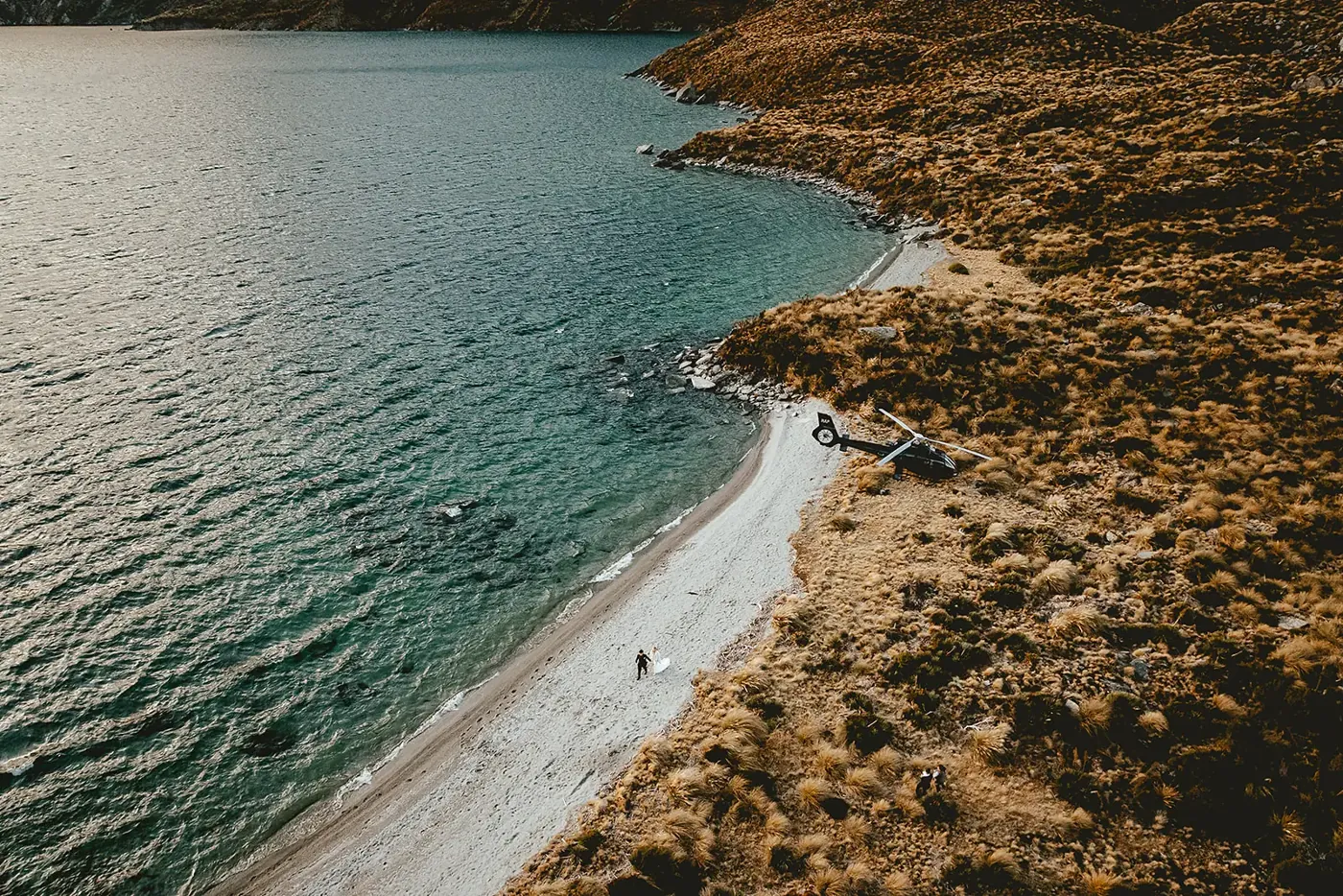
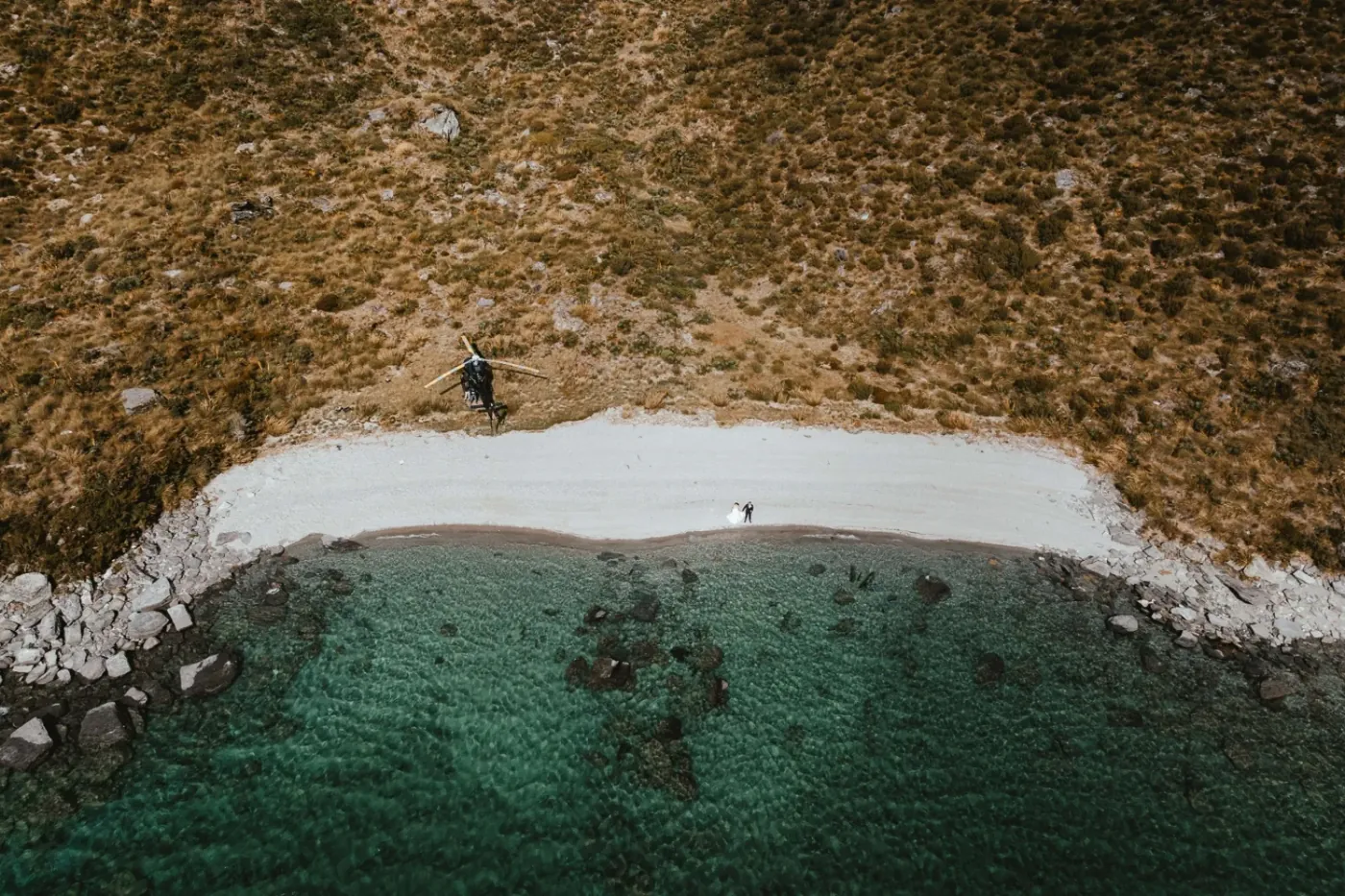
Aerial view of a bride and groom walking a pale Lake Lochnagar beach, their helicopter landed in the golden tussock beside turquoise water

Queenstown · Richardson Mountains

Lake Lochnagar Weddings & Heli Elopements

A remote, crystal-clear alpine lake held in place by an ancient rockslide.

Photographed from a second helicopter, with two photographers and two helicopters on location

Quick answer

Lake Lochnagar (Ōtaka) is a 125 m deep alpine lake at 1,083 m in the Richardson Mountains, north of Queenstown. An ancient rockslide dams it, and its water is protected in its natural state. Walking in is a serious backcountry trip, so for a wedding the practical way in is by helicopter, landing on a beach, by the hut, at the waterfall or on the rocks.

Lake Lochnagar at a glance

Names
Lake Lochnagar. Its Māori name is Ōtaka, and it has also been recorded as Goat Lake.
Elevation
1,083 m above sea level, in the northern Richardson Mountains between Queenstown and Wānaka.
Depth
Up to 125 m deep, one of the deepest alpine lakes you can land beside in the Queenstown region.
Size
About 303.6 ha, roughly 3 square kilometres of water.
How it formed
Glaciers carved the valley; a huge ancient rockslide later dammed it, and that dam still holds the lake today.
Water
DOC records exceptional water quality and clarity, and no fish. The lake is protected in its natural state under the Kawarau Water Conservation Order.
Getting there
For a wedding, by helicopter. Walking routes exist but are demanding backcountry trips for experienced trampers only.
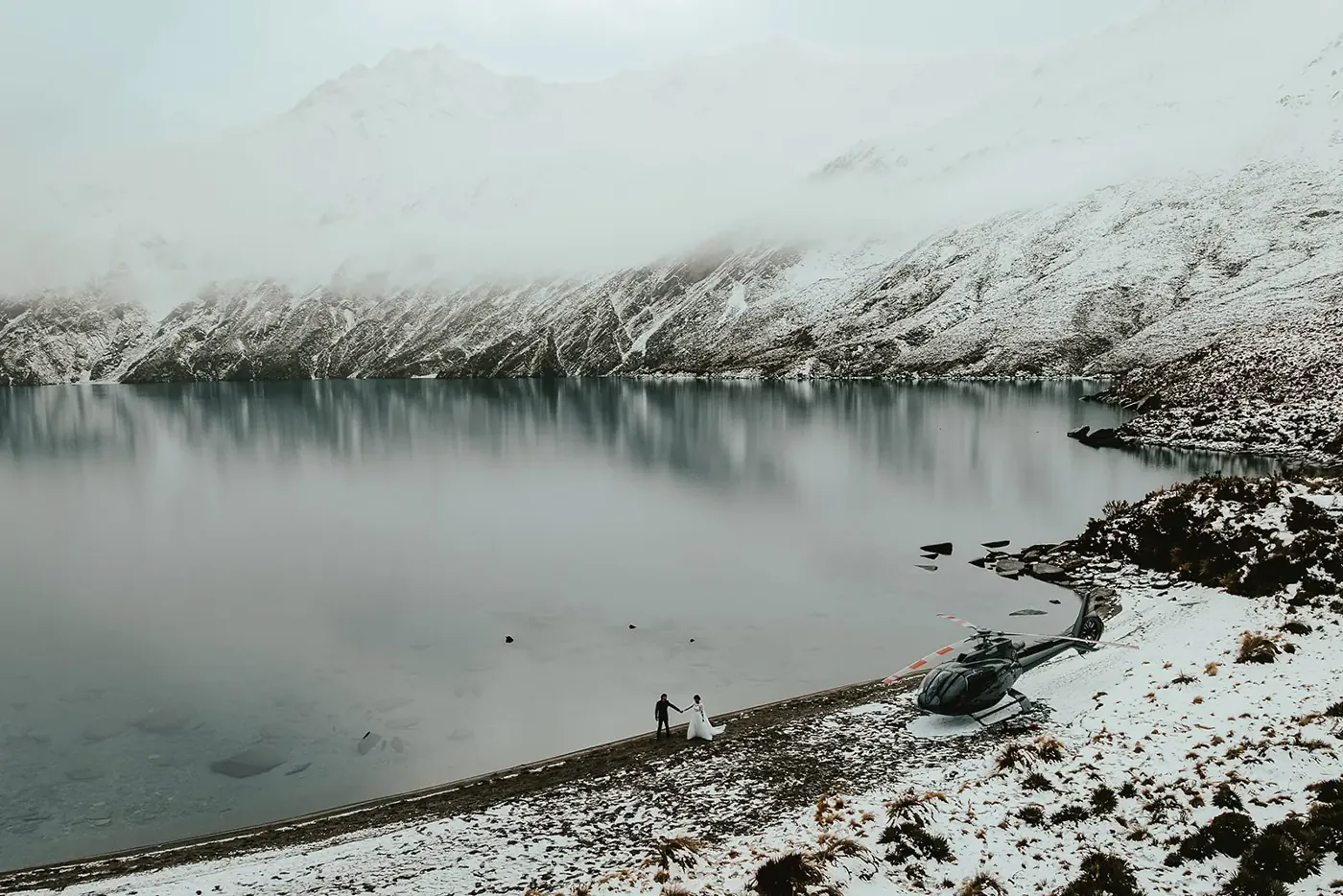
Aerial view of a helicopter and couple on the snowy shoreline of Lake Lochnagar beneath cloud-wrapped peaks
ŌtakaA still lake, a snowy shore, and one helicopter in all that space.

Photographed from a second helicopter, with two photographers and two helicopters on location

Why Lochnagar

Why couples choose Lake Lochnagar

Lochnagar feels a world away. There is no road, no town in view and no crowd, just a deep lake ringed by mountains. Its colour shifts from dark blue to green with the sky, and the shoreline changes from pebbled beaches to big rocks and falling water, so one landing can give you several very different backdrops.

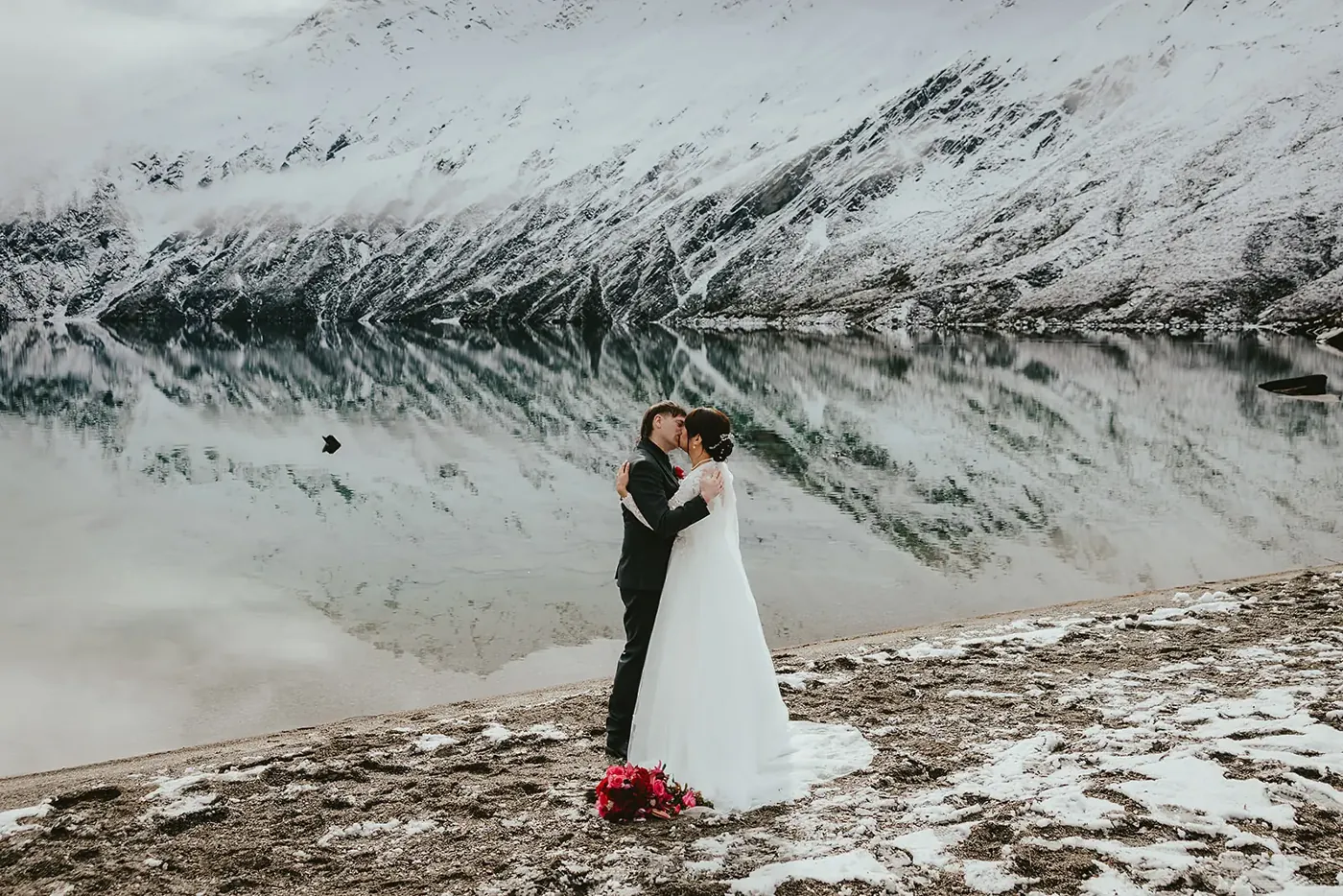
On a calm day the water turns to glass and the whole range is painted upside down beneath you. It also pairs well with other landings, so many couples combine Lochnagar with a glacier or ridgeline on the same day.

Bride and groom embracing on the shore of Lake Lochnagar as snowy mountains reflect in the still water

01 · Where you land

Lake Lochnagar landing spots

There are several landing areas around the lake, each with its own feel. Wind, light and the pilot's safety check decide which one we use on the day, so we never promise a single spot in advance.

Aerial view of a helicopter landed above a pale Lake Lochnagar beach with a bride and groom by the clear green water
The beachesTouch down where the tussock meets the water.

Photographed from a second helicopter, with two photographers and two helicopters on location

  • Pebbles and clear water

    The beaches

    Stony shoreline beaches where the water is so clear you can see the bottom well out from the edge. A beach ceremony puts the lake right at your feet with the mountains rising straight out of it.

  • Rustic and historic feel

    The hut

    An old-style backcountry hut near the lake, a reminder of the area's mustering and hunting past. It gives a warm, timeless contrast to the wild landscape around it.

  • Moving water backdrop

    The waterfall

    A waterfall tumbling down towards the lake. Couples love it as a ceremony or portrait backdrop, and the boulders nearby can give shelter on a breezy day.

  • Dramatic and elevated

    The rocks

    Big rock outcrops and boulders around the lake edge, left by the rockslide that formed it. They lift you above the water for wide views down the length of the lake.

02 · Seasons

Lake Lochnagar through the year

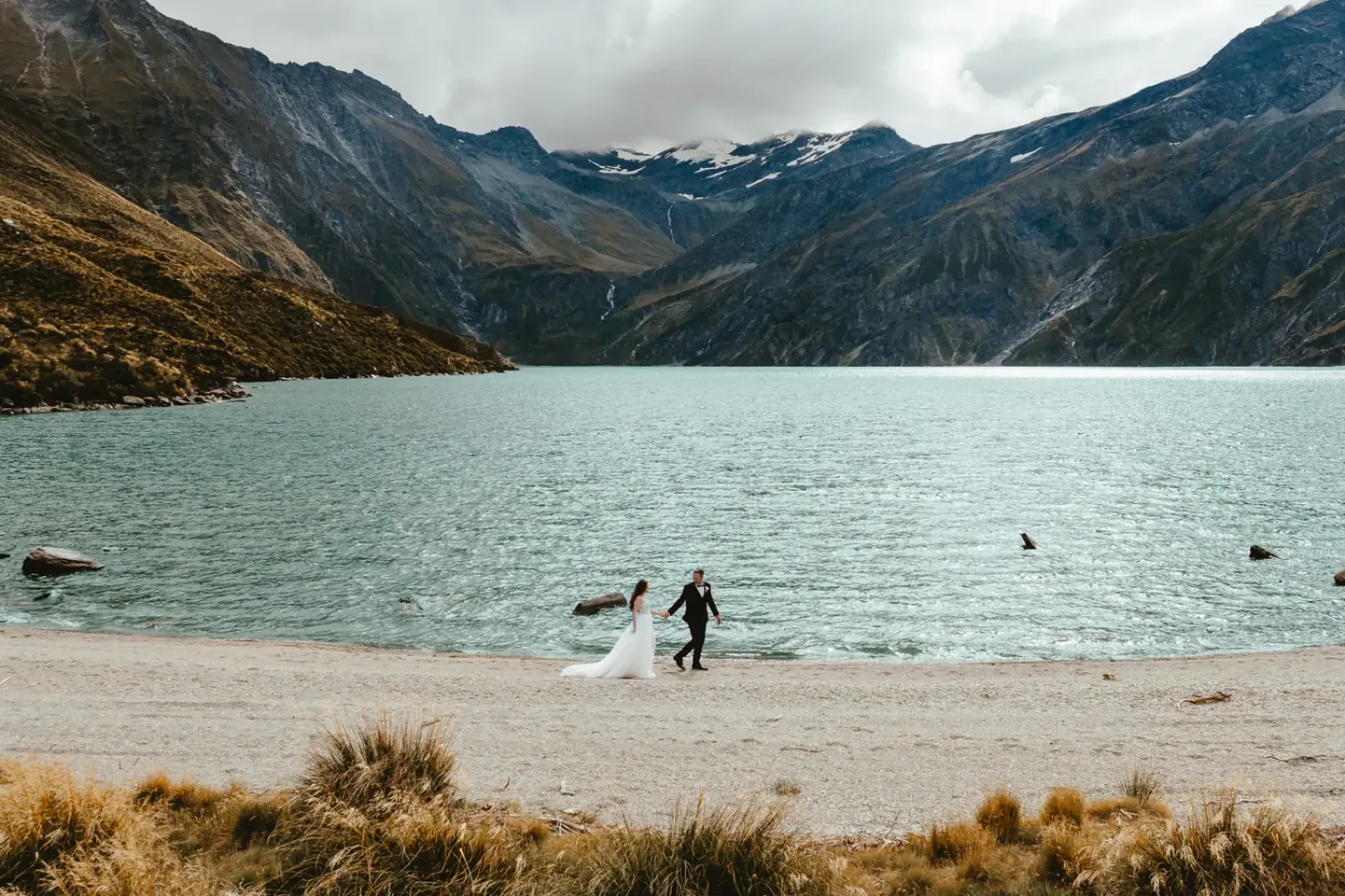
Bride and groom walking along a pebbled beach at Lake Lochnagar in summer, turquoise water and mountains behind
December to FebruaryBarefoot on the beach, a thousand metres up.

Summer weddings at Lochnagar

The lake at its most vivid: deep blues and greens on a still day, long evenings and warm air at the water's edge. Sandflies can be about on calm summer days, so we bring repellent.

Golden tussock, pale beaches and turquoise shallows. Summer is when couples kick off their shoes on the stones and run along the shore while the helicopter circles back overhead.
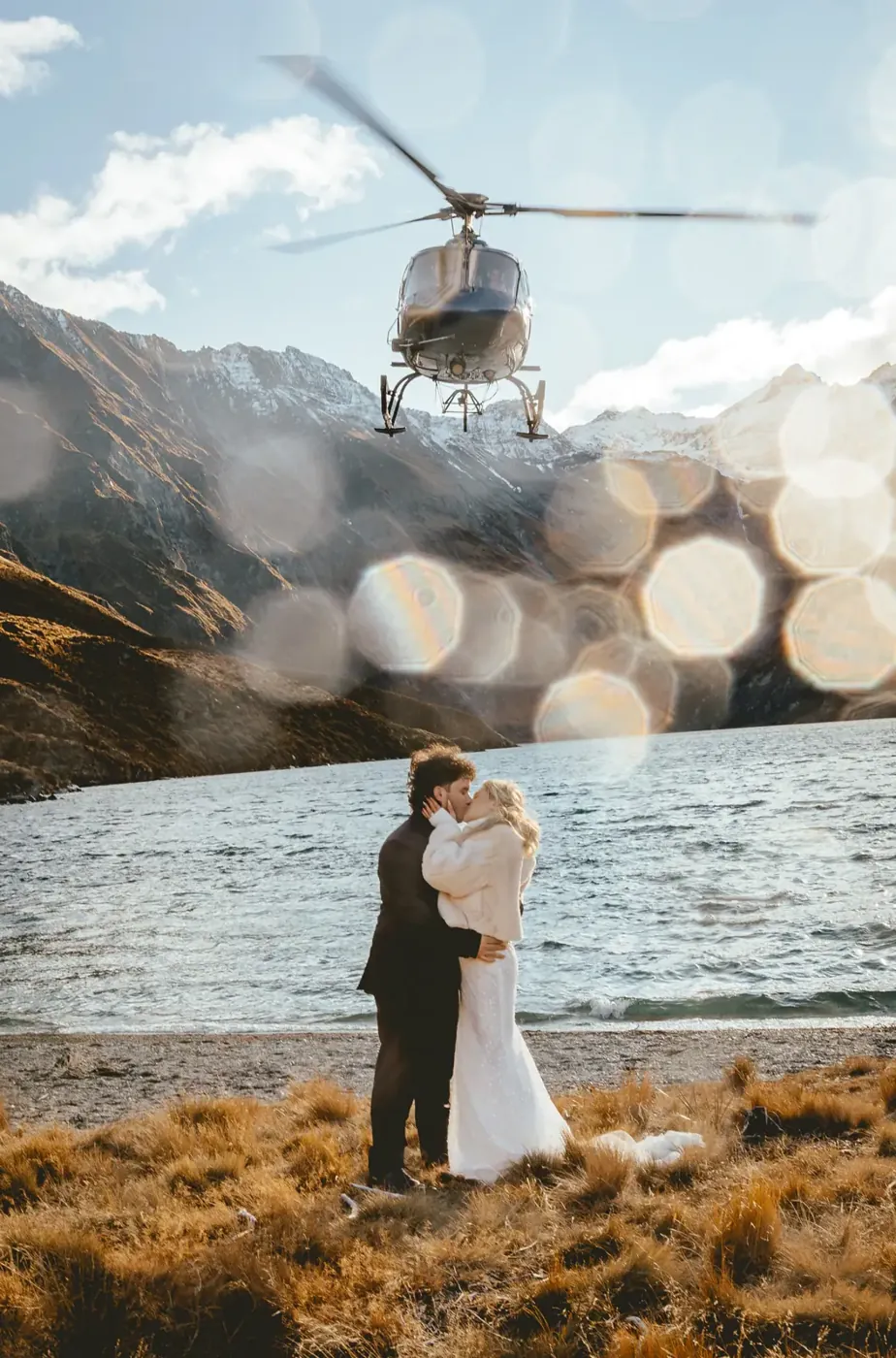
Couple kissing in golden tussock at Lake Lochnagar as a helicopter hovers above
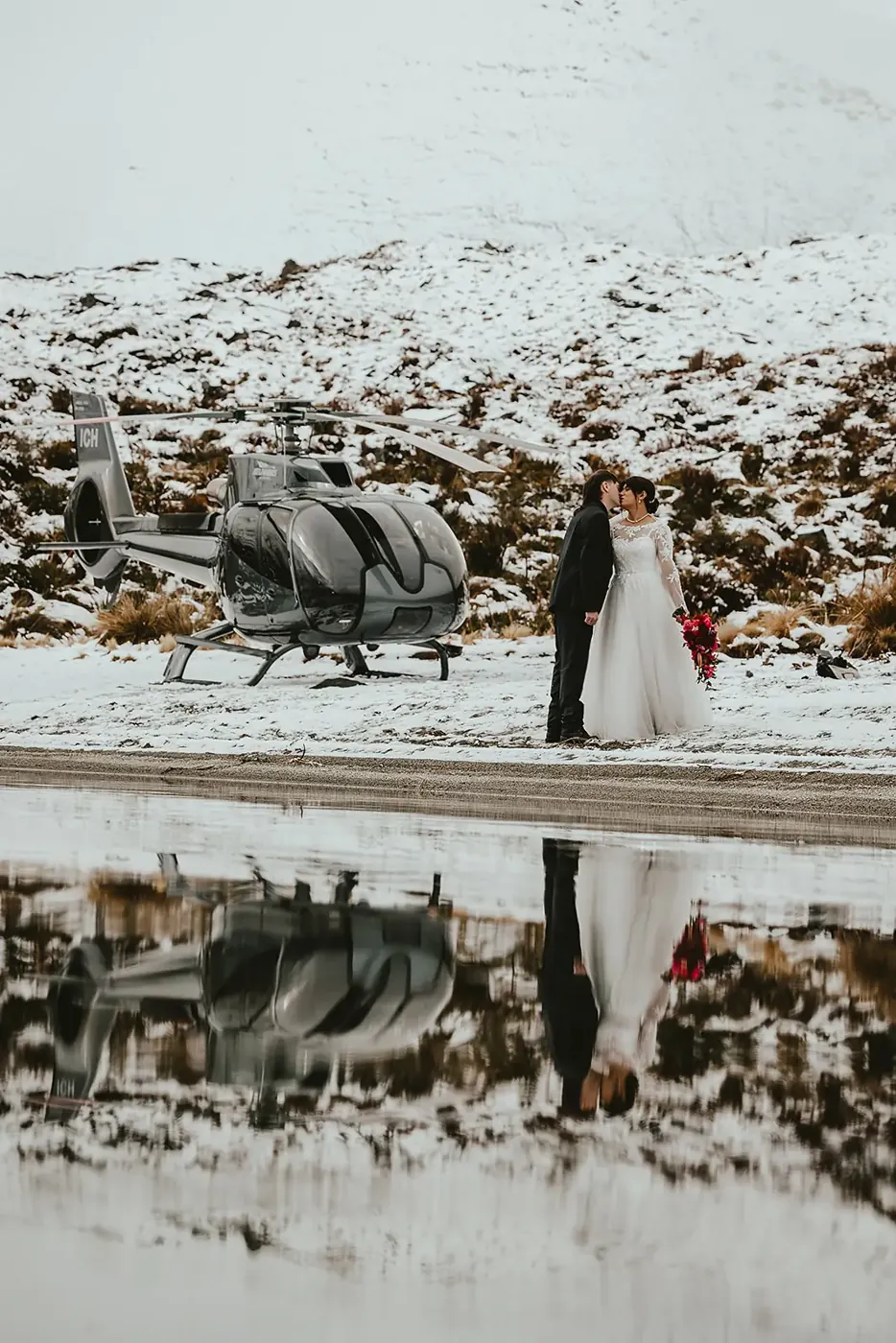
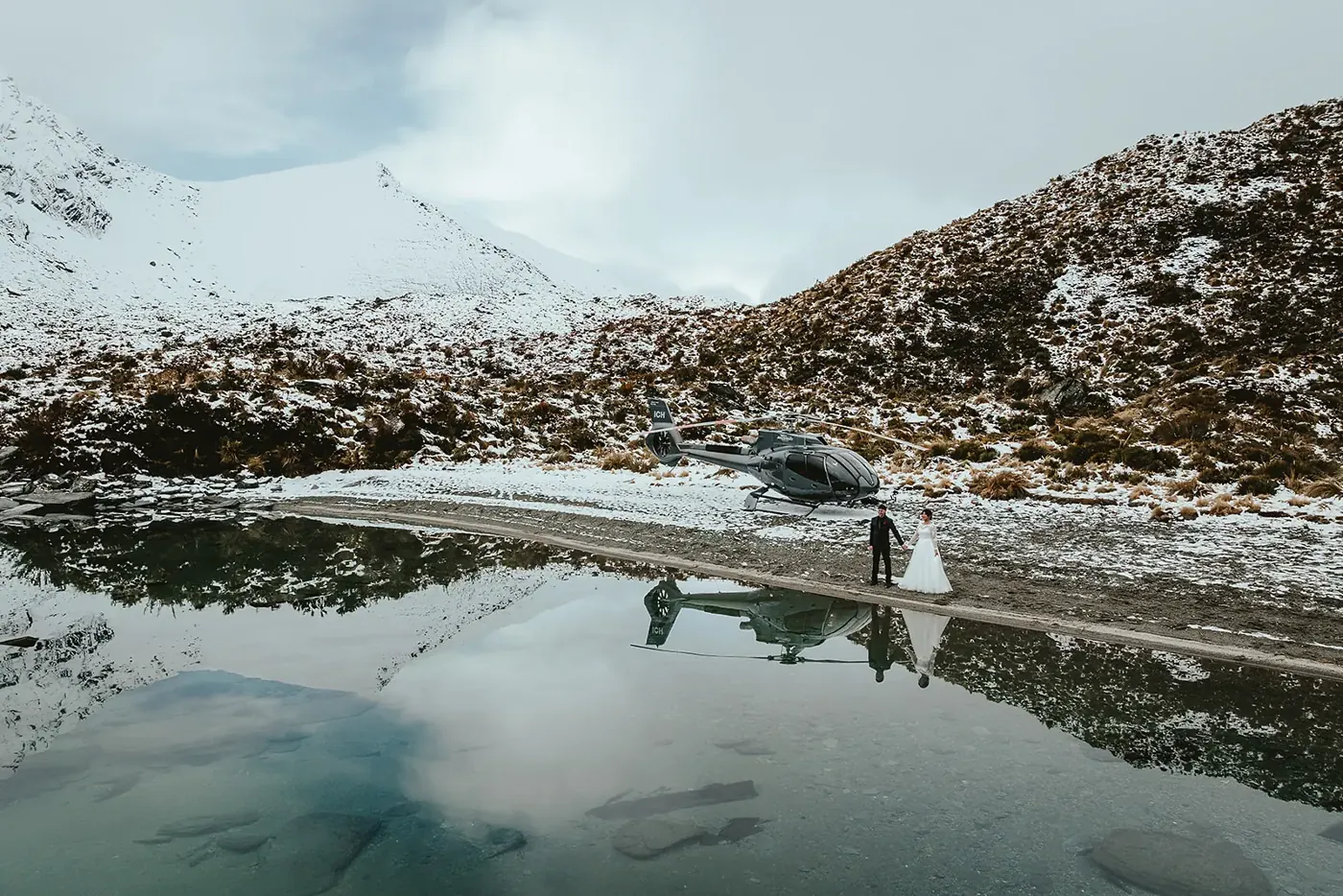
Helicopter landed on the snowy shore of Lake Lochnagar in spring, mirrored in the still lake
September to NovemberEverything twice: the mountains, the helicopter, the two of you.

Spring weddings at Lochnagar

Fresh snow often lingers on the surrounding peaks while the lake shore opens up, giving bright, high-contrast photographs. Spring weather changes quickly, so we keep a flexible window.

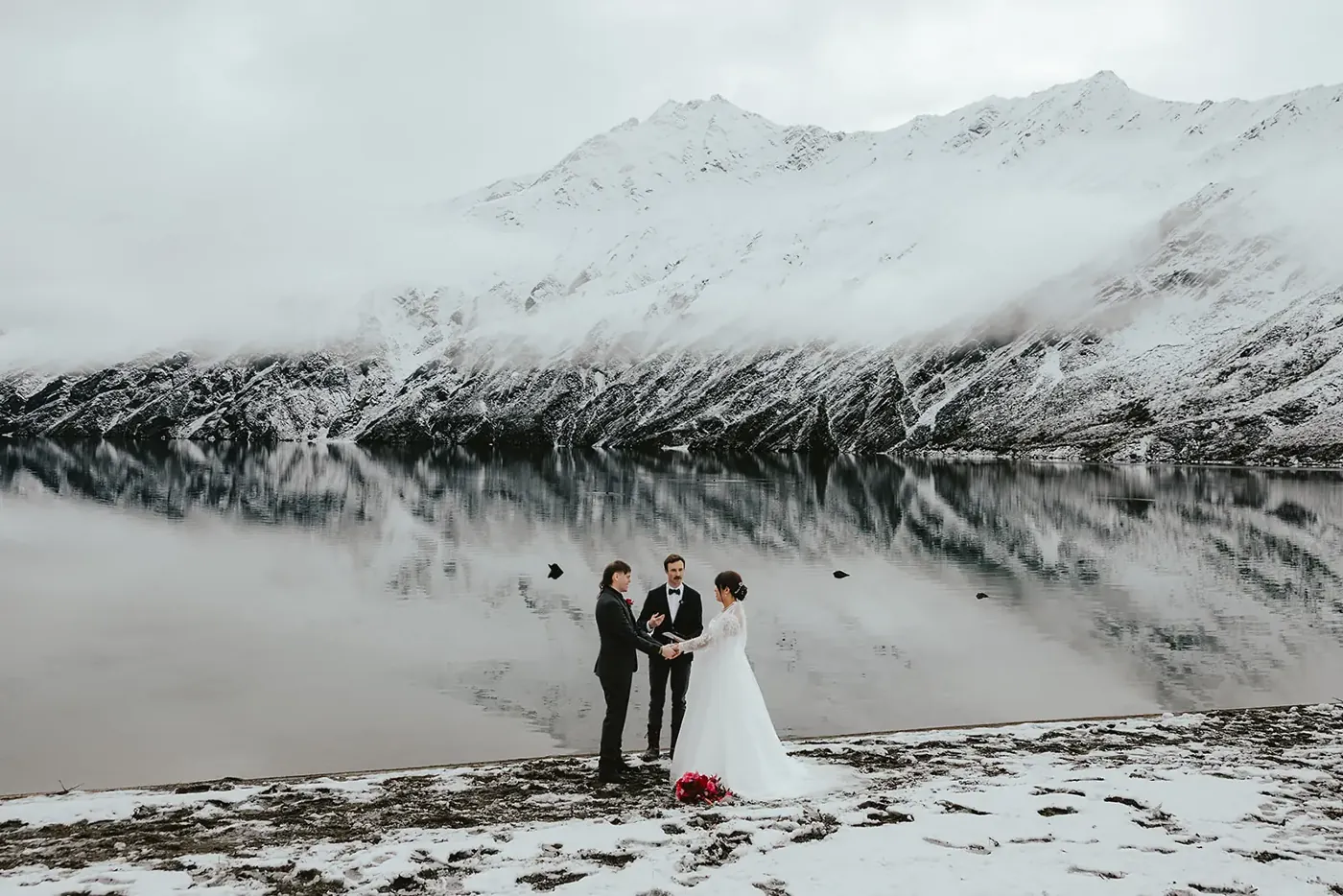
Cloud drifts low over snowy ridges, the water turns to a mirror, and the helicopter, the couple and the mountains all appear twice. Vows here feel quiet and enormous at the same time.

Bride and groom beside a helicopter at Lake Lochnagar, reflected in the lake in spring
Spring wedding ceremony with a celebrant on the snowy shore of Lake Lochnagar
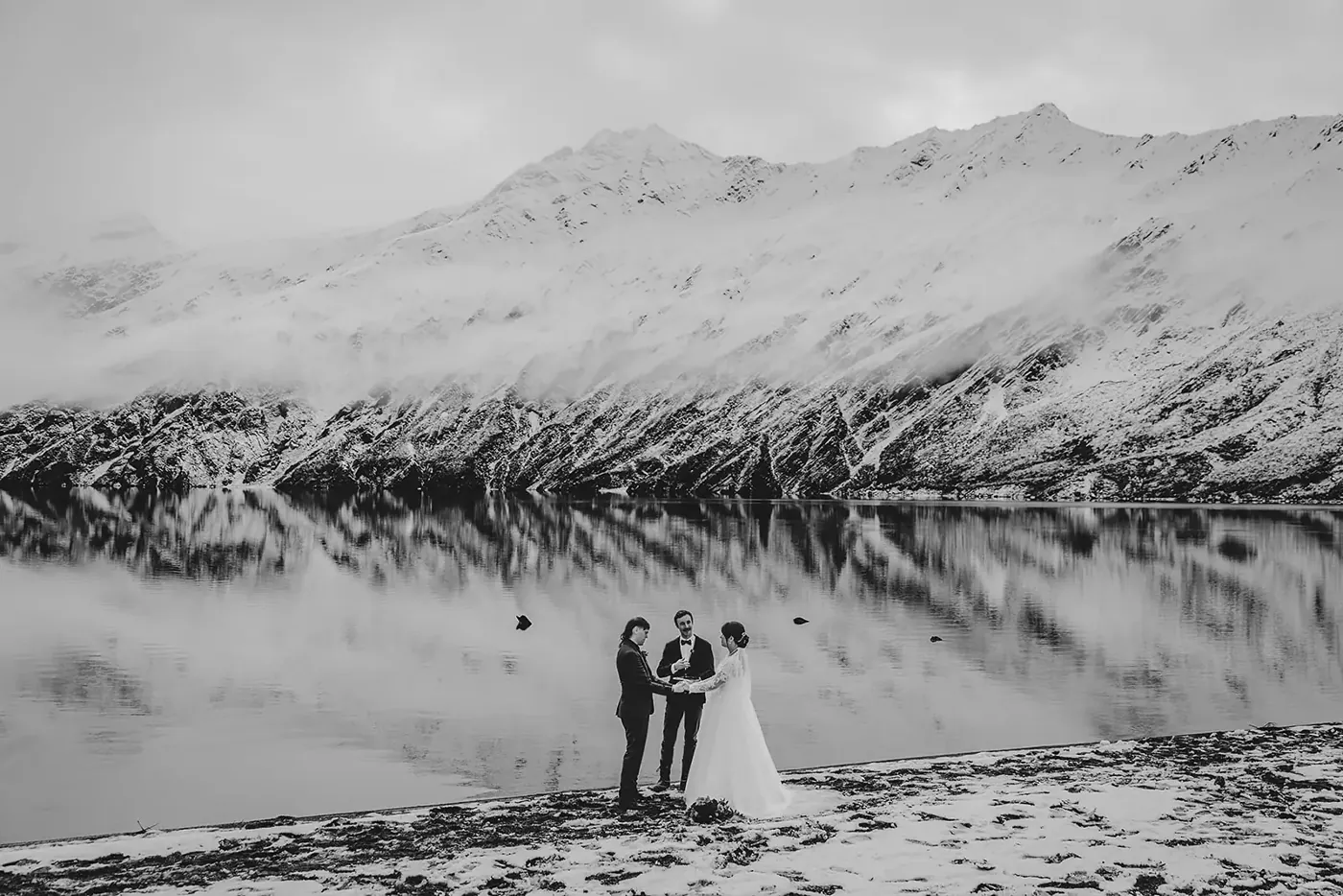
Black and white photo of wedding vows at Lake Lochnagar under low cloud and snowy peaks
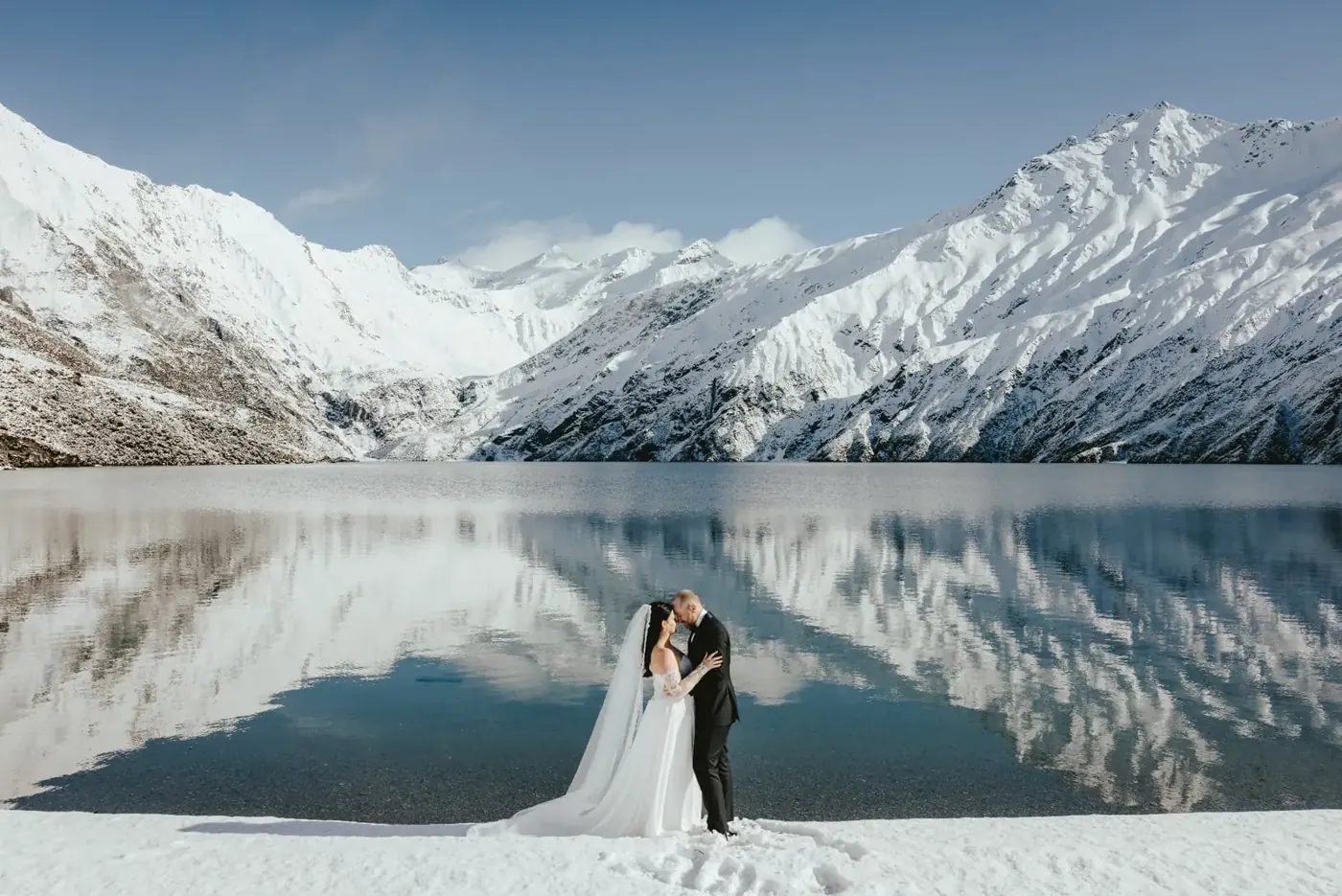
Couple kissing on snow at Lake Lochnagar with snowy mountains reflected in the water
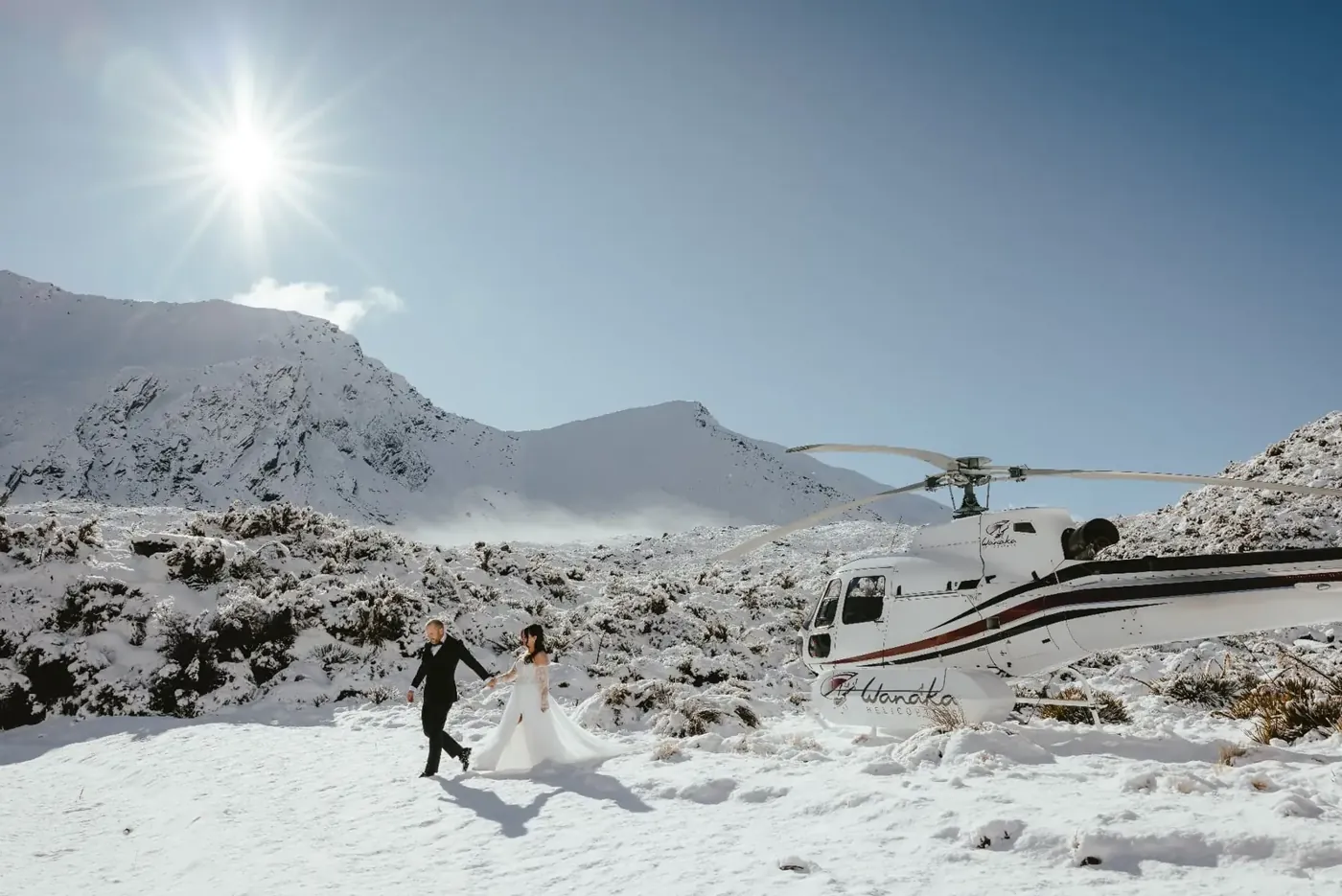
Bride and groom walking through fresh snow towards a helicopter at Lake Lochnagar in winter
June to AugustFresh snow, blue sky, and nobody else for miles.

Winter weddings at Lochnagar

Snow can cover the mountains around the lake and change the whole mood of the place. Avalanche risk and conditions decide whether, and where, a landing is safe, so winter days are planned closely with the pilot.

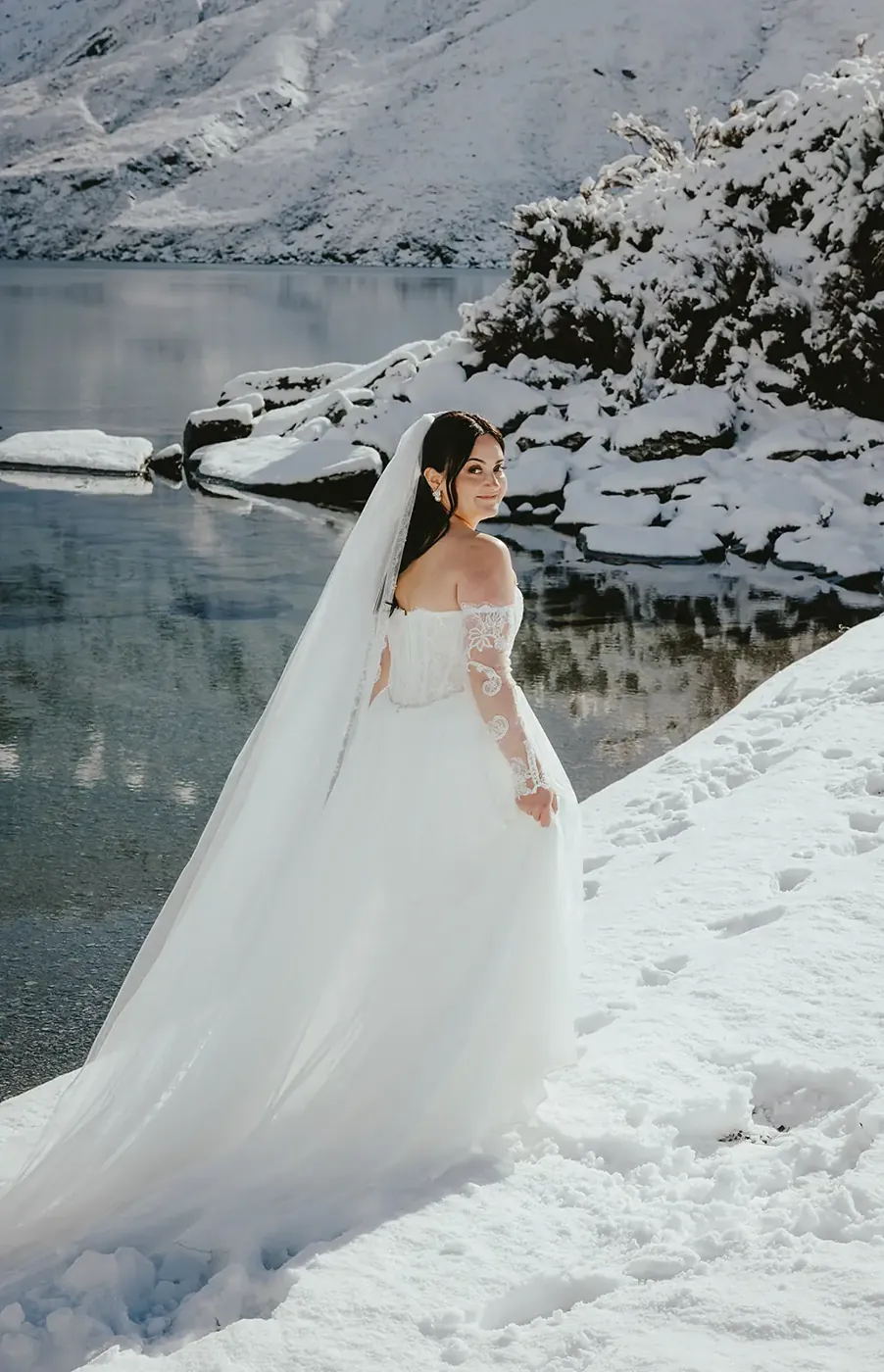
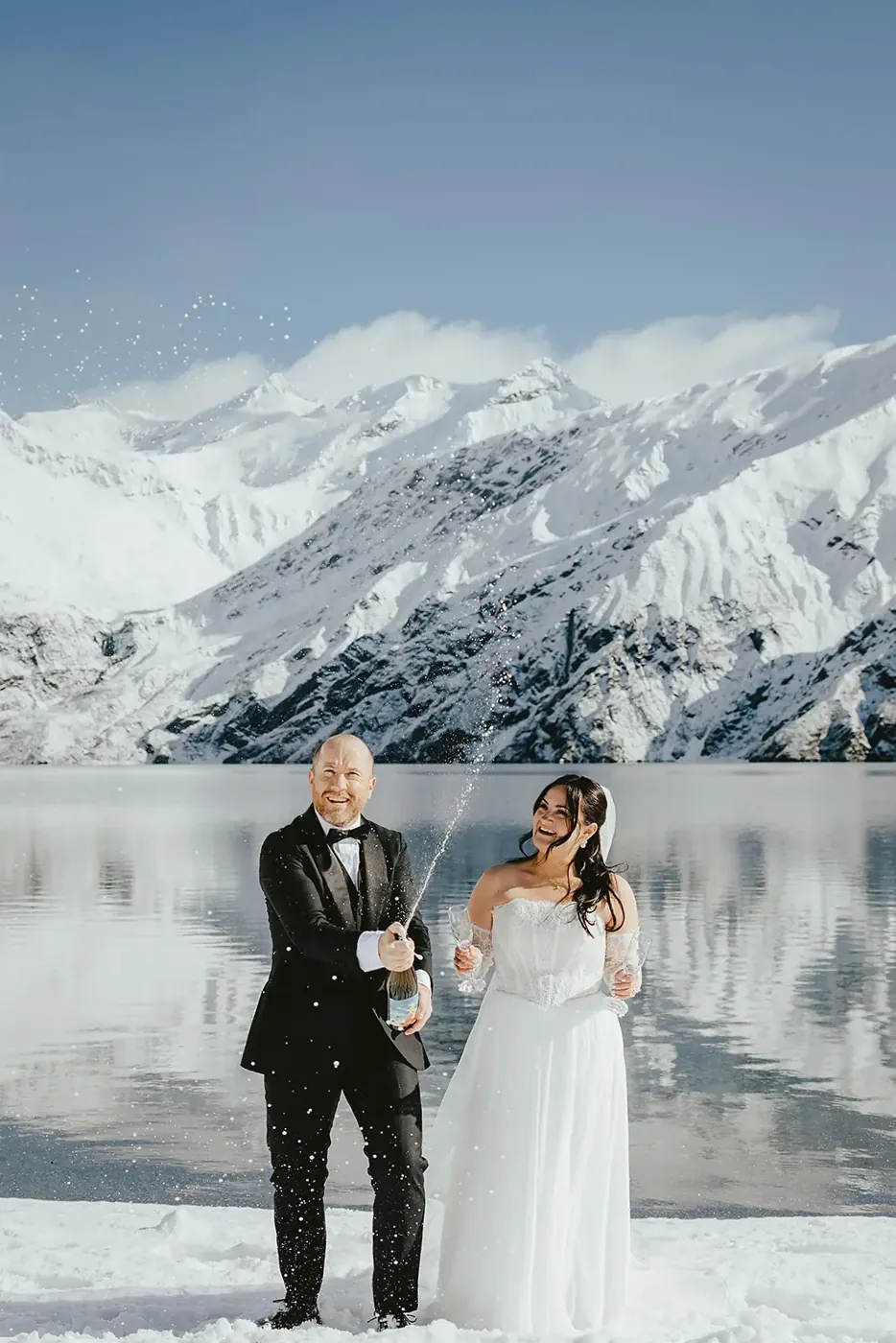
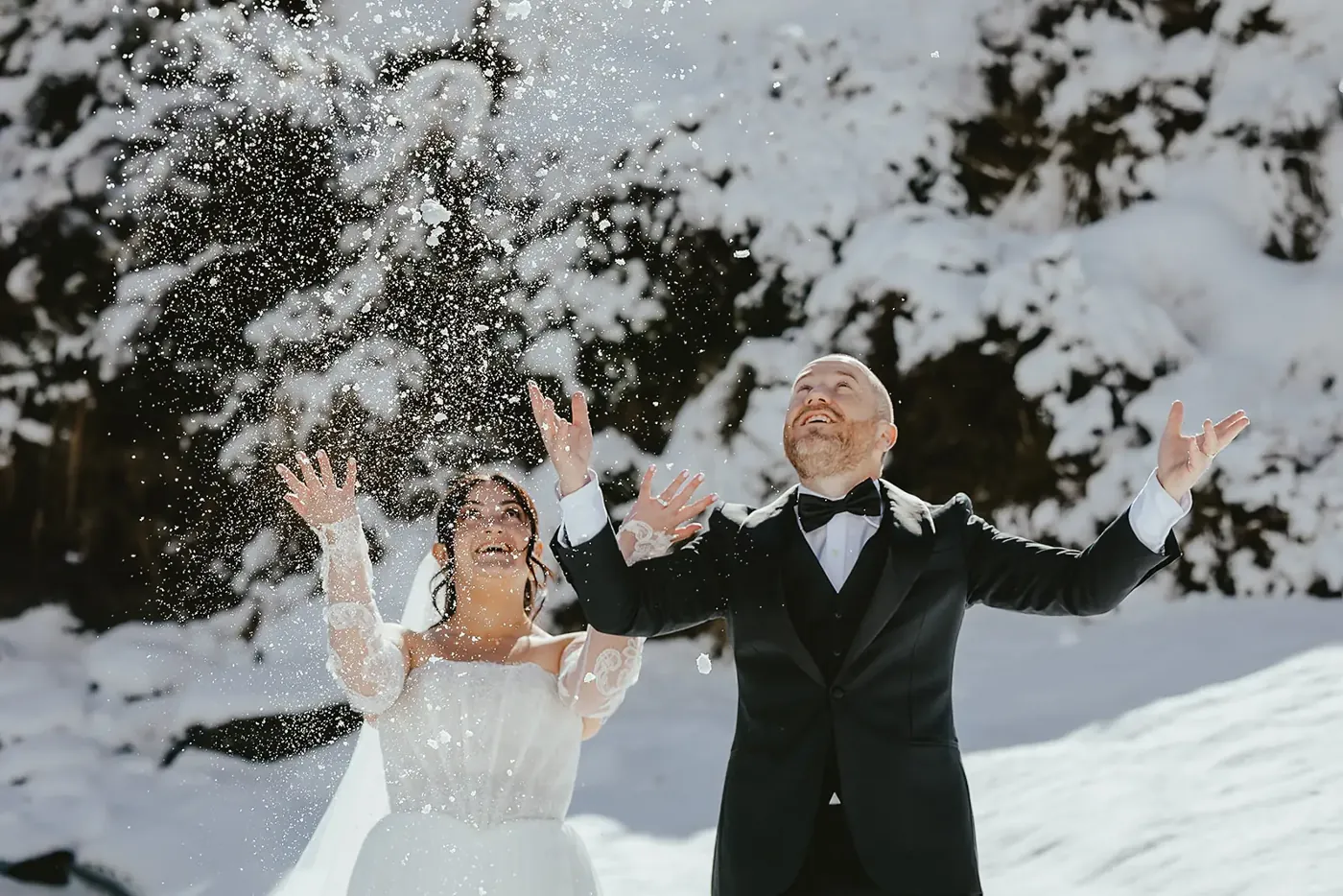
On a clear winter day the sun bounces off fresh snow, a veil trails across white ground, and somebody always ends up throwing a handful of snow into the air. Then the champagne comes out.

Bride with a long veil on the snowy shore of Lake Lochnagar
Couple spraying champagne at Lake Lochnagar with snowy peaks behind
Bride and groom throwing snow into the air at their Lake Lochnagar winter wedding
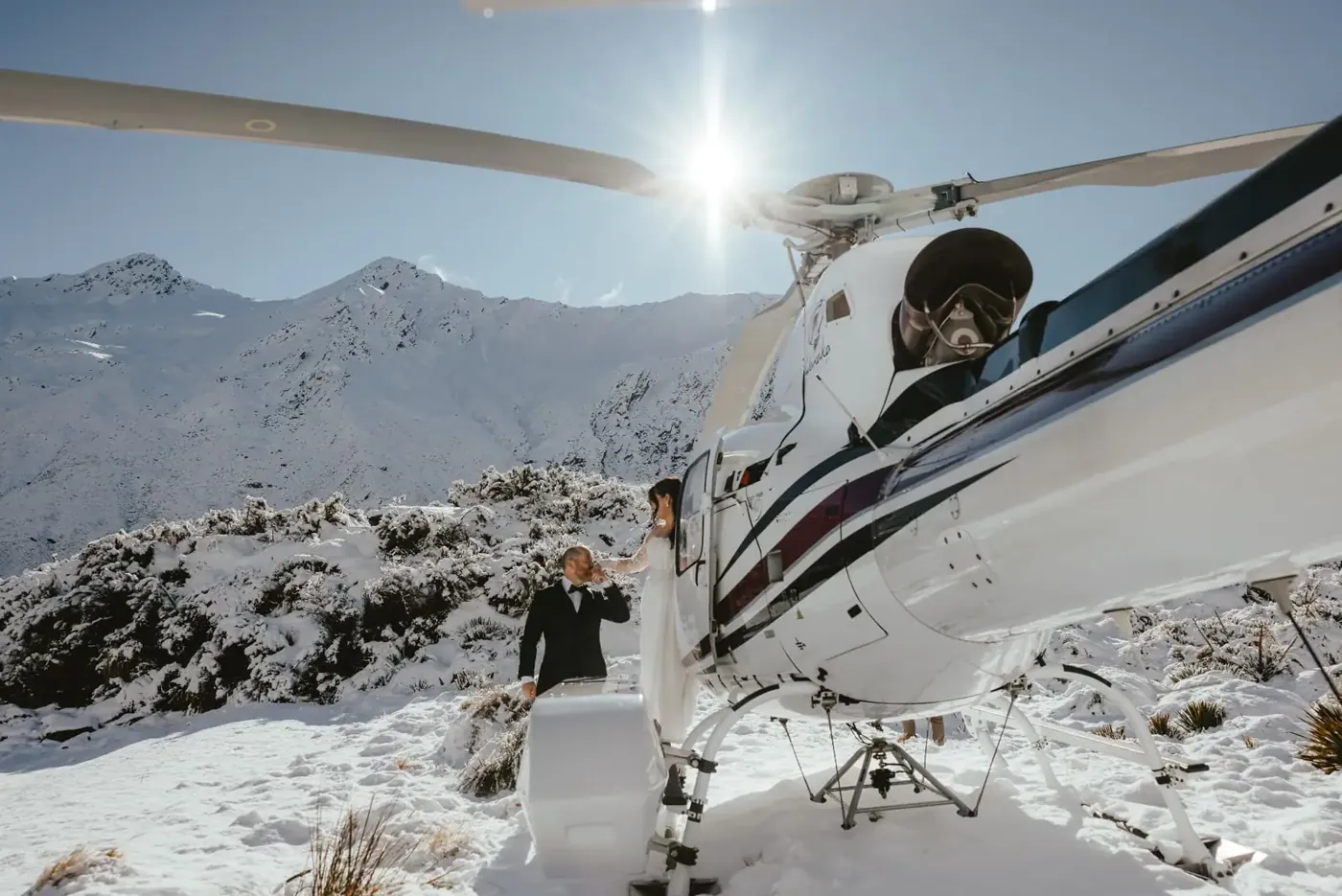
Groom kissing the bride's hand beside a helicopter in the snow at Lake Lochnagar

03 · Getting there

How to get to Lake Lochnagar

By helicopter

The flight from Queenstown crosses the high country north of town, often over the Shotover and Skippers Canyon. Flight time depends on where you take off, the aircraft and the route, and we confirm it when we plan your day.

On foot

Overland routes come in from the Shotover via Branches Station and from Rees Saddle. DOC describes this as demanding backcountry terrain needing a high level of skill, and some approaches need landholder permission. It is not a route for a wedding party.

Weather

The pilot makes the final call on every landing. Read how we plan around it in our weather backup guide.

Make it a two-landing day

Pair Lake Lochnagar with a glacier or a peak

Lochnagar is one half of some of the best two-landing days in the region. Pick a second stop that looks nothing like the lake, and you get two completely different weddings in one flight.

Lochnagar + Tyndall Glacier

Ice above, water below

Tyndall Glacier sits high above Lake Lochnagar on the edge of Mount Aspiring National Park, so the hop between the two is one of the shortest glacier-to-lake flights around. Couples get snow, ice and crevassed ridges at one landing, and still turquoise water at the other.

Because the glacier is so close, very little extra flying is needed to add it. Flying time is the biggest part of a helicopter quote, so this is often one of the more affordable ways to include a glacier landing. We confirm the exact price when we plan your route.

Lochnagar + Coromandel Peak

Hidden lake, famous view

Coromandel Peak, the private landing on Mount Roy above Lake Wānaka, is the opposite of Lochnagar. It is an open summit with the famous Roys Peak outlook over the lake and its islands towards Mount Aspiring. Lochnagar is a secluded basin with the mountains closing in around you.

Together they give you the big panoramic view and the quiet hidden lake on the same day. The combination works especially well departing from Wānaka. Read our Coromandel Peak guide.

04 · History, names and science

The story of Lake Lochnagar

Few wedding locations come with a backstory this big. Lochnagar is a lake made by a mountain falling down, thousands of years ago.

Timeline

  1. Ice age

    Glaciers carve the valleys of the Richardson Mountains.

  2. ~9,000 to 6,300 years ago

    A vast rockslide, about 690 million m³ of debris, blocks the valley and the lake forms behind it.

  3. Before Europeans

    The lake is known to Māori as Ōtaka.

  4. By 1900

    Gold-country exploration is reported near Lochnagar (Lake Wakatip Mail).

  5. 1903

    Excursions towards Lochnagar appear in the Otago Daily Times.

  6. 1925 and 1933

    Detailed descriptions of the lake are published in the Otago Daily Times and the Evening Star.

  7. 1997

    The Water Conservation (Kawarau) Order lists Lochnagar among waters to be kept in their natural state.

How it got its name

Ōtaka

The lake's recorded Māori name, known long before European exploration.

Lochnagar

LINZ records link the nearby 2,316 m peak Lochnagar to the Scottish mountain of the same name. Who first gave the name to the lake is not recorded.

Goat Lake

An older recorded name, fitting for country where DOC still lists goats, chamois and red deer.

Did you know?

  • 01

    The rockslide dam is about 340 m high, 2.1 km long and 2 km wide, made of roughly 690 million cubic metres of debris.

  • 02

    Water drains out through the rockslide itself rather than over a simple surface outlet.

  • 03

    There are no fish in the lake, and DOC records no introduced plants in the water.

Sources: Our Lakes / Our Future (Lochnagar), Lochnagar landslide-dam geomechanics and timing study, DOC Otago Conservation Management Strategy and Lochnagar hunting block, Water Conservation (Kawarau) Order 1997, LINZ, and Papers Past (Lake Wakatip Mail 1900, Otago Daily Times 1903 and 1925, Evening Star 1933).

05 · The last look

Leaving Lake Lochnagar married

The rotors start, the beach shrinks to a pale curve against the water, and the lake you said your vows beside settles back into silence. From above, you finally see how far from everything you really were.

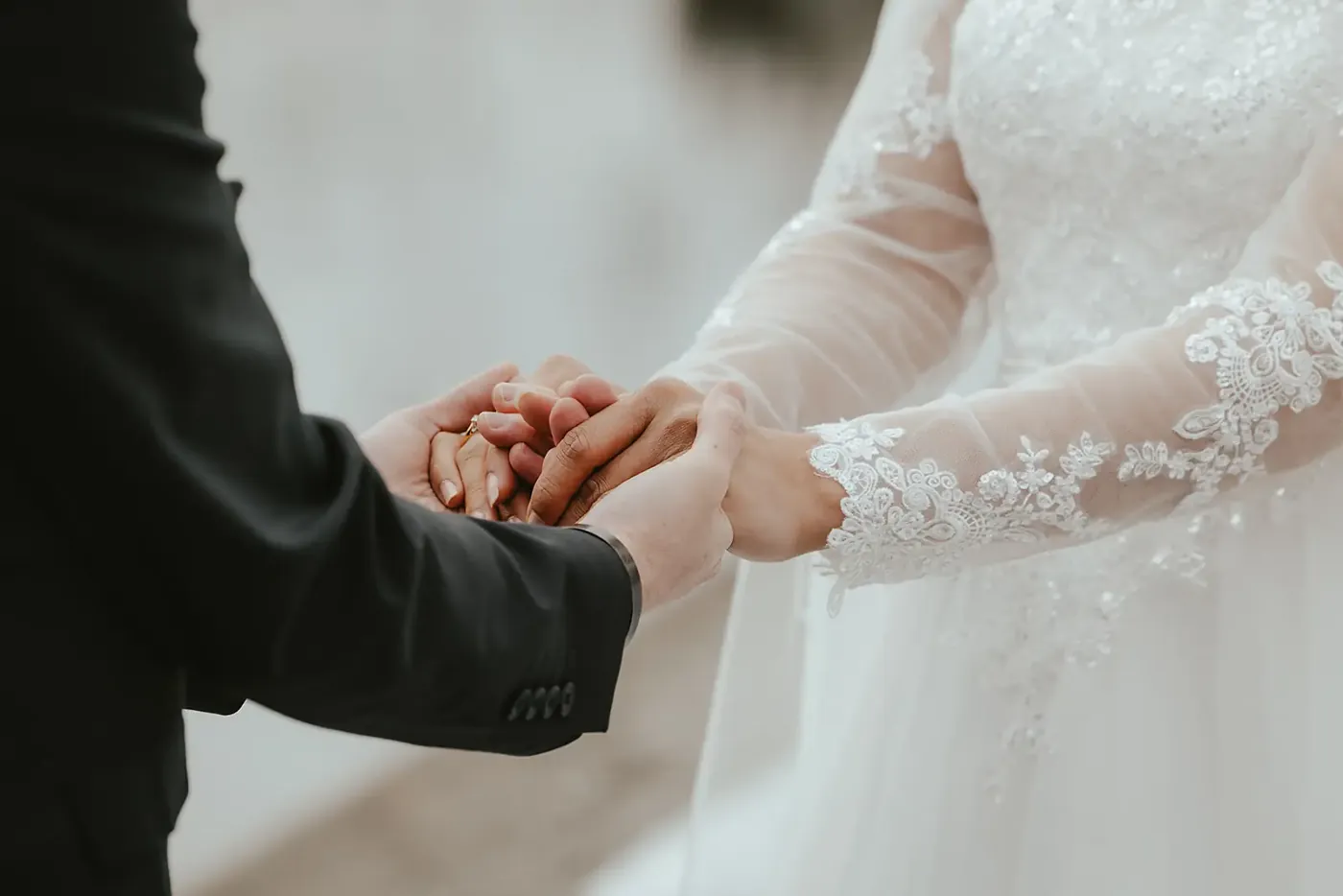
Bride and groom holding hands at their Lake Lochnagar wedding, lace sleeves in winter light

"Hands held, a little cold, completely sure."

Some of our favourite frames at Lochnagar are the smallest ones: lace against a jacket sleeve, fingers laced together while the mountains wait in the background.

Lake Lochnagar wedding questions

Lake Lochnagar sits at 1,083 m in the northern Richardson Mountains, north of Queenstown between the Shotover and Rees valleys. It is one of the more remote alpine lakes between Queenstown and Wānaka.

Ōtaka. The lake has also been recorded as Goat Lake.

Up to about 125 m deep, with a surface area of about 303.6 ha.

Glaciers shaped the valley, and an enormous ancient rockslide, about 690 million cubic metres of debris, later dammed it. Dating of boulders on the dam suggests the lake has existed in roughly its current form for more than 6,300 years, and probably close to 9,000.

No. There are overland routes, but DOC describes them as demanding backcountry terrain for skilled trampers, and some need landholder permission. For a wedding, a helicopter is the only practical way in.

Yes. Lochnagar is a well-known heli wedding and elopement location from Queenstown. Landings depend on permission, the pilot's safety assessment and the weather on the day.

There are several landing areas around the lake, including pebbled beaches, a backcountry hut, a waterfall and rocky outcrops. Your pilot and planner choose the best one for the wind and light.

Yes. DOC records exceptionally high water quality and clarity, and the lake is protected in its natural state. Clear does not mean safe to drink, so bring your own water.

No. DOC records an absence of fish in the lake.

Possibly. DOC lists red deer, chamois and goats in the area, and some couples spot them in the distance, but sightings can never be promised.

Accounts differ, and we do not promise either way. Snow on the surrounding mountains is common in winter; ice on the lake depends on the year. We check conditions with the pilot before the day.

Shoes you can walk on stones and uneven ground in, a warm layer even in summer, and secured veils and hair for the helicopter downdraft and lake breezes.

The pilot makes the final call. We move to a sheltered landing at the lake, shift the timing, or switch to a different location so your day can still happen.

Yes. Tyndall Glacier sits just above Lake Lochnagar, so adding it takes only a little extra flying. That short hop often makes it one of the more affordable ways to include a glacier, and it gives you snow and ice at one landing and a clear alpine lake at the other.

Yes. Coromandel Peak on Mount Roy gives you the open, famous view over Lake Wānaka, which contrasts beautifully with Lochnagar's hidden basin. It pairs especially well on days departing from Wānaka.

Other landings that pair well with Lochnagar.