
Triona + Edward
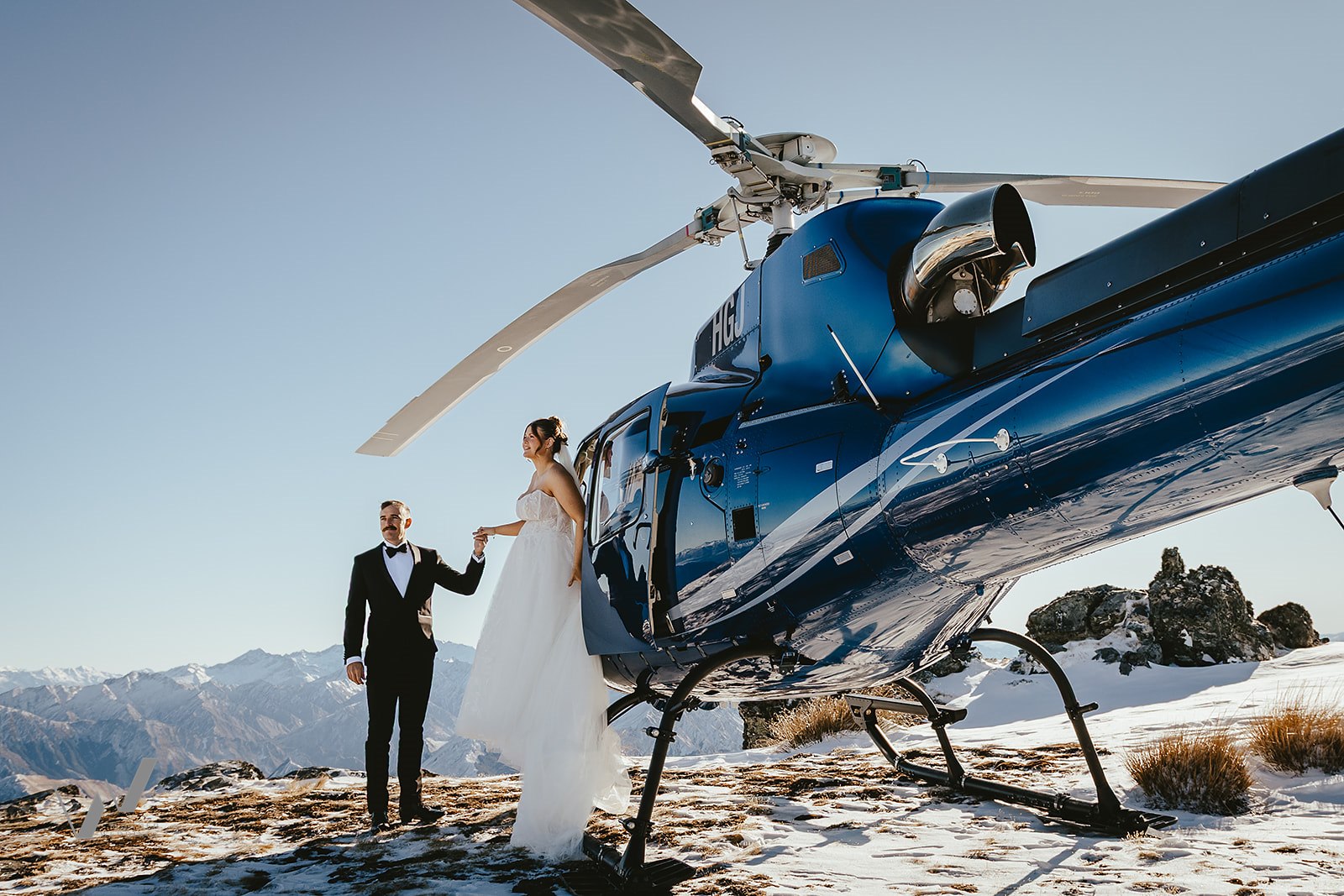
Family photos on the ground, then a private two-landing flight to Earnslaw Burn and Mt Crichton.
Landing Location. Queenstown & Glenorchy
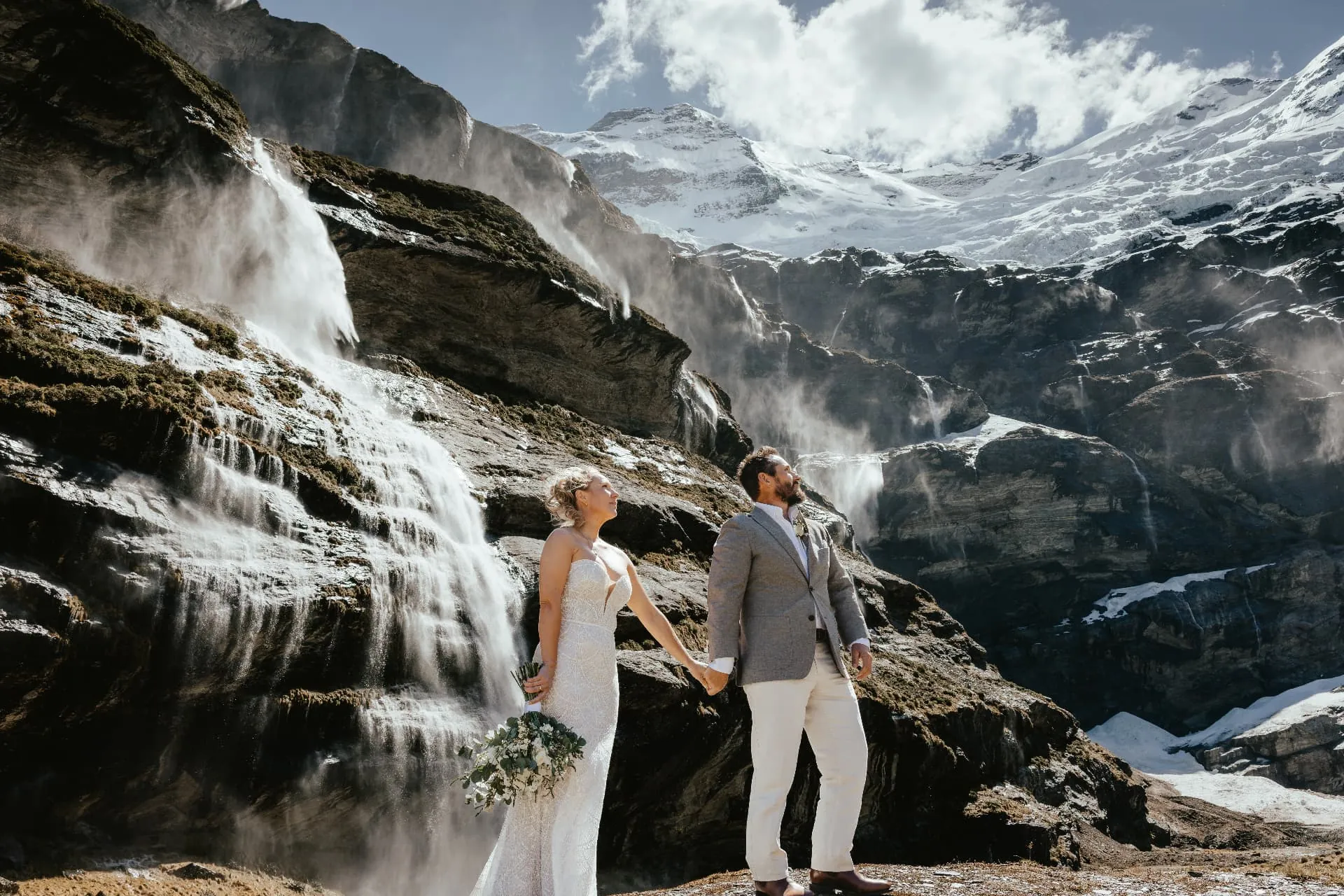
A glacier valley north of Glenorchy where dozens of waterfalls fall from a hanging ice shelf, a ceremony inside the landscape rather than on top of it.
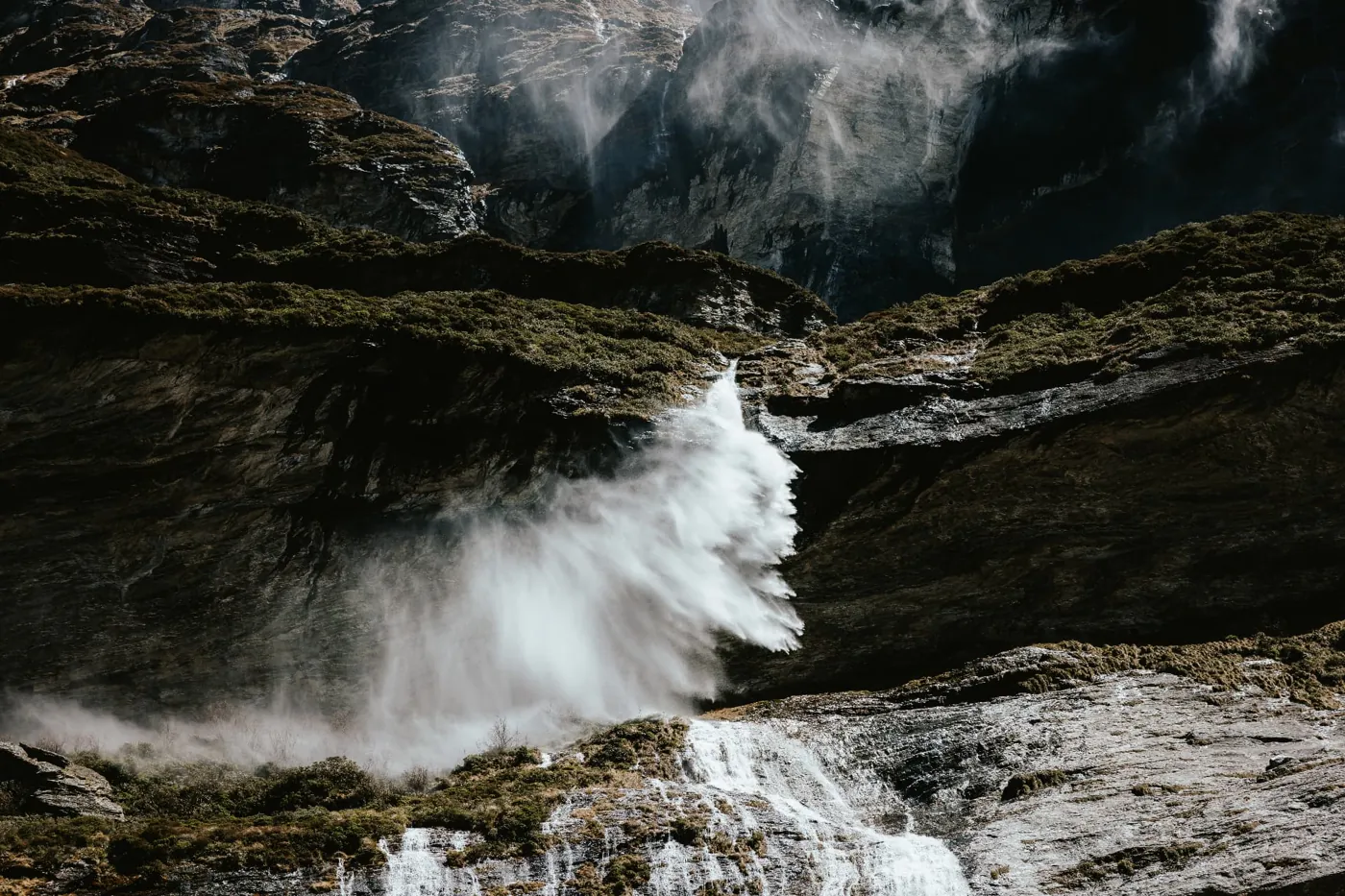
Earnslaw Burn sits beneath the glaciers of Mount Earnslaw / Pikirakatahi, north of Glenorchy at the head of Lake Wakatipu. The valley floor is a wide, boulder-strewn basin, and the walls around it carry meltwater off the ice shelf above in dozens of separate falls at once. On a high-flow day you can hear the whole valley.
It is the opposite experience to a summit landing. Instead of standing above everything with a horizon behind you, the cliffs close in and the scale runs vertically, which is why the photographs from here read as cinematic rather than scenic.
01 · The flight in
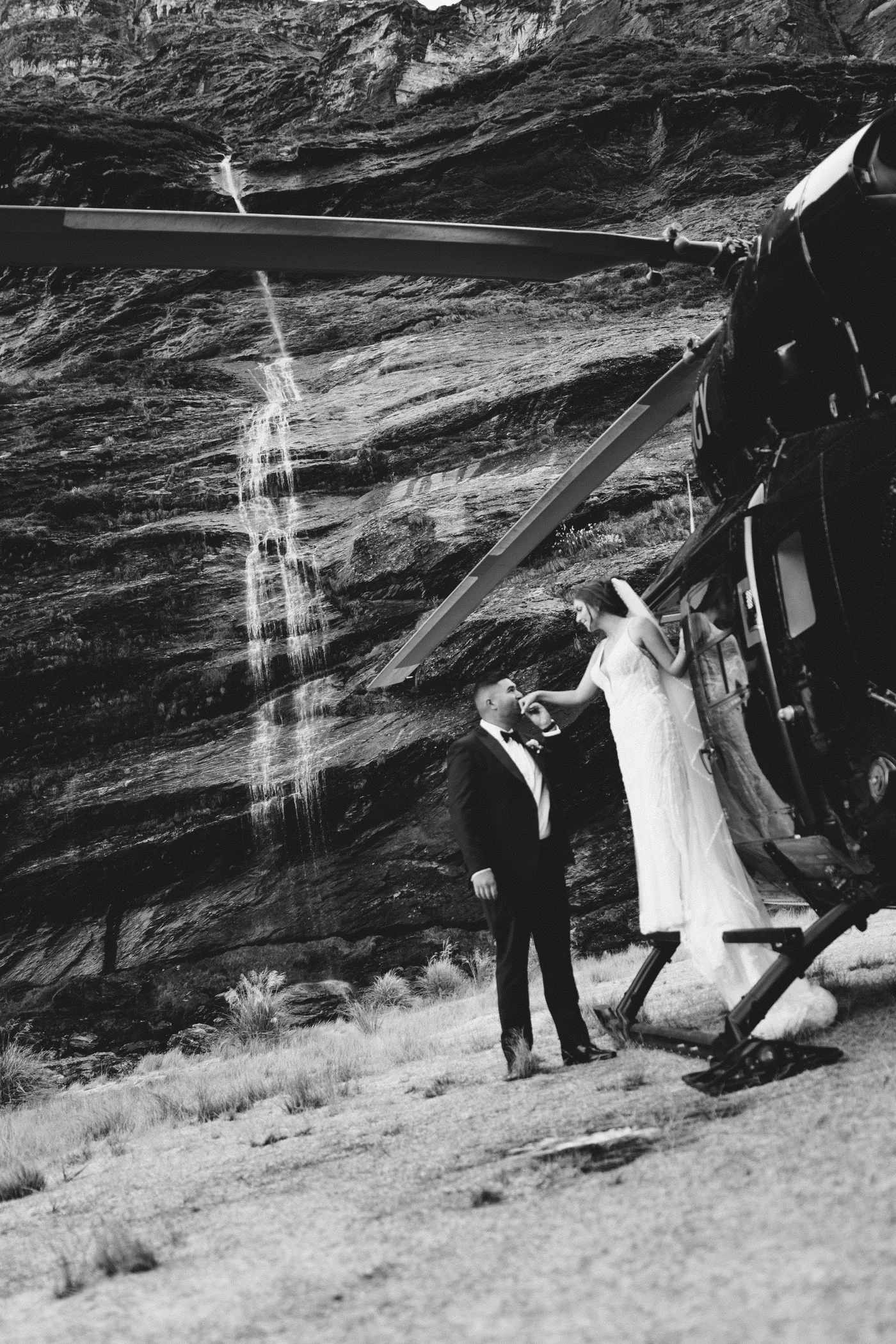
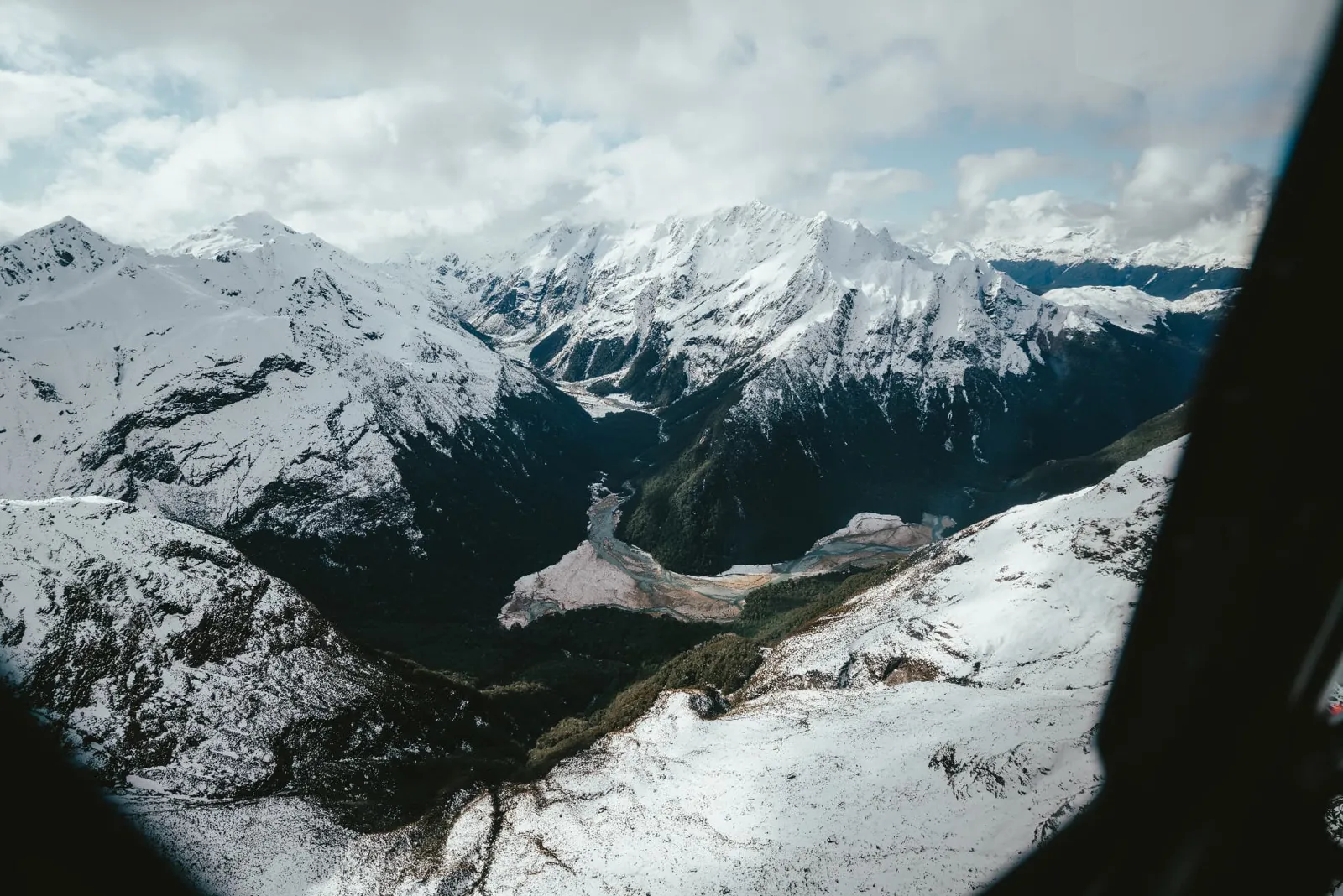
The approach is half the experience. The helicopter tracks north from Queenstown up Lake Wakatipu, past Glenorchy and into Mount Aspiring National Park, then turns in under the snowfields and hanging ice of Mount Earnslaw / Pikirakatahi before dropping into the basin.
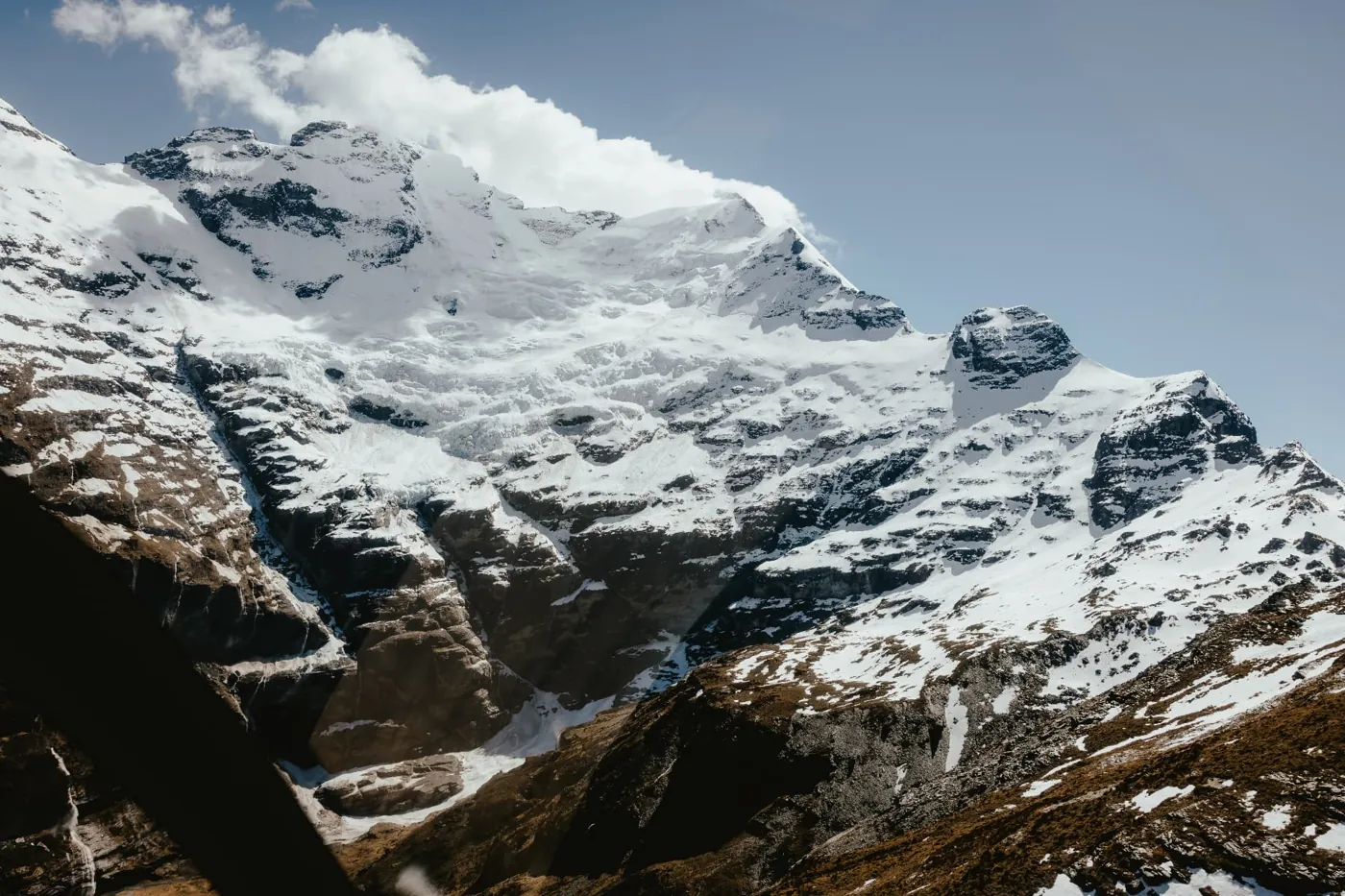
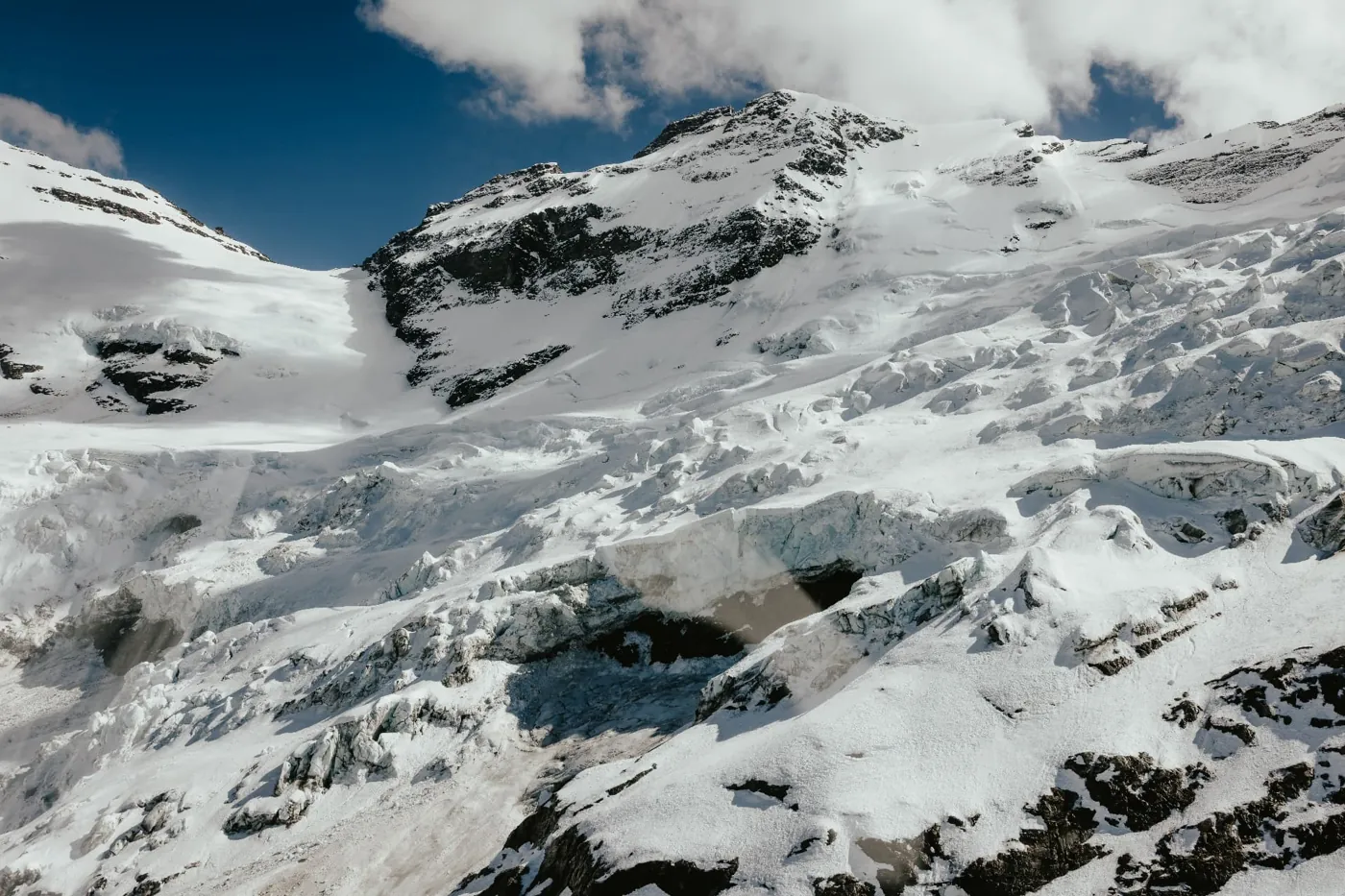
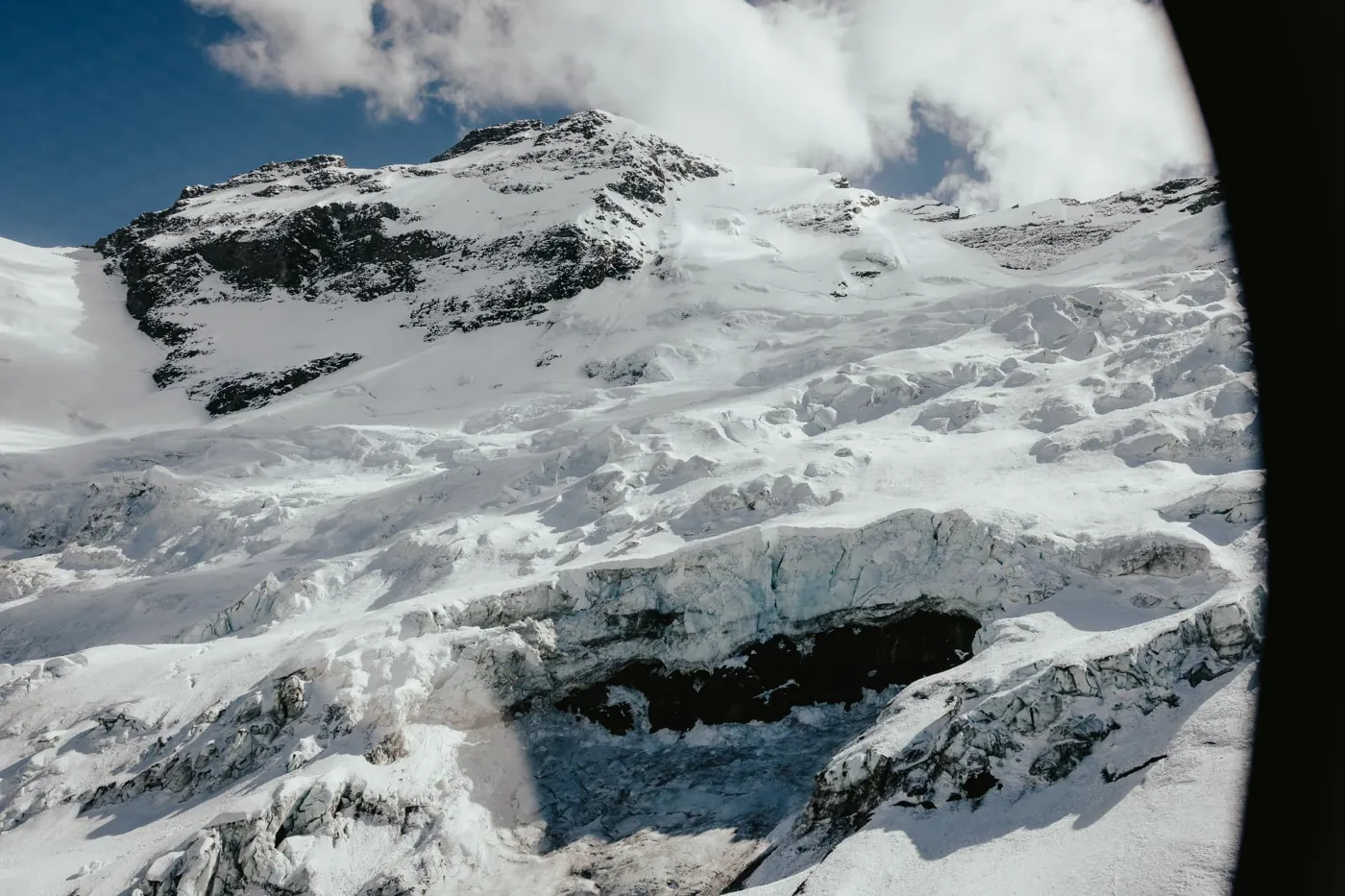
Sources: Department of Conservation, Earnslaw Burn Track and Head of Lake Wakatipu brochure; Te Ara Encyclopedia of New Zealand; Wilderness Magazine.
02 · The landing
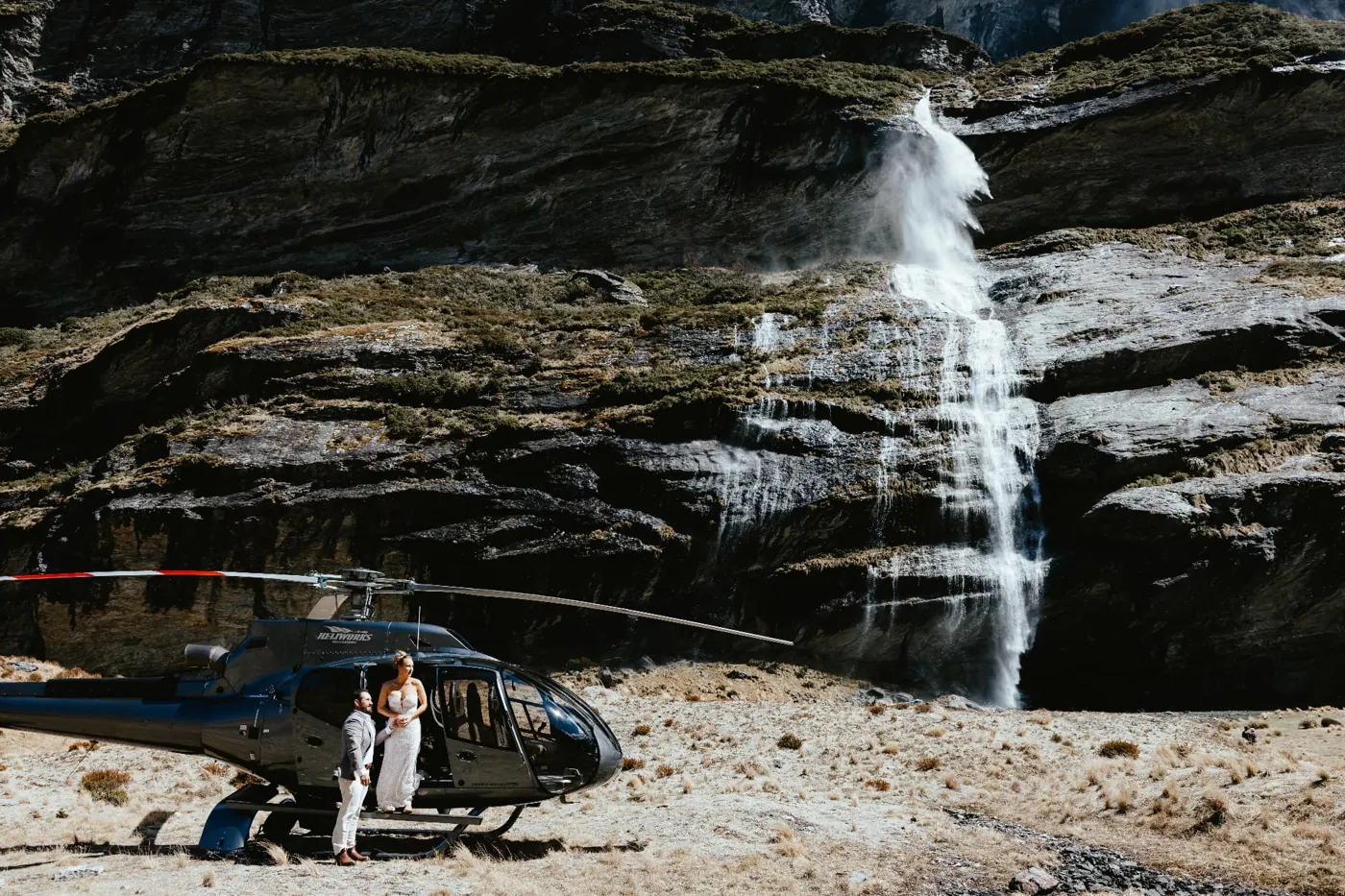
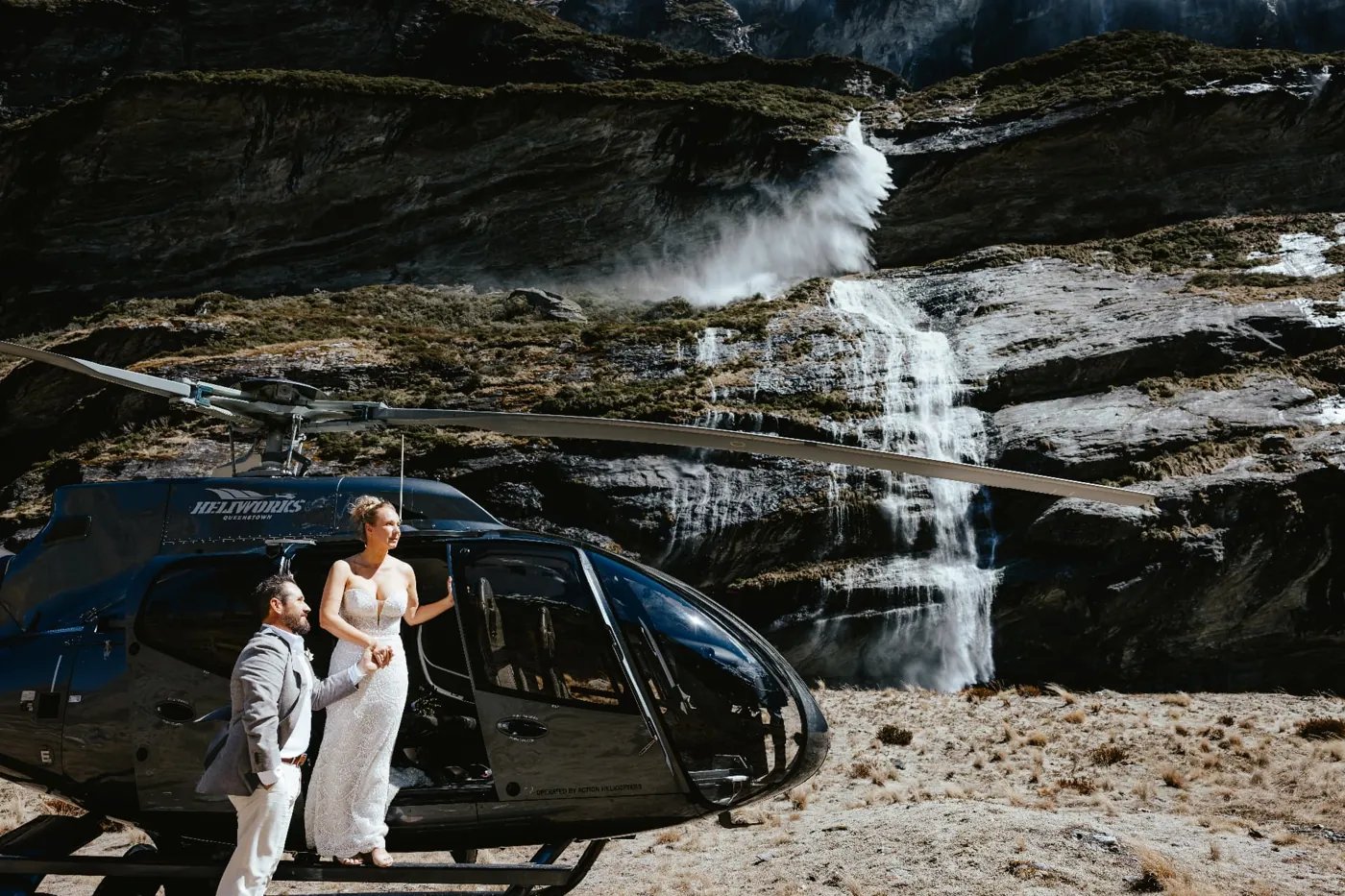
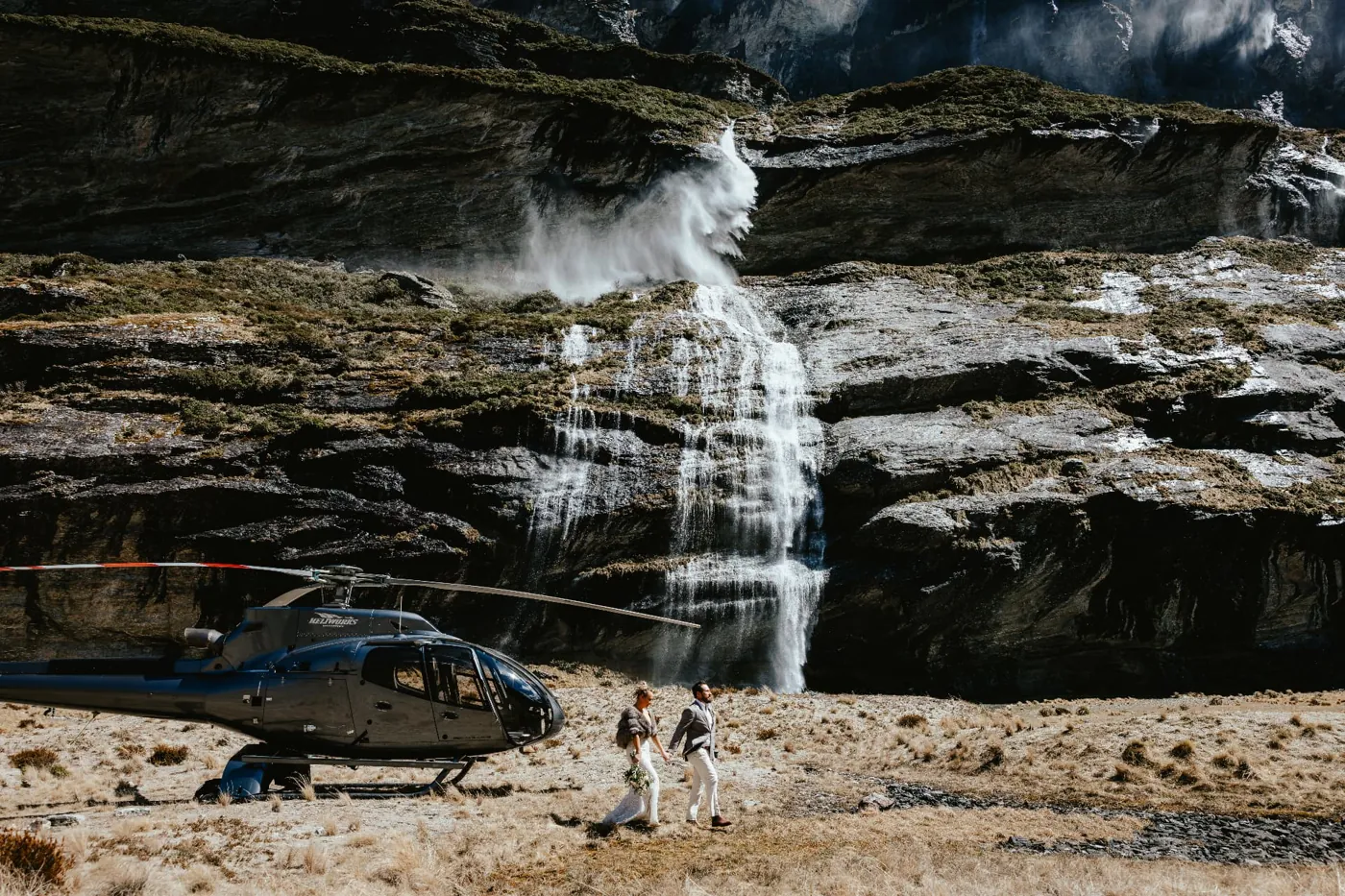
The pilot sets down on the open tussock basin, a short walk from the falls. There is no road, no track traffic and no other wedding in sight, just the sound of meltwater and the cliffs rising on three sides.
03 · The ceremony
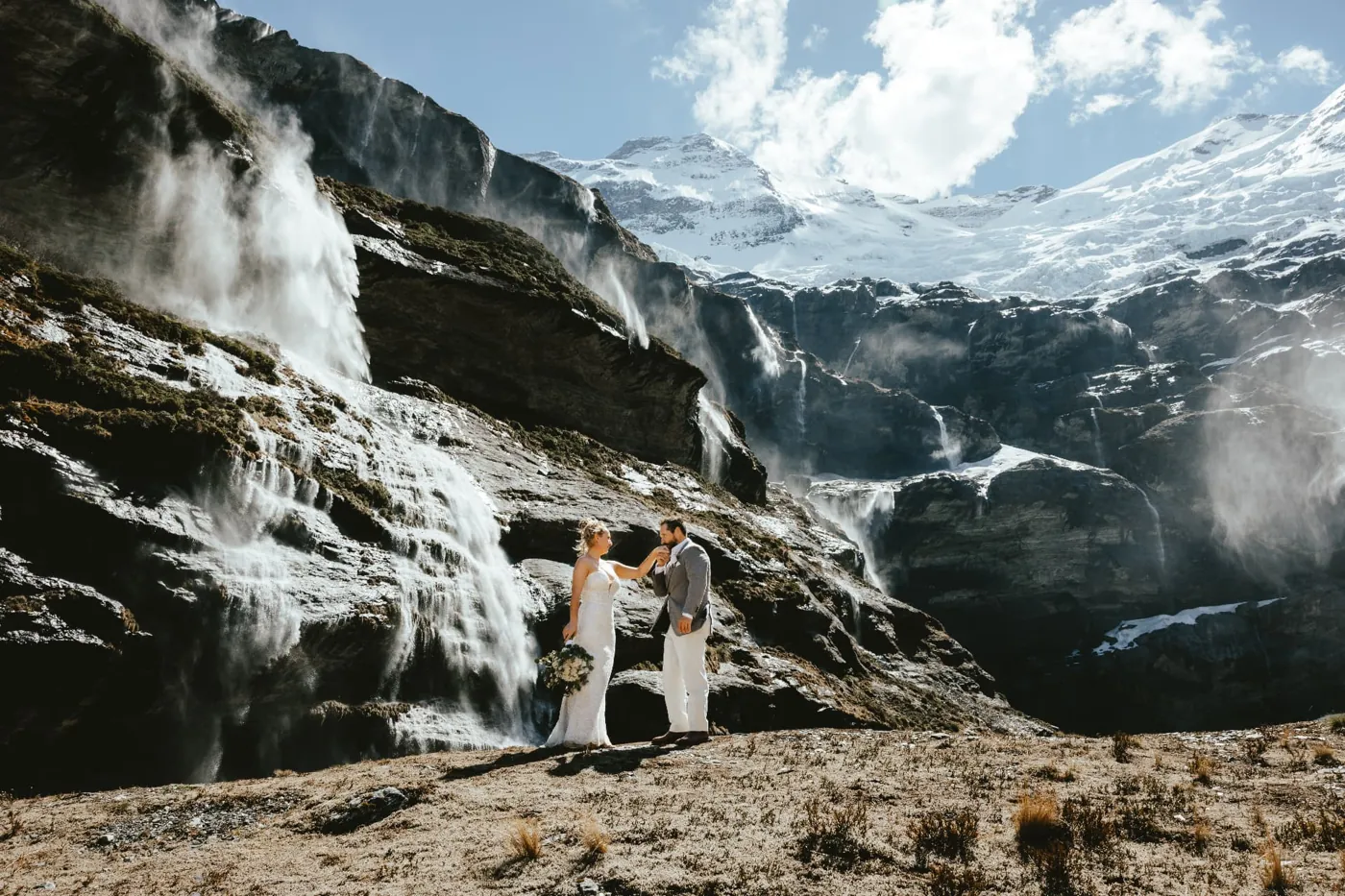
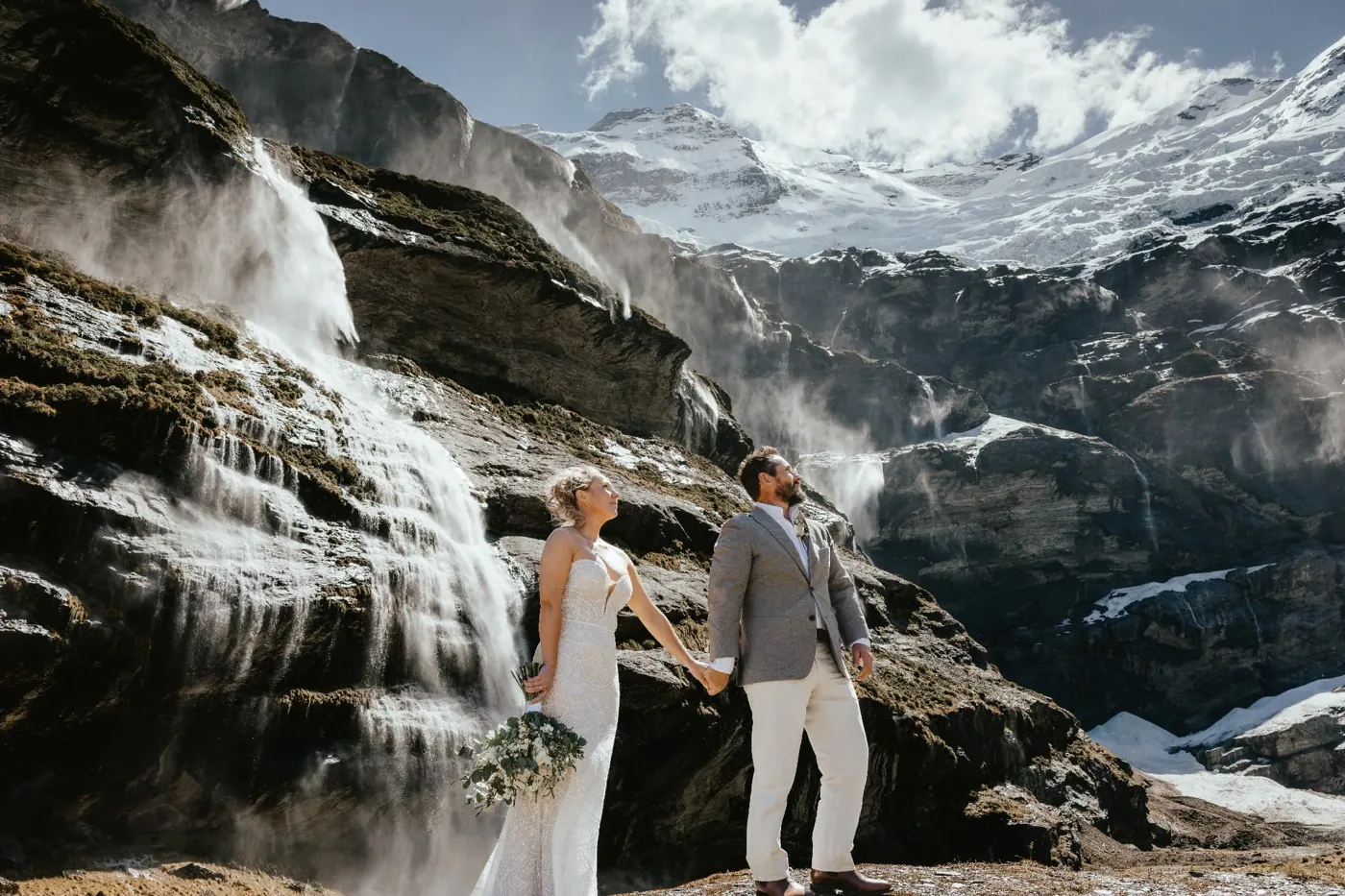
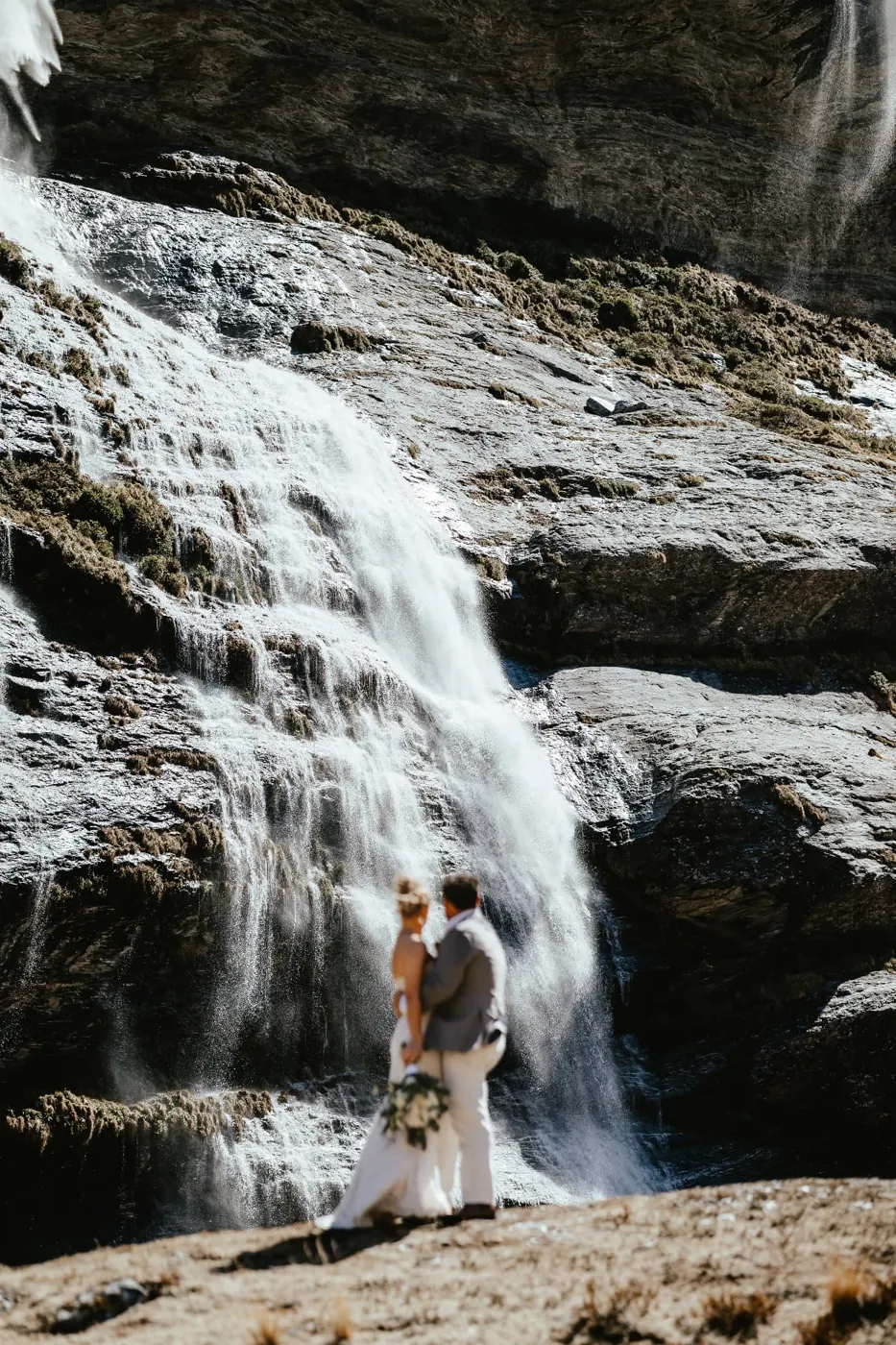
Most couples say their vows on the basin floor with the icefall behind them, then walk out for portraits that show just how big the valley is. Wide frames here read like a film still: two people, one waterfall wall and Mount Earnslaw above.
See Packages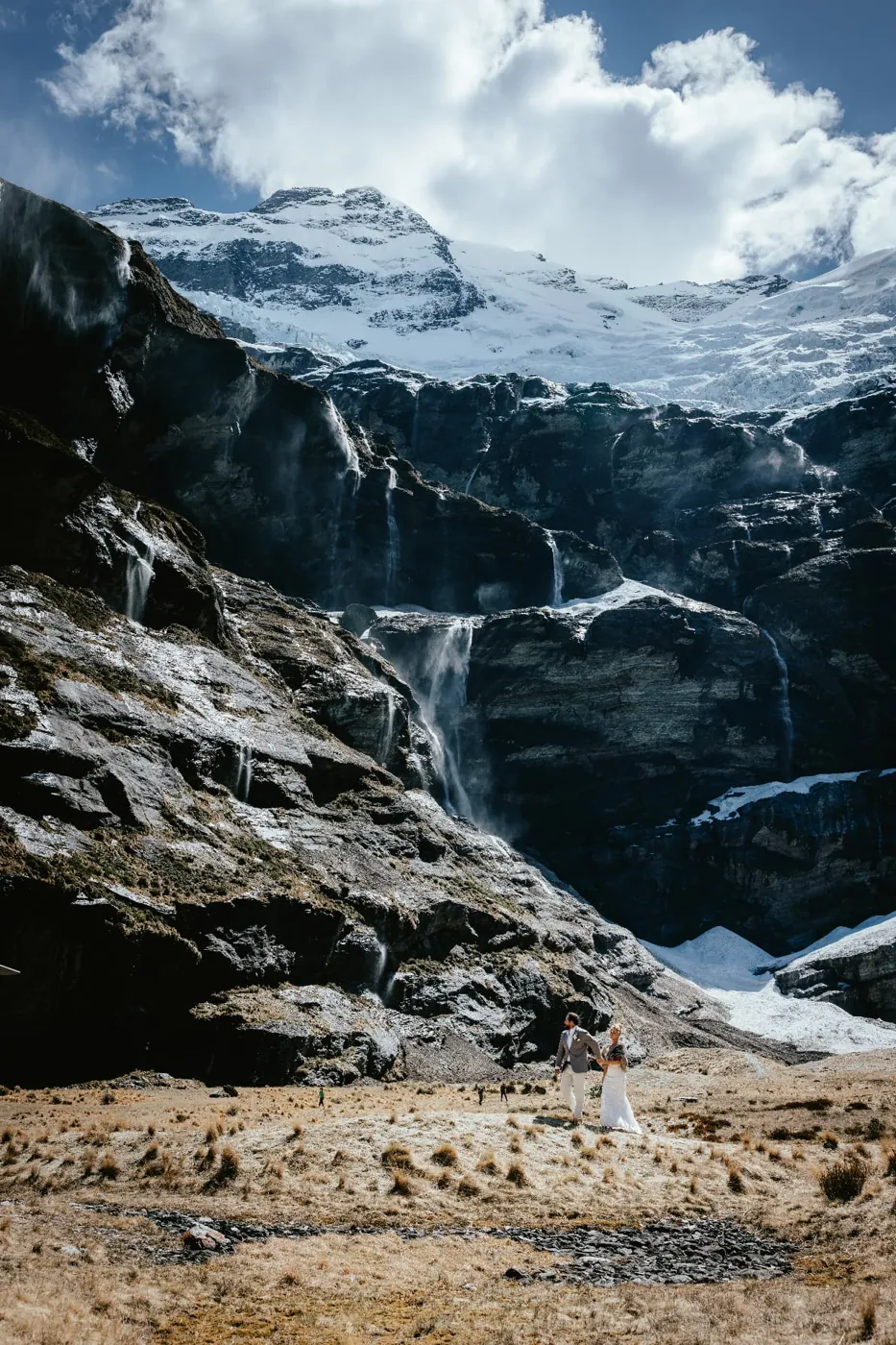
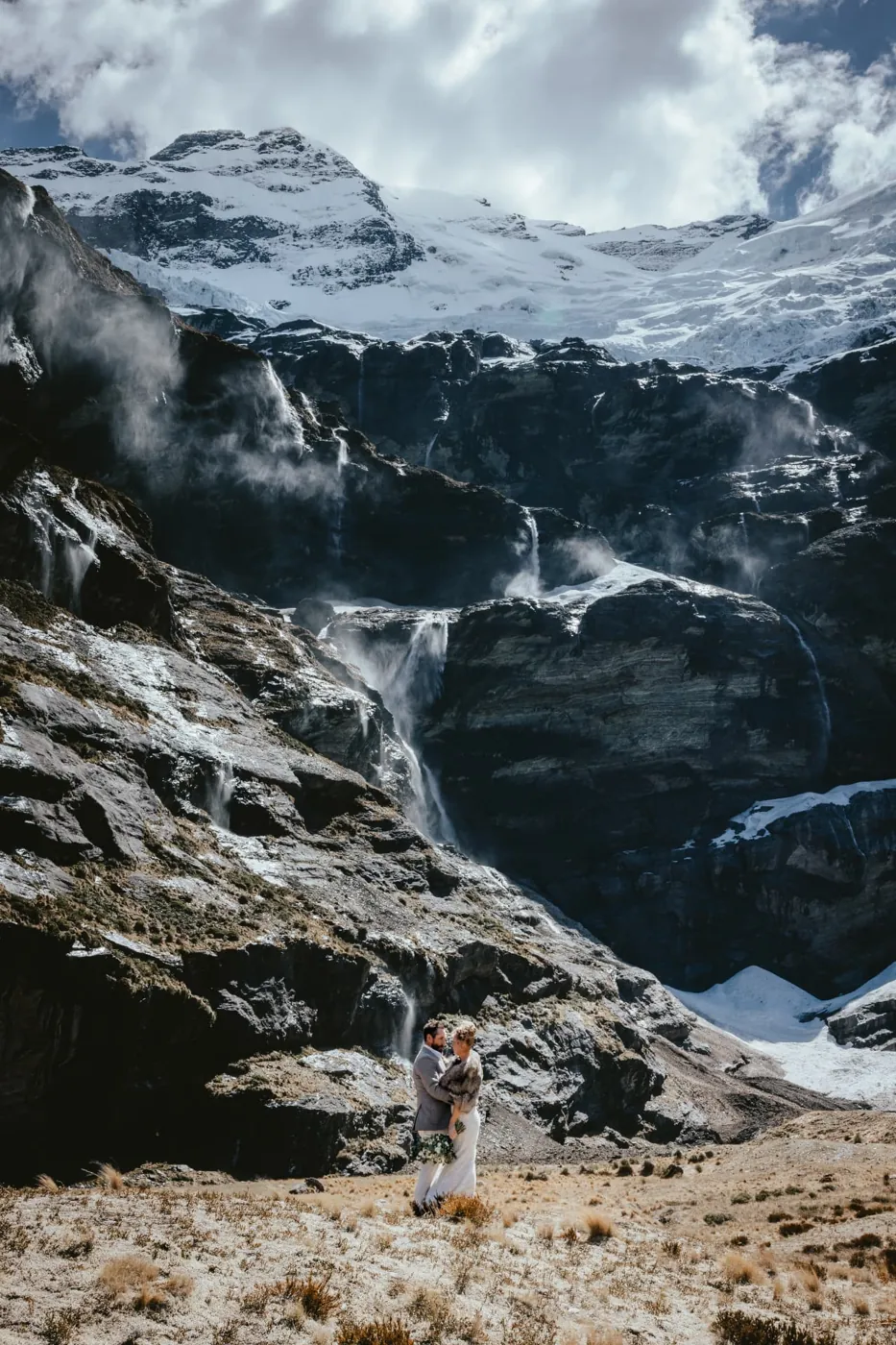
Portraits
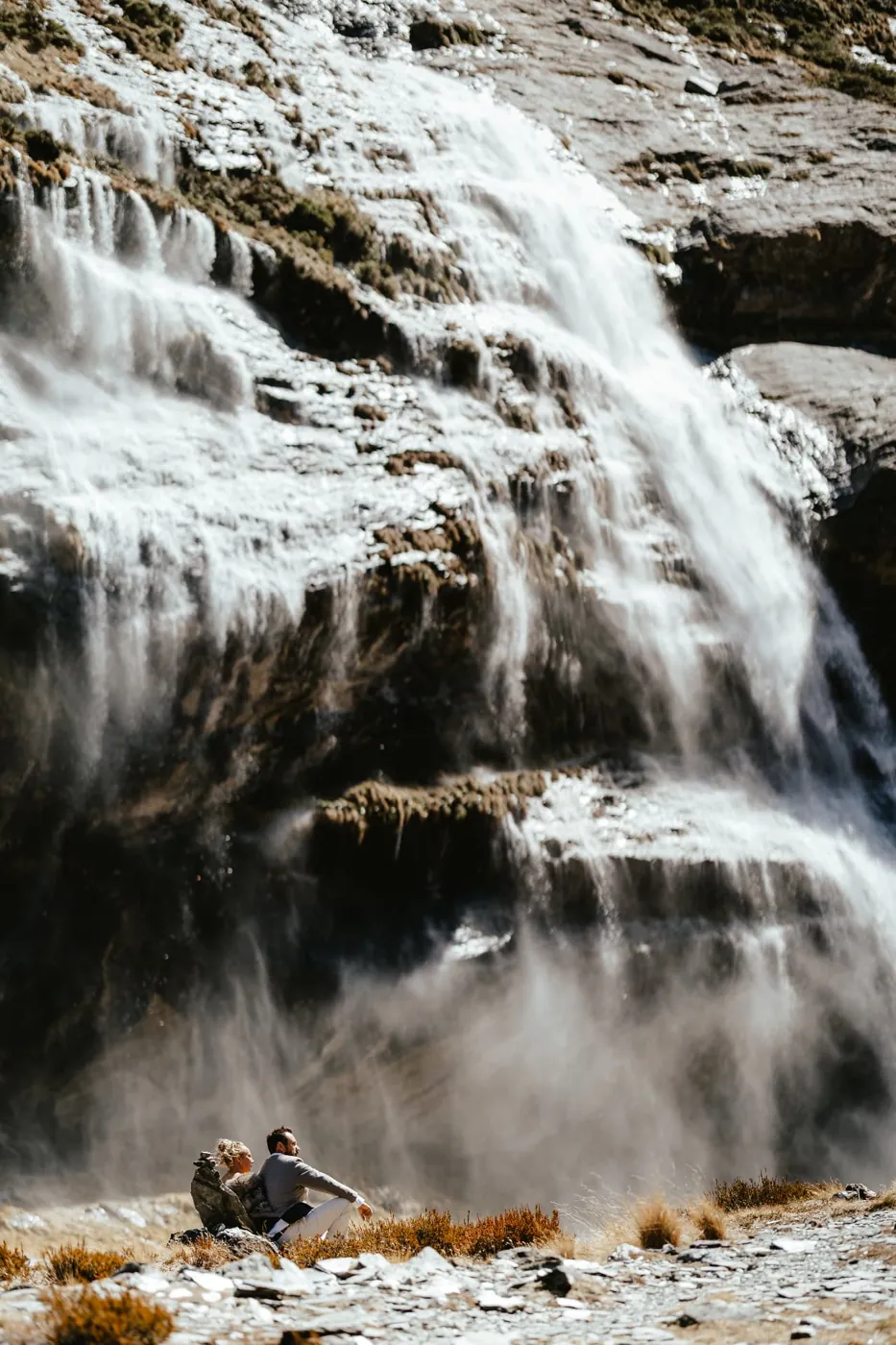
Vows, quiet moments and wide frames beside the Earnslaw Burn falls.
Winter at Earnslaw Burn
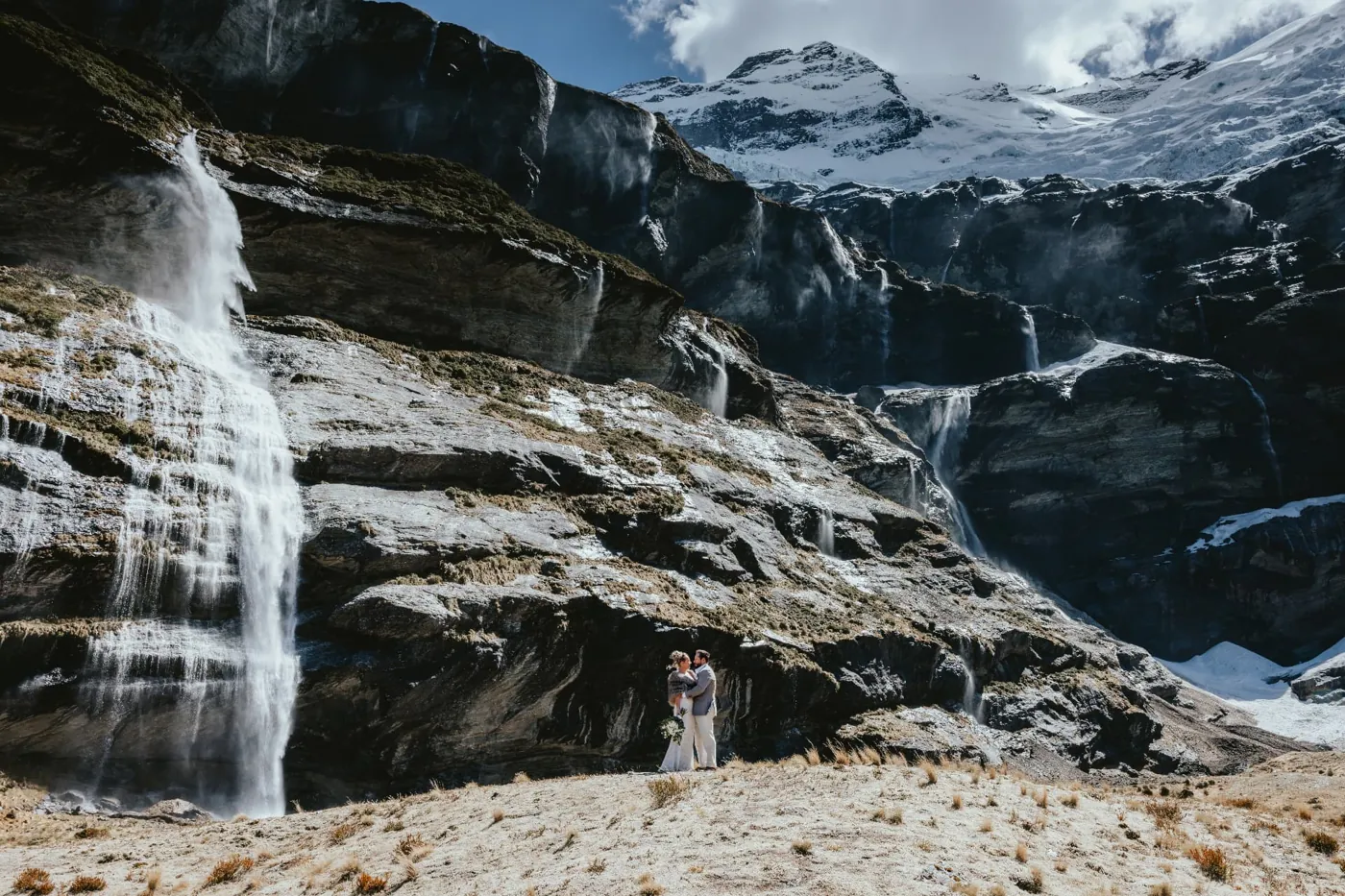
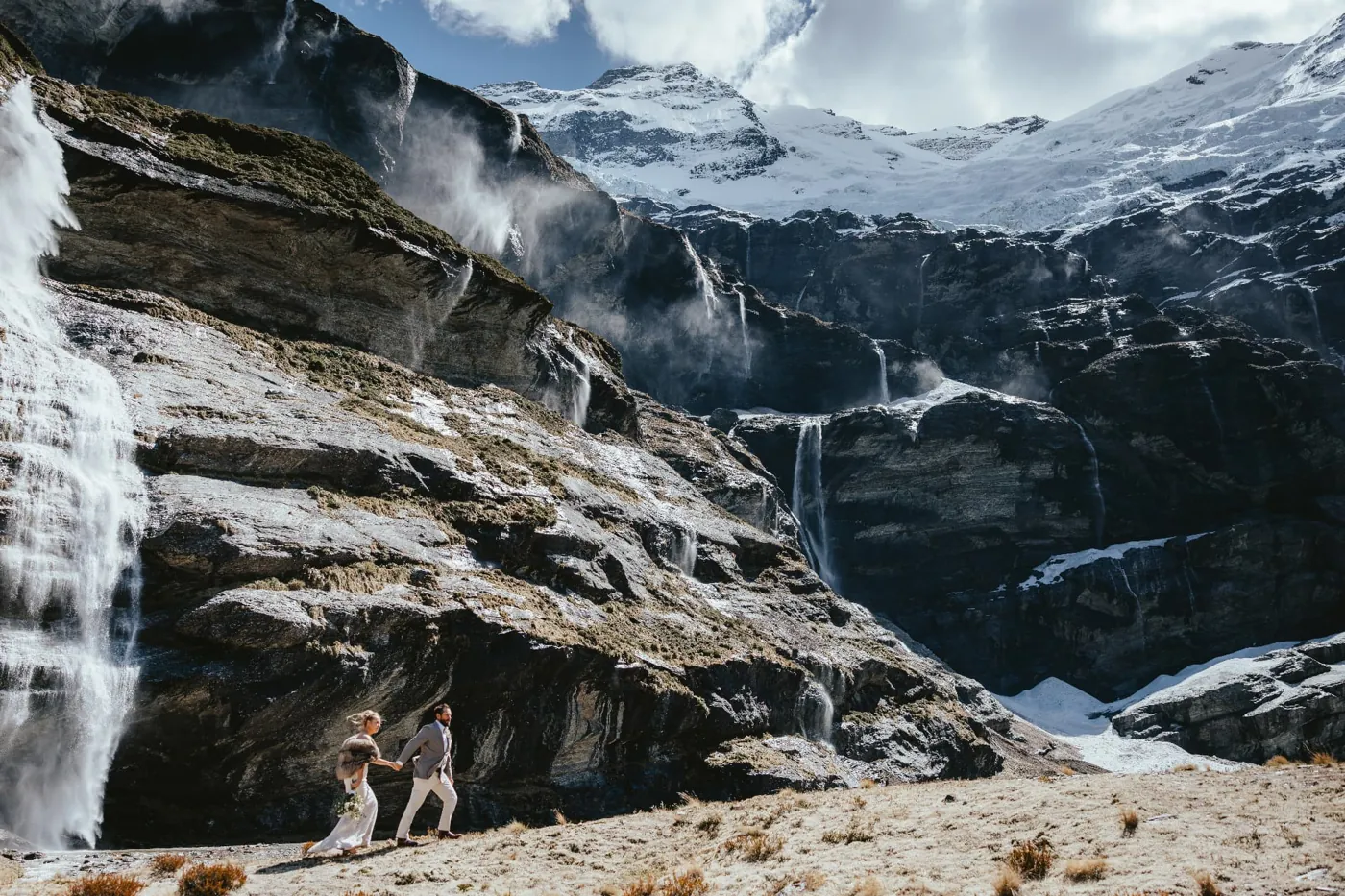
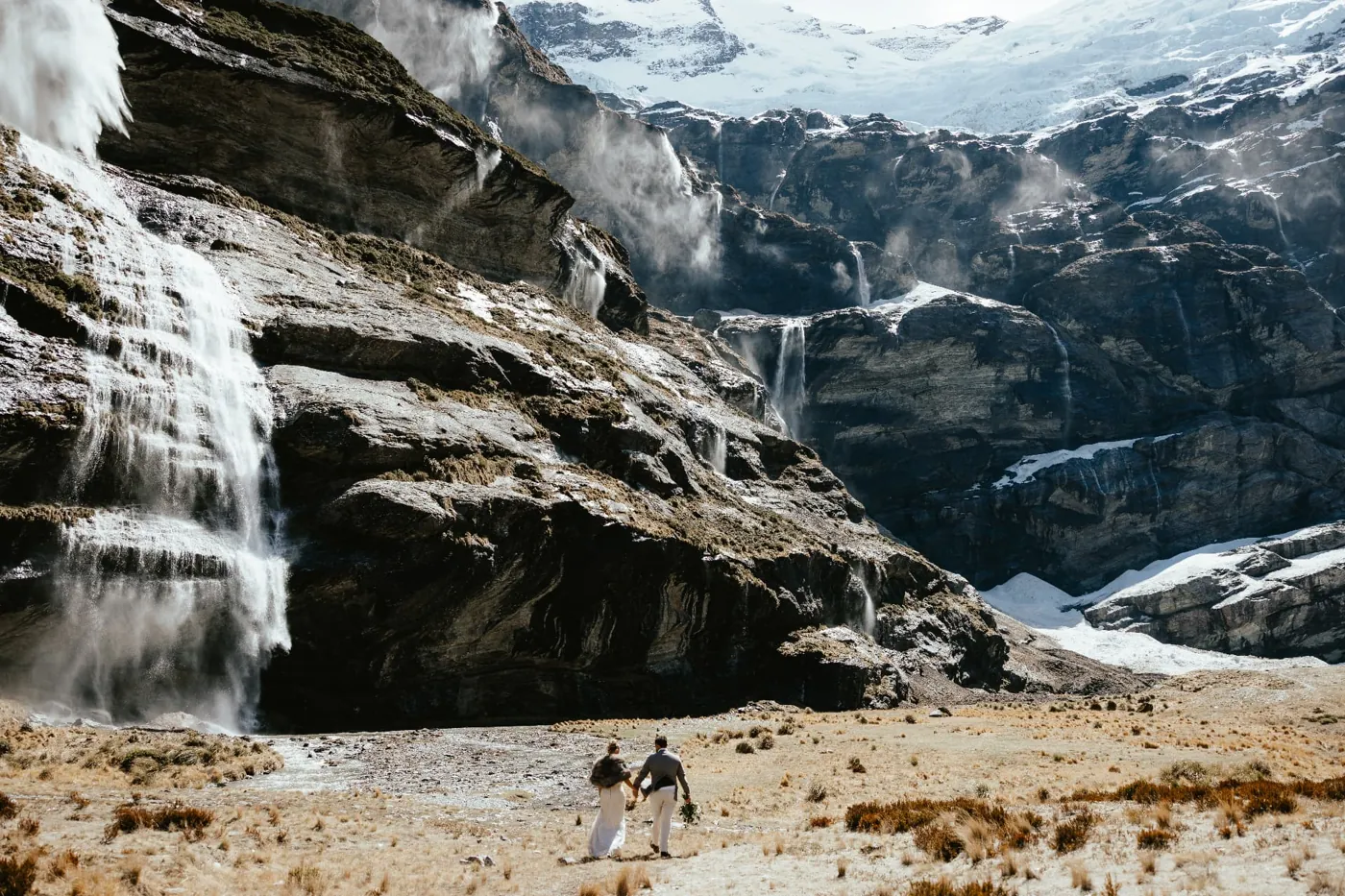
Winter changes Earnslaw Burn completely. Deep in the valley the sun barely reaches the floor, and the famous waterfalls freeze into still ice. That is why we don't recommend the main Earnslaw Burn wall in the winter months: the falling water that makes it famous simply stops.
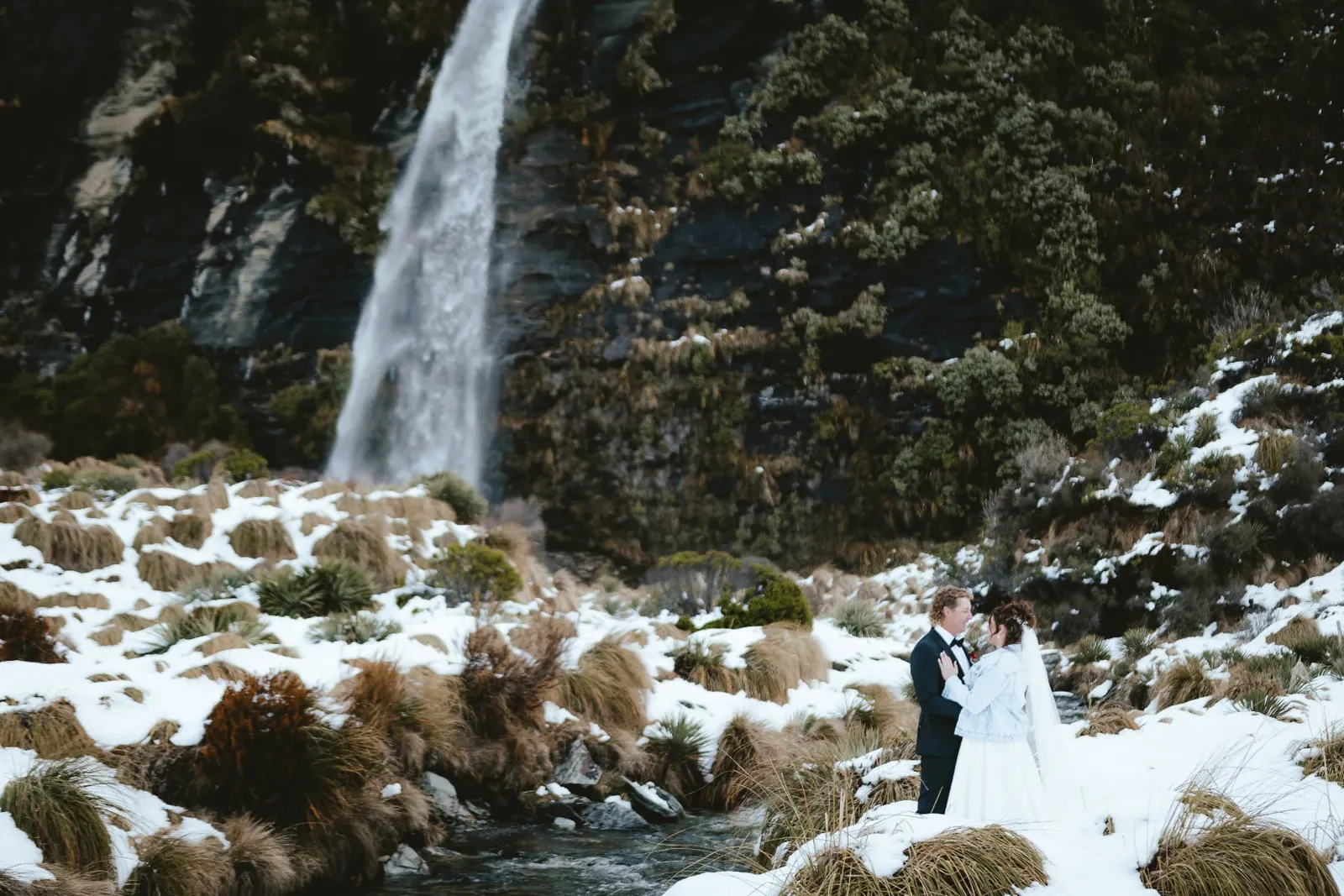
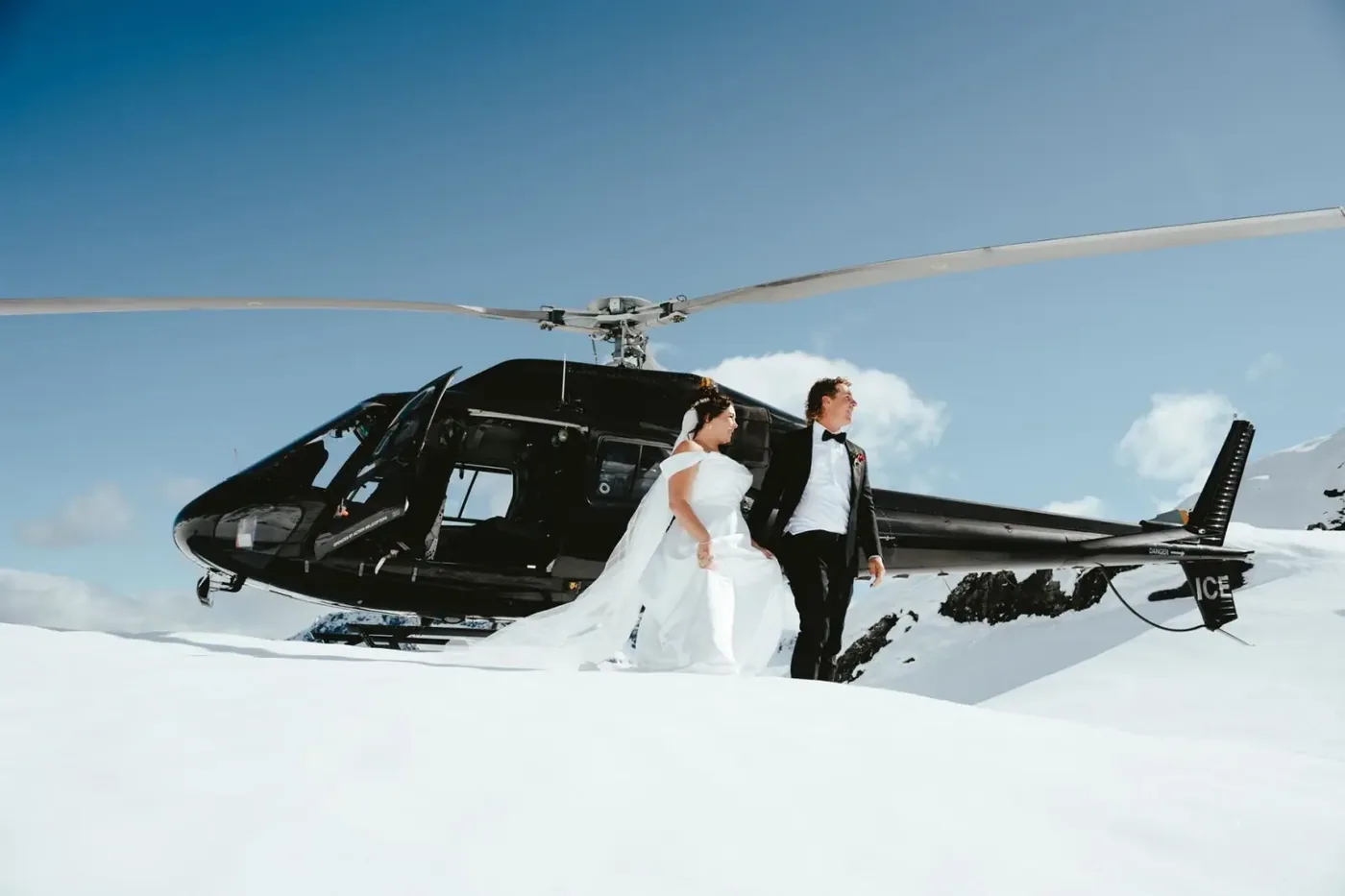
There is still one waterfall that keeps running. It sits about 3 kilometres before the main wall, and it is where our winter couples land: snow underfoot, tussock poking through, and water still falling behind them.
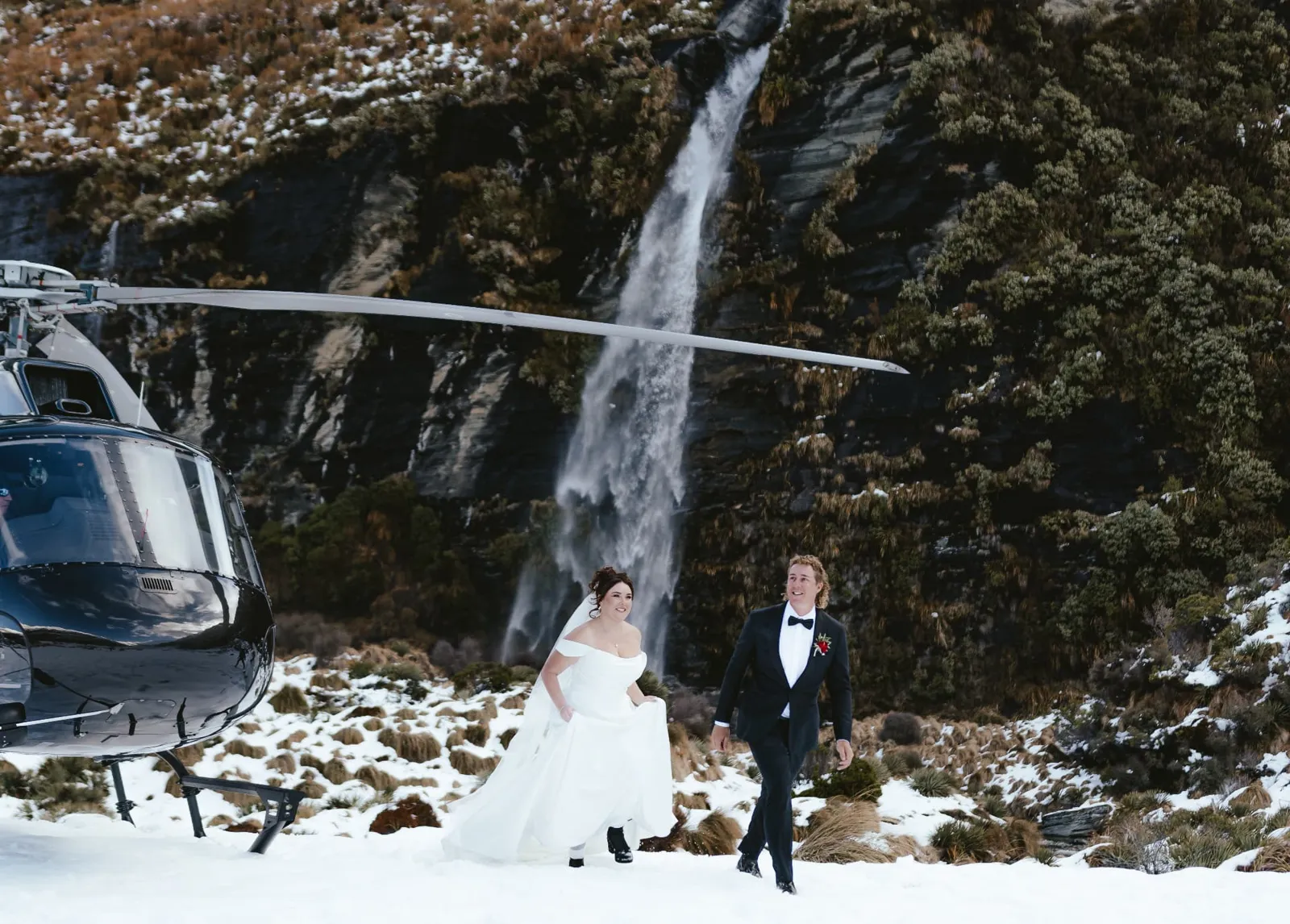
The winter waterfall
Still falling, while the rest of the valley sleeps.
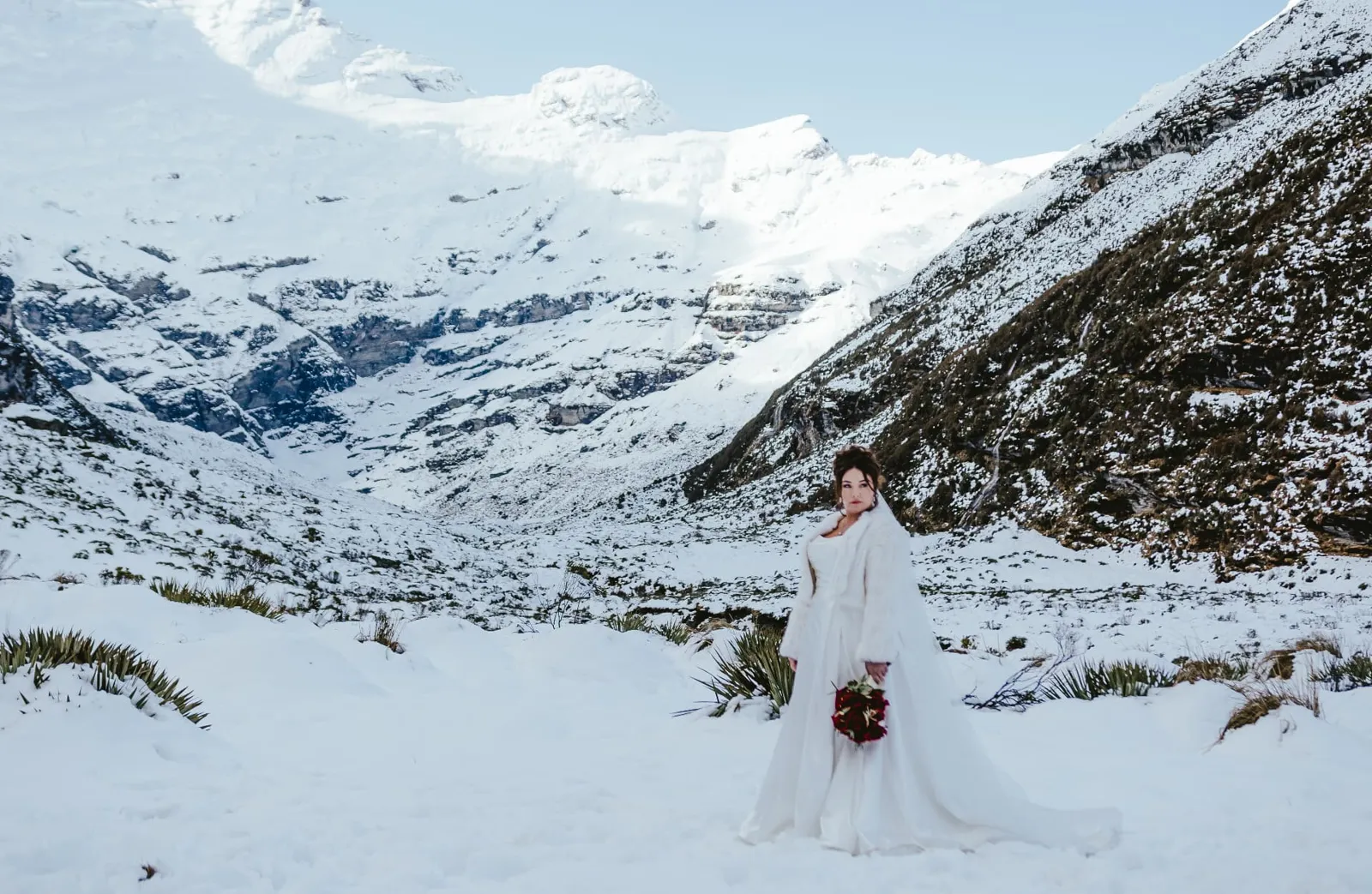
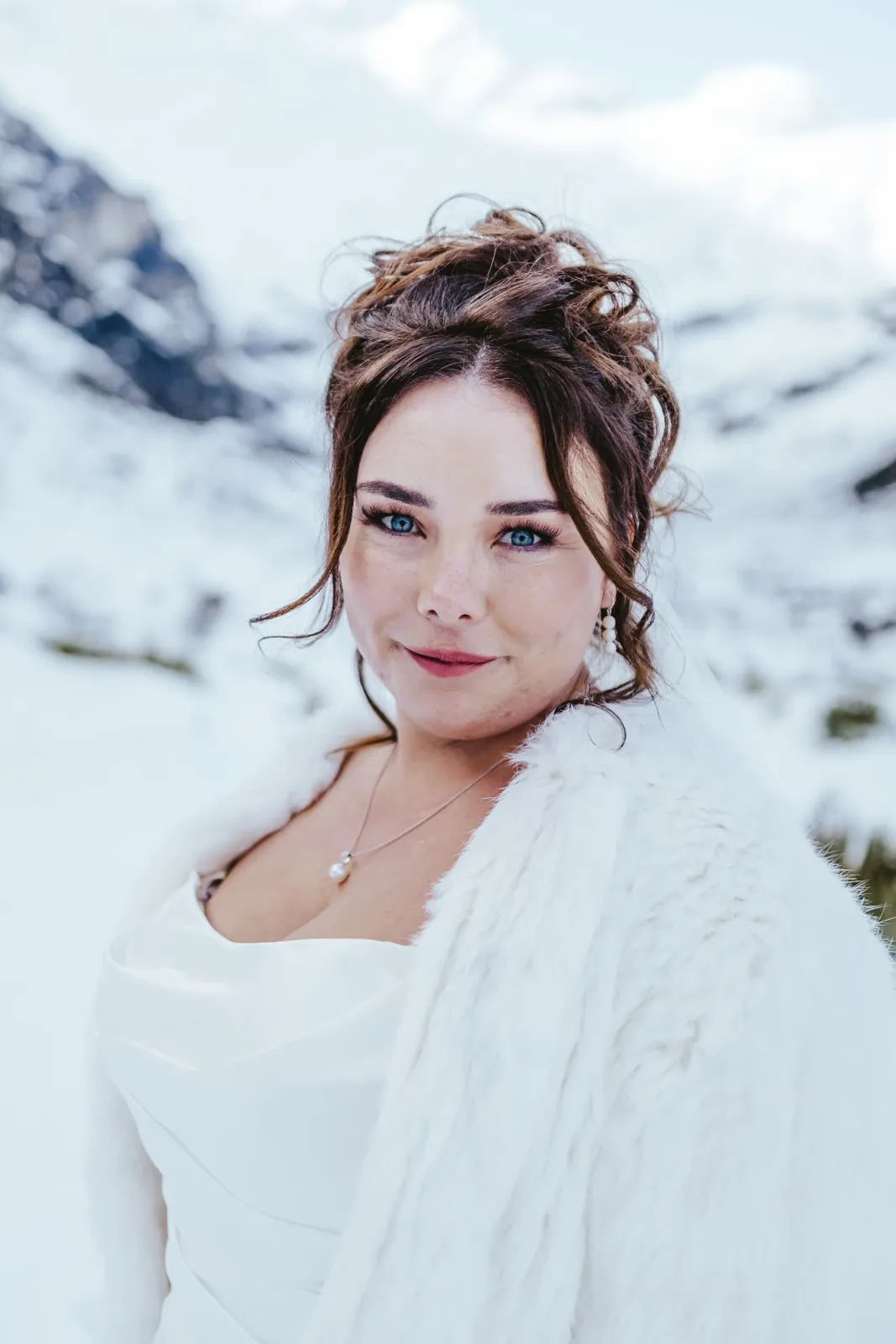
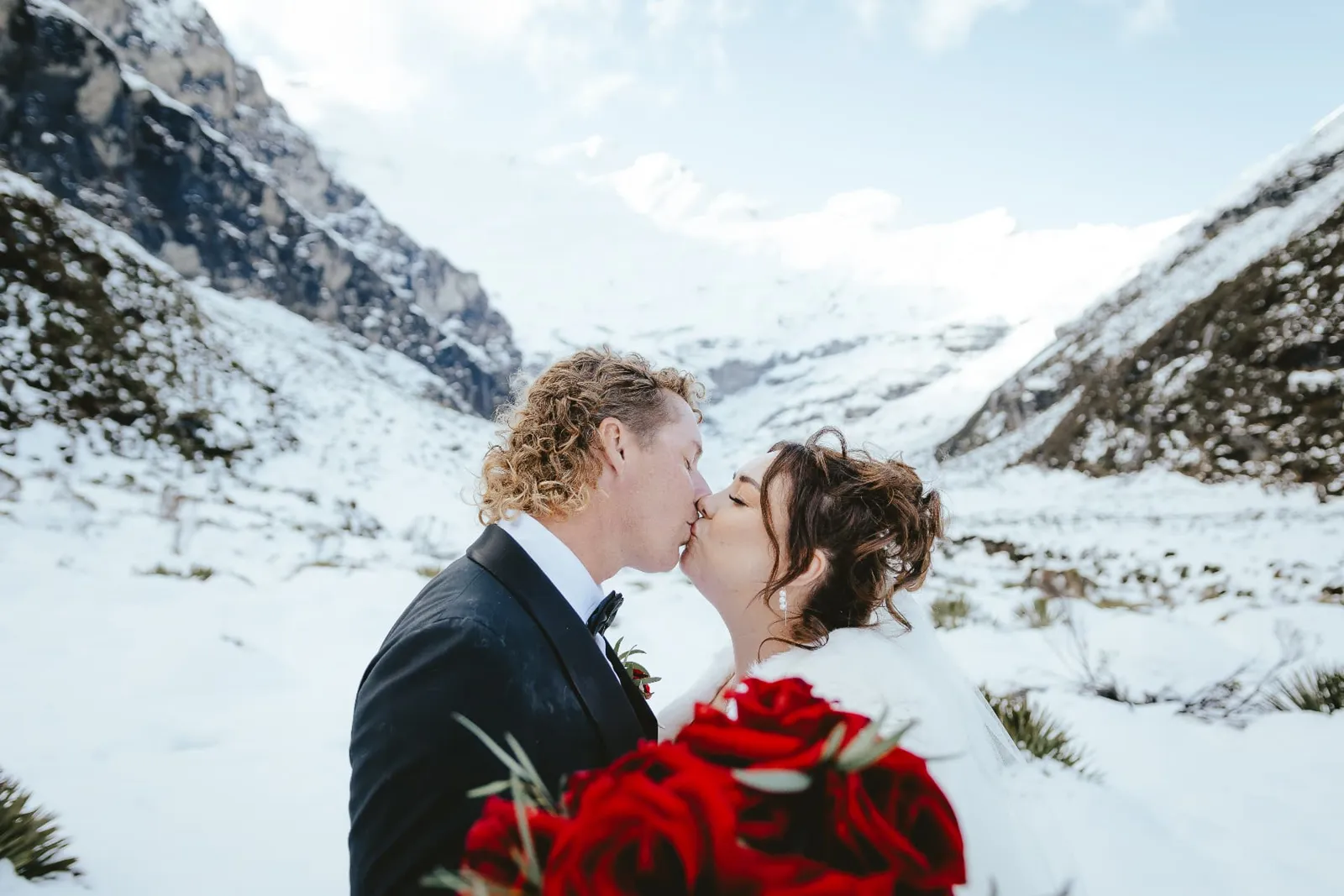
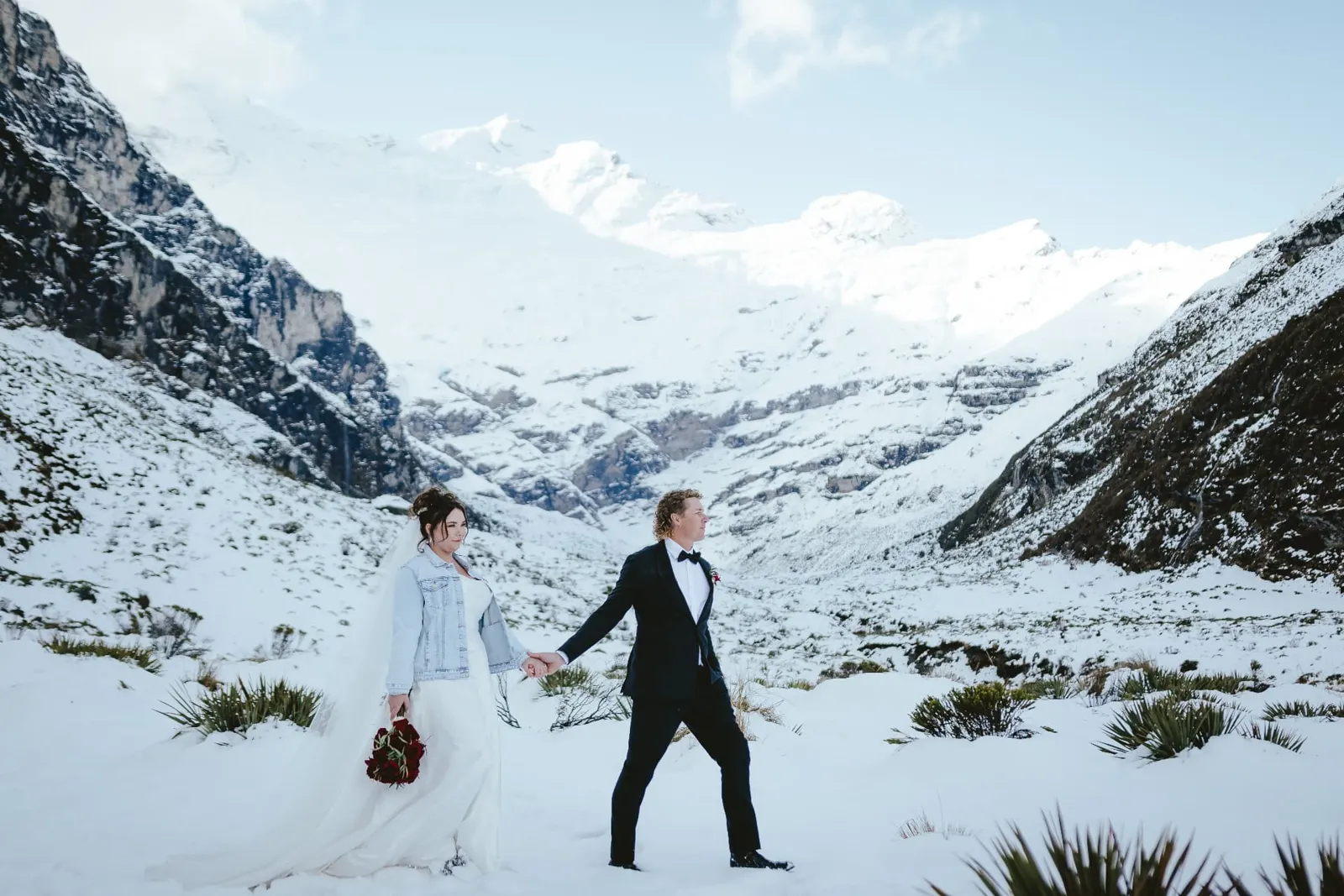
A white valley, just the two of you.
The beginning of winter
Before the deep snow arrives, there are a few weeks when Earnslaw Burn sits between seasons. Fresh snow dusts the top of the glacier wall and frost silvers the golden tussock. Most of the falls that stream down the cliffs in spring have gone quiet, leaving bare rock and old ice in the gullies.
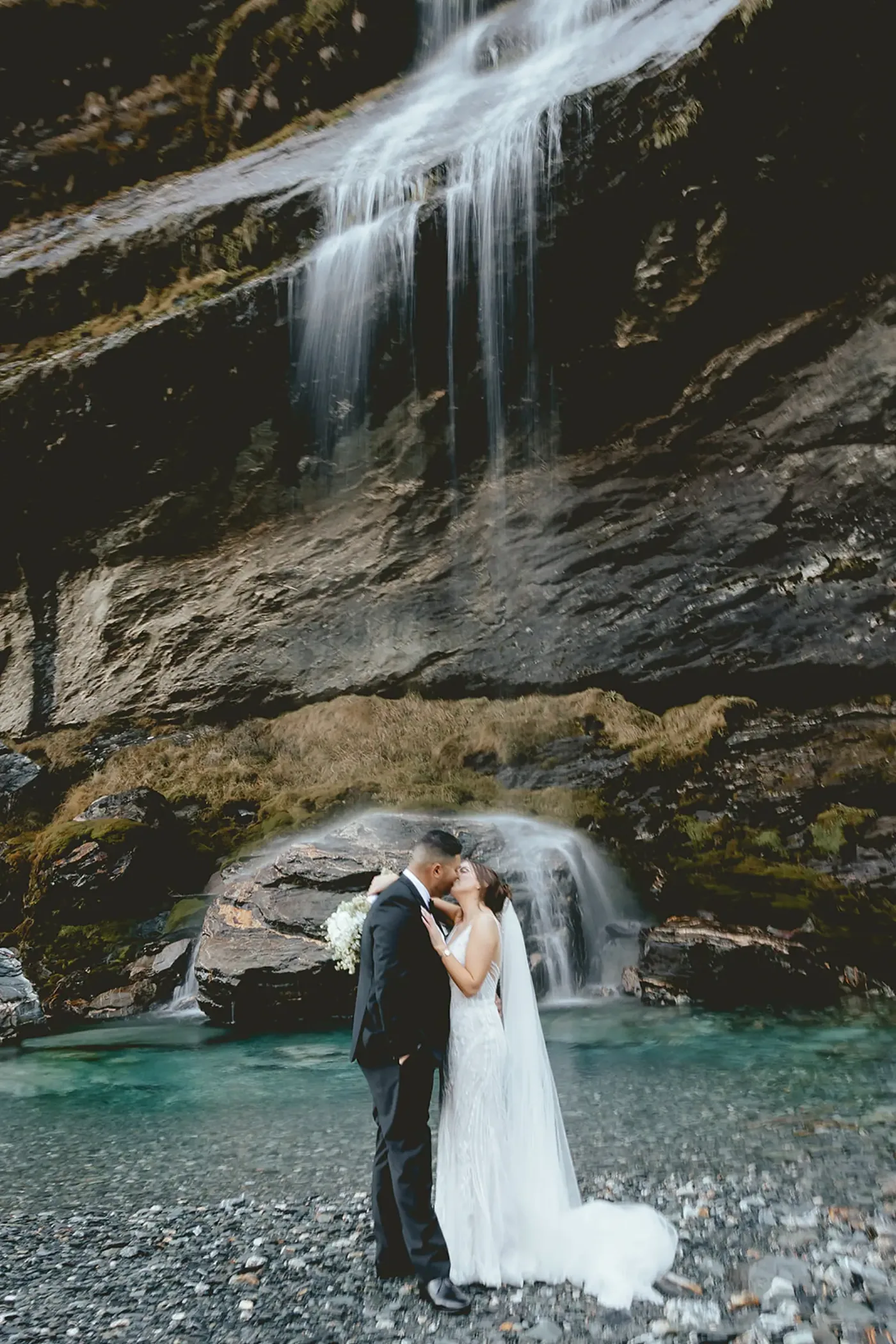
One keeps going: the main waterfall, still pouring into its turquoise pool. With the rest of the valley still, it becomes the whole ceremony, and the photos get quieter, moodier and more intimate.
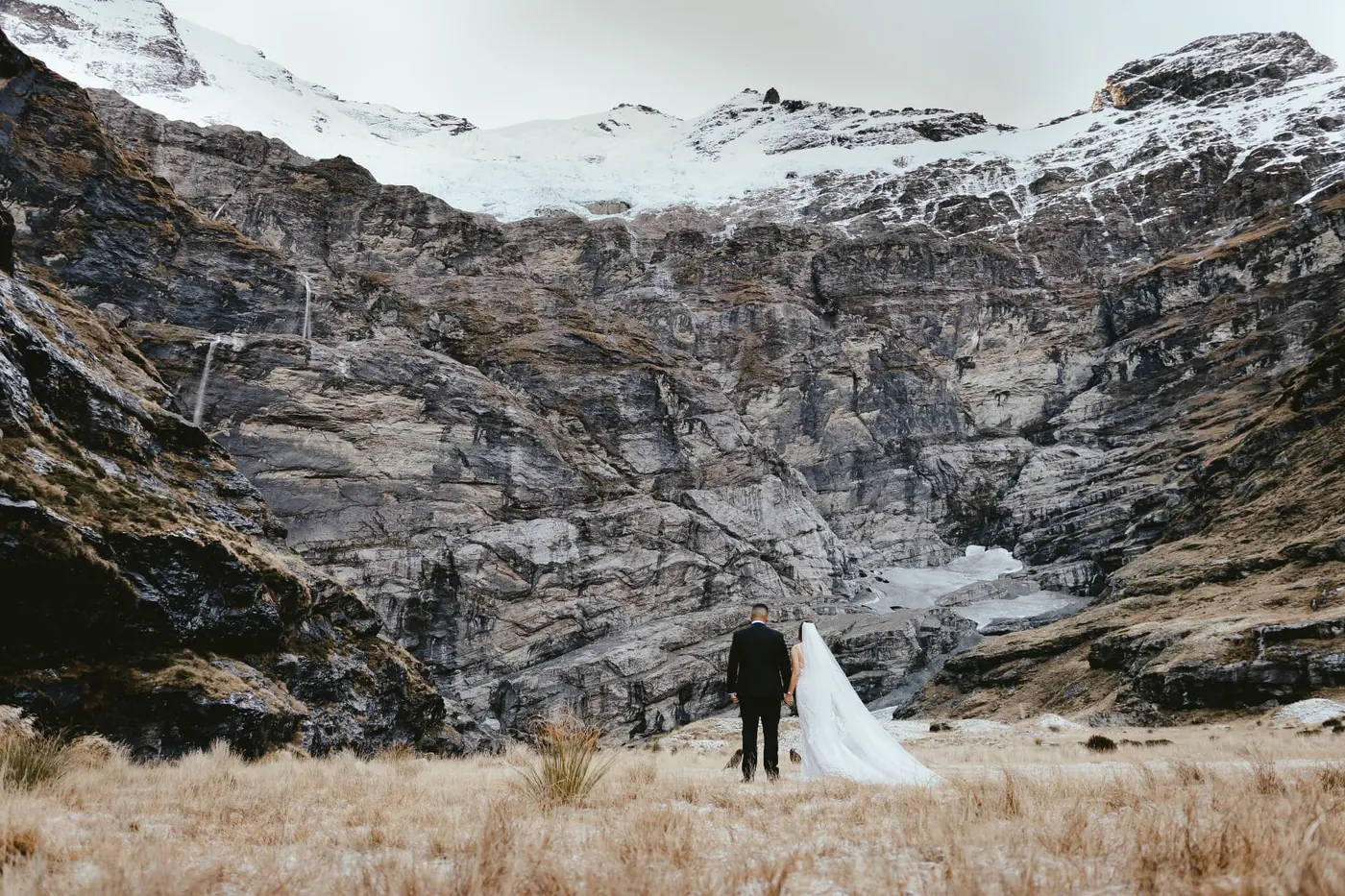
Early winter
New snow above, the cliffs gone quiet below.
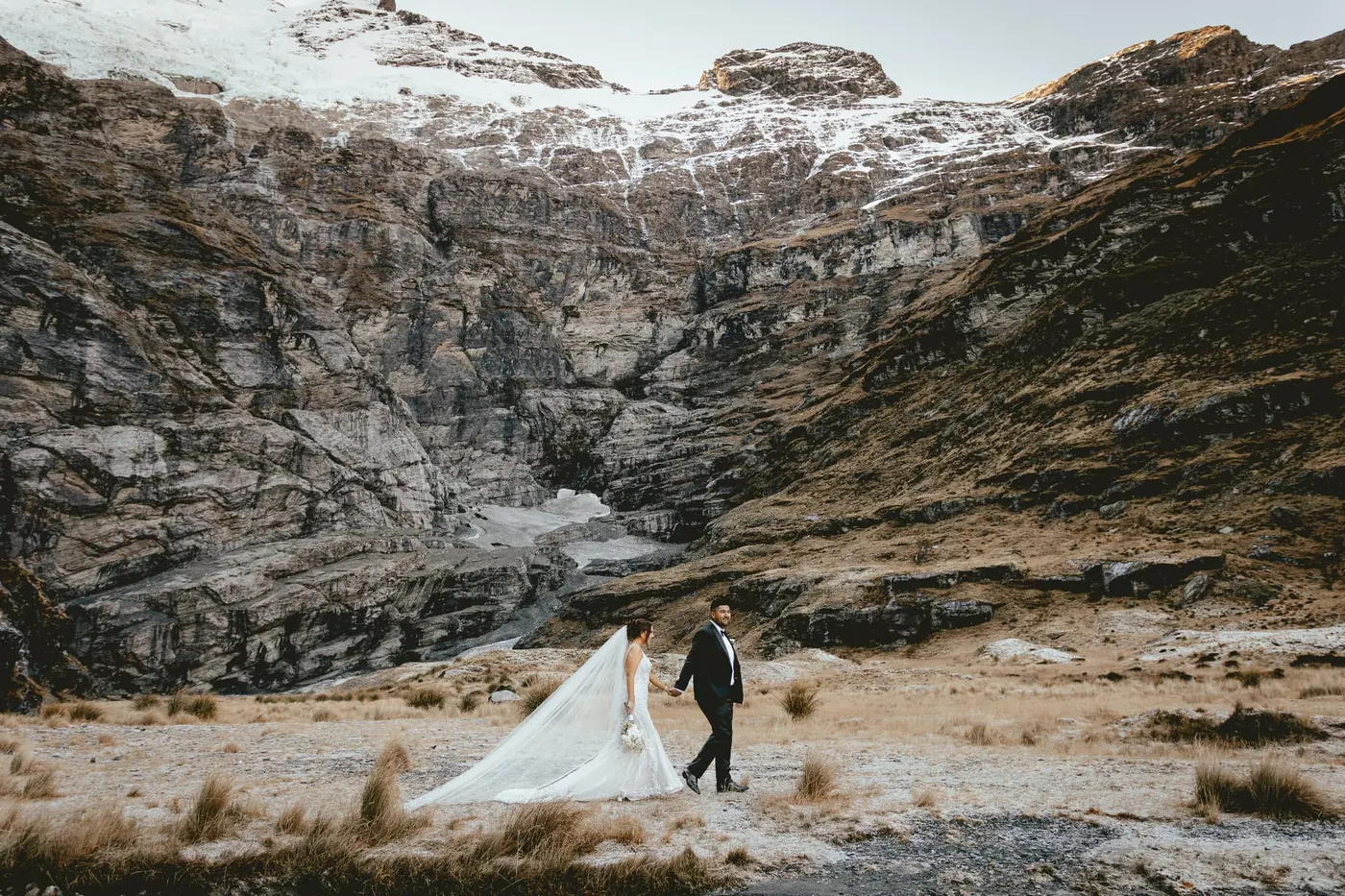
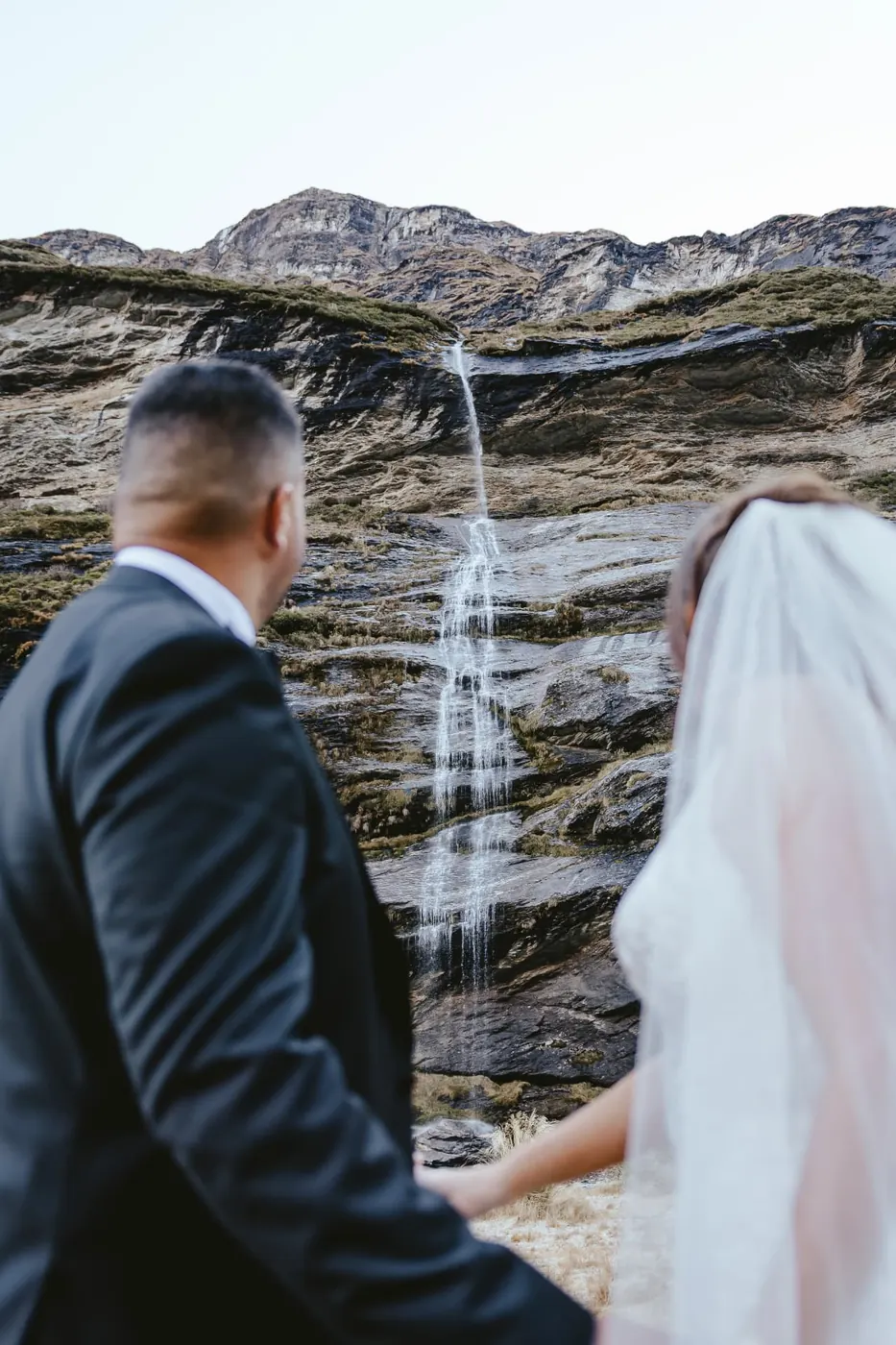
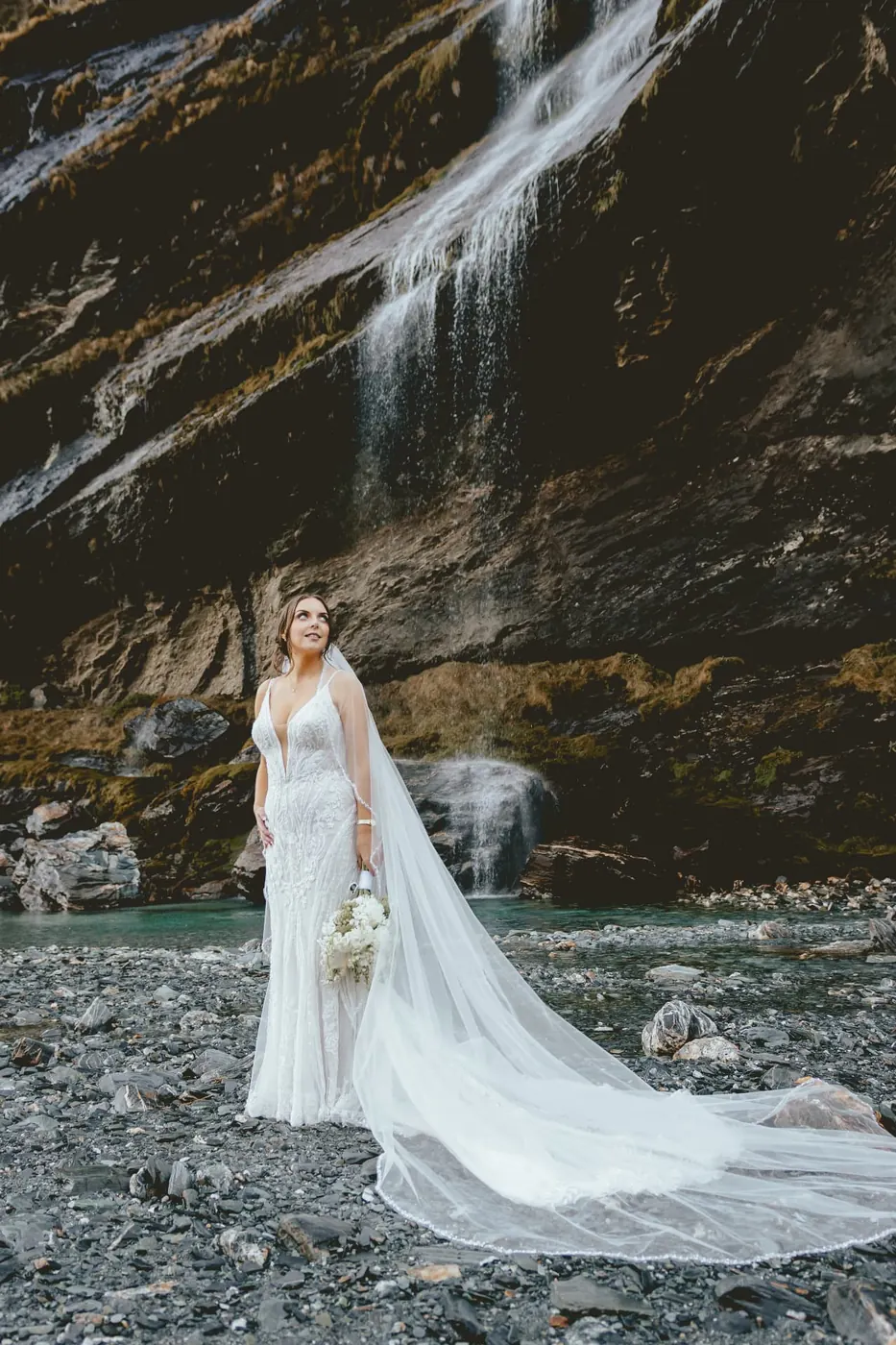
When the other falls stop, the main waterfall is the one still singing.
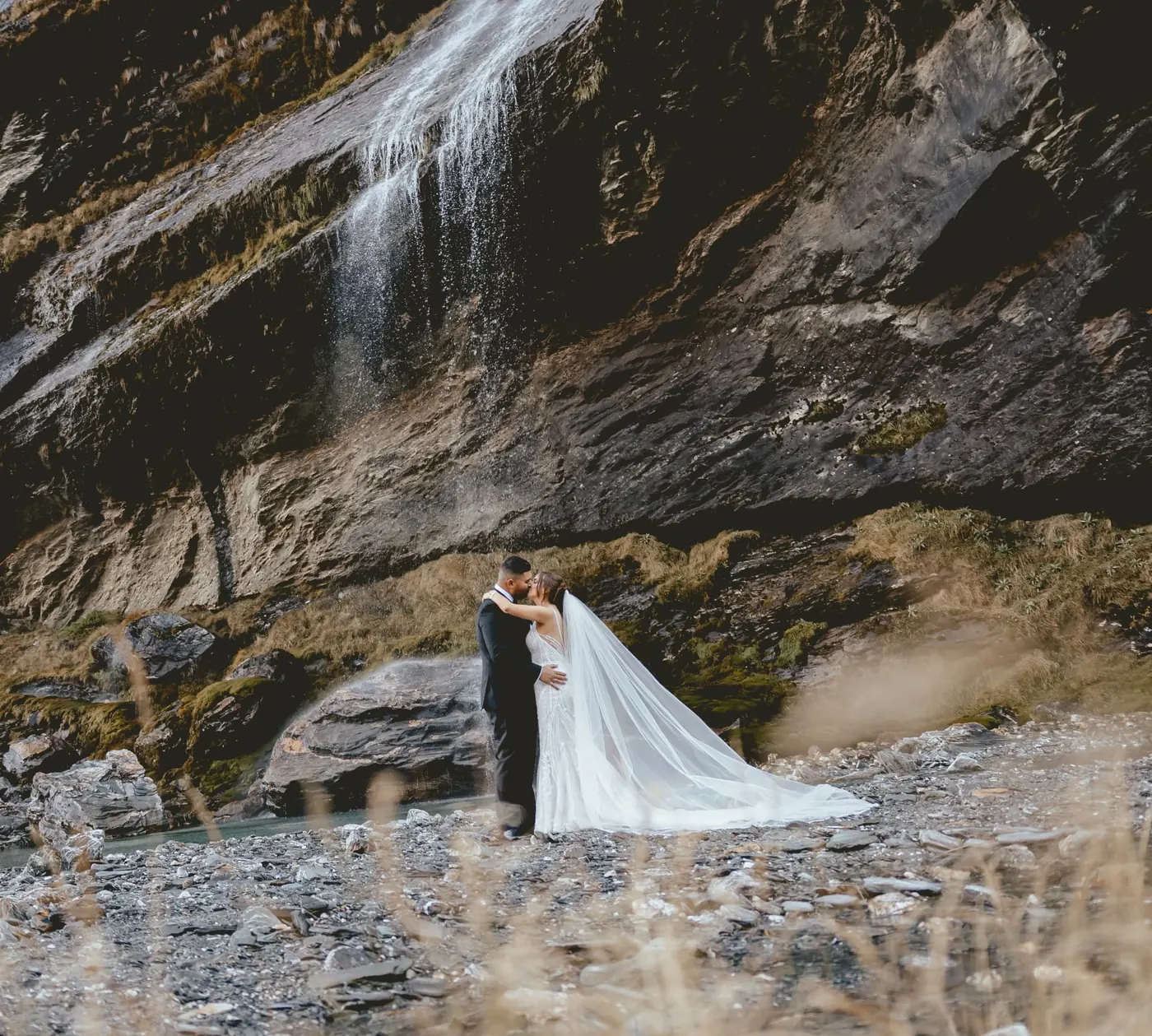
Just the two of you, and one waterfall.
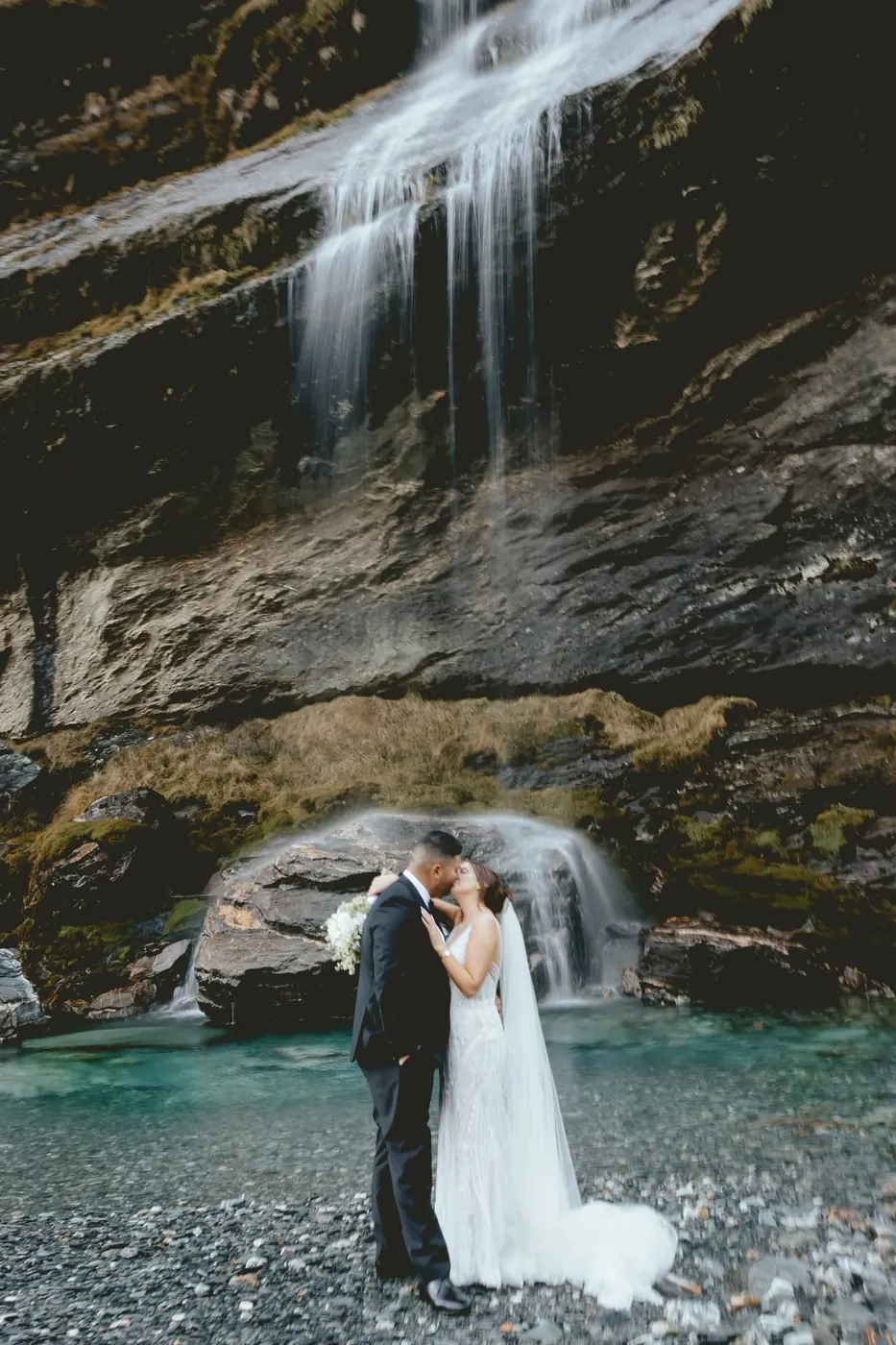
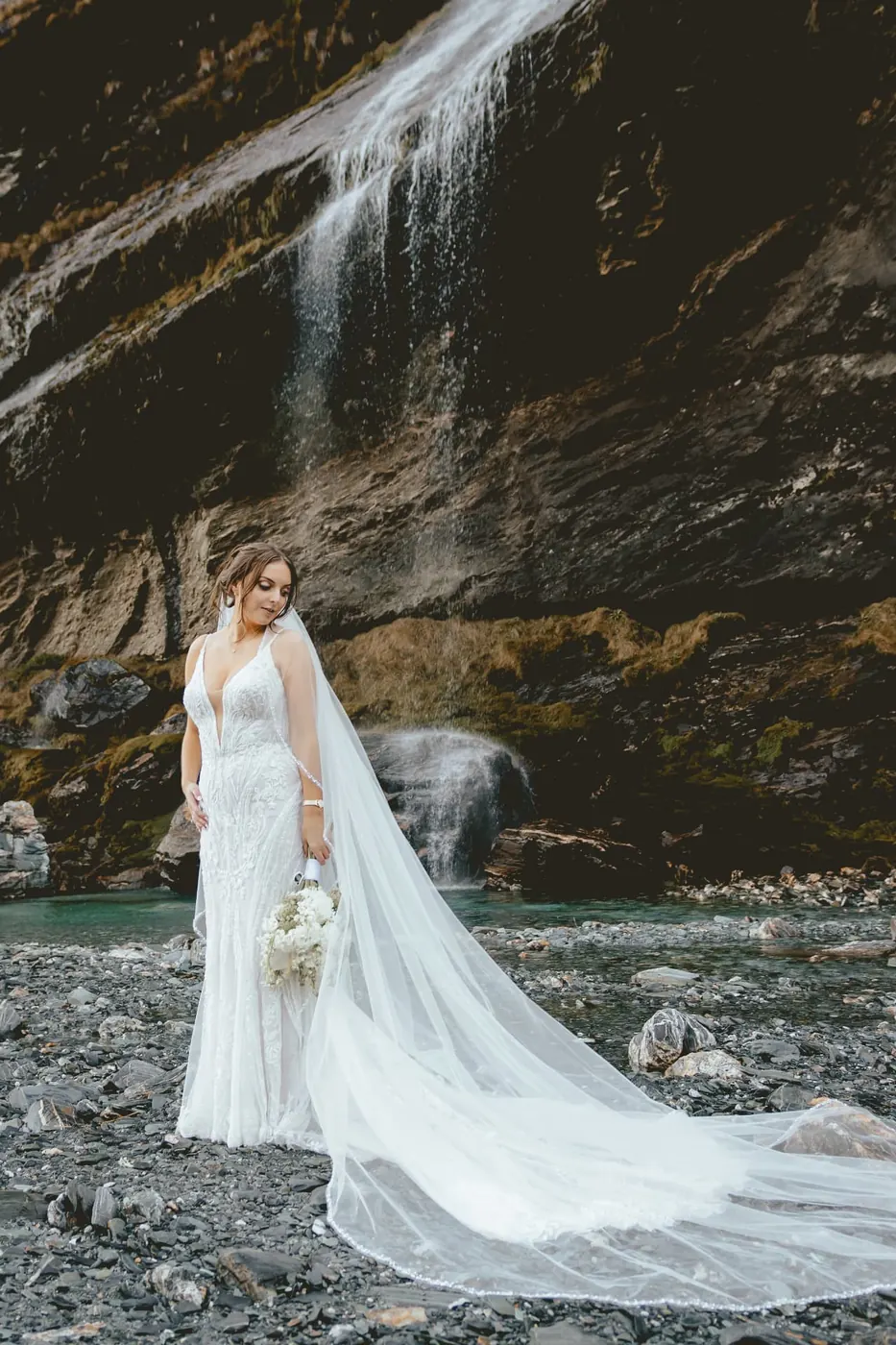
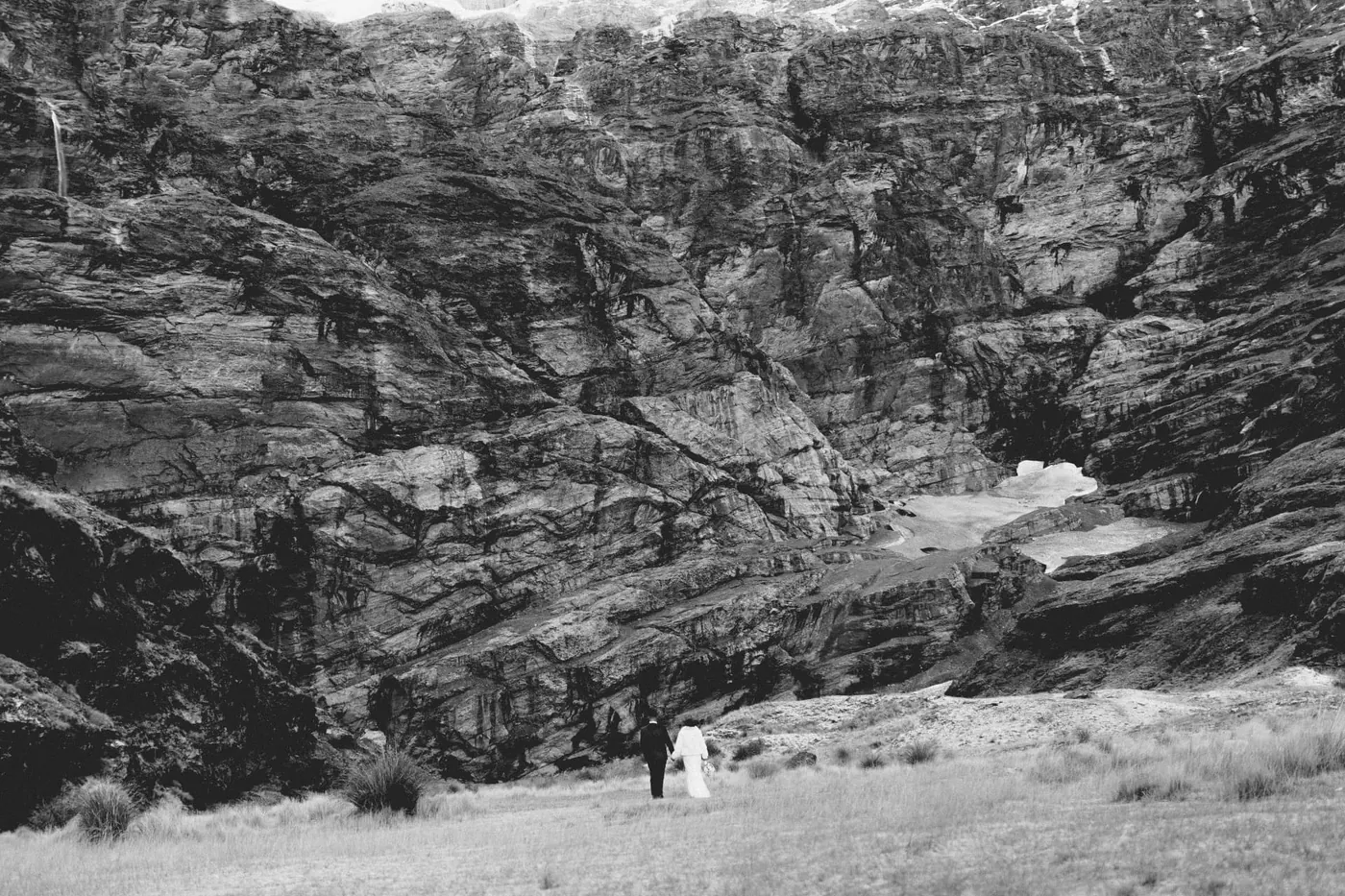
Flat winter light suits black and white: rock, water and two people.
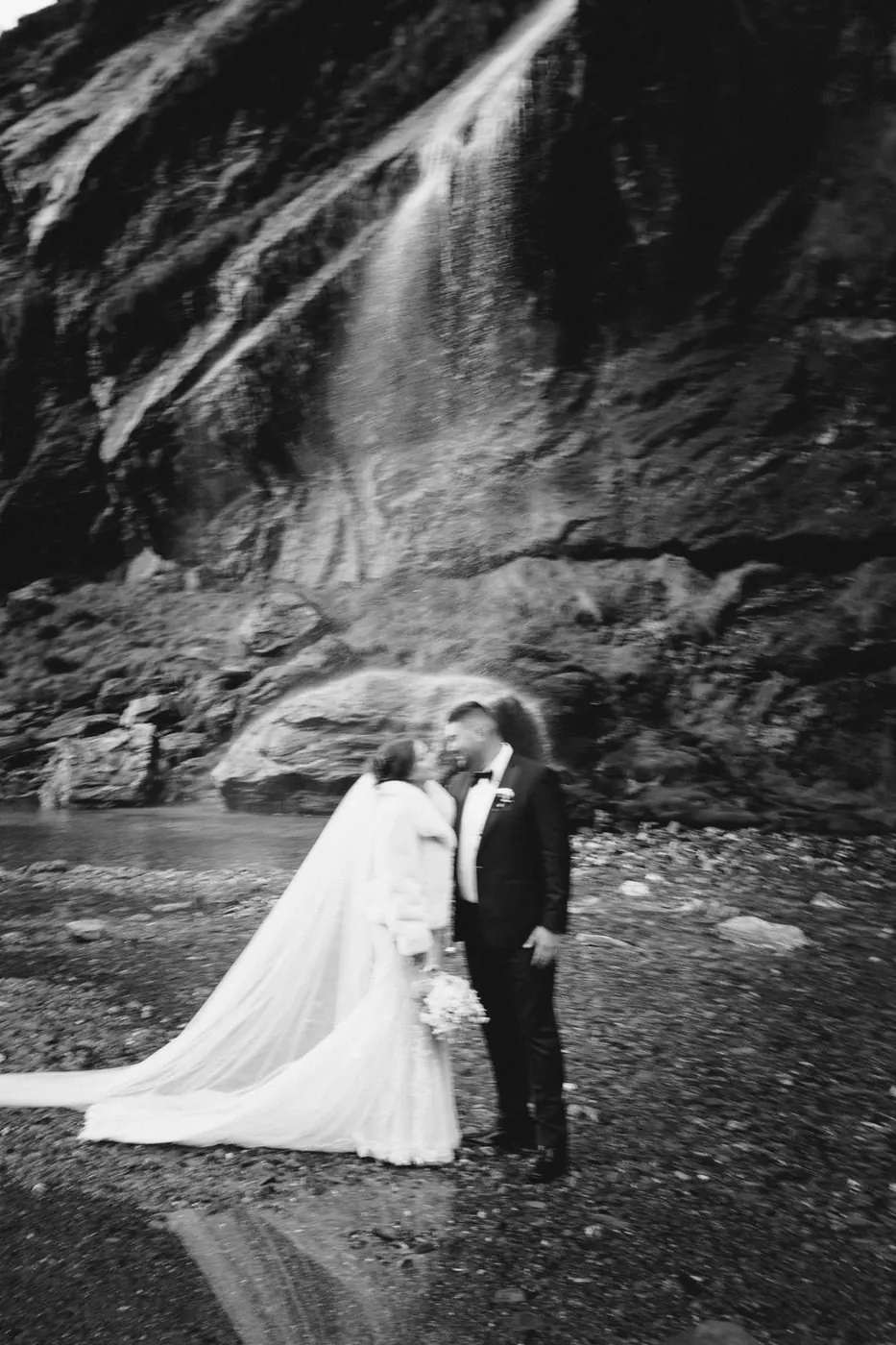
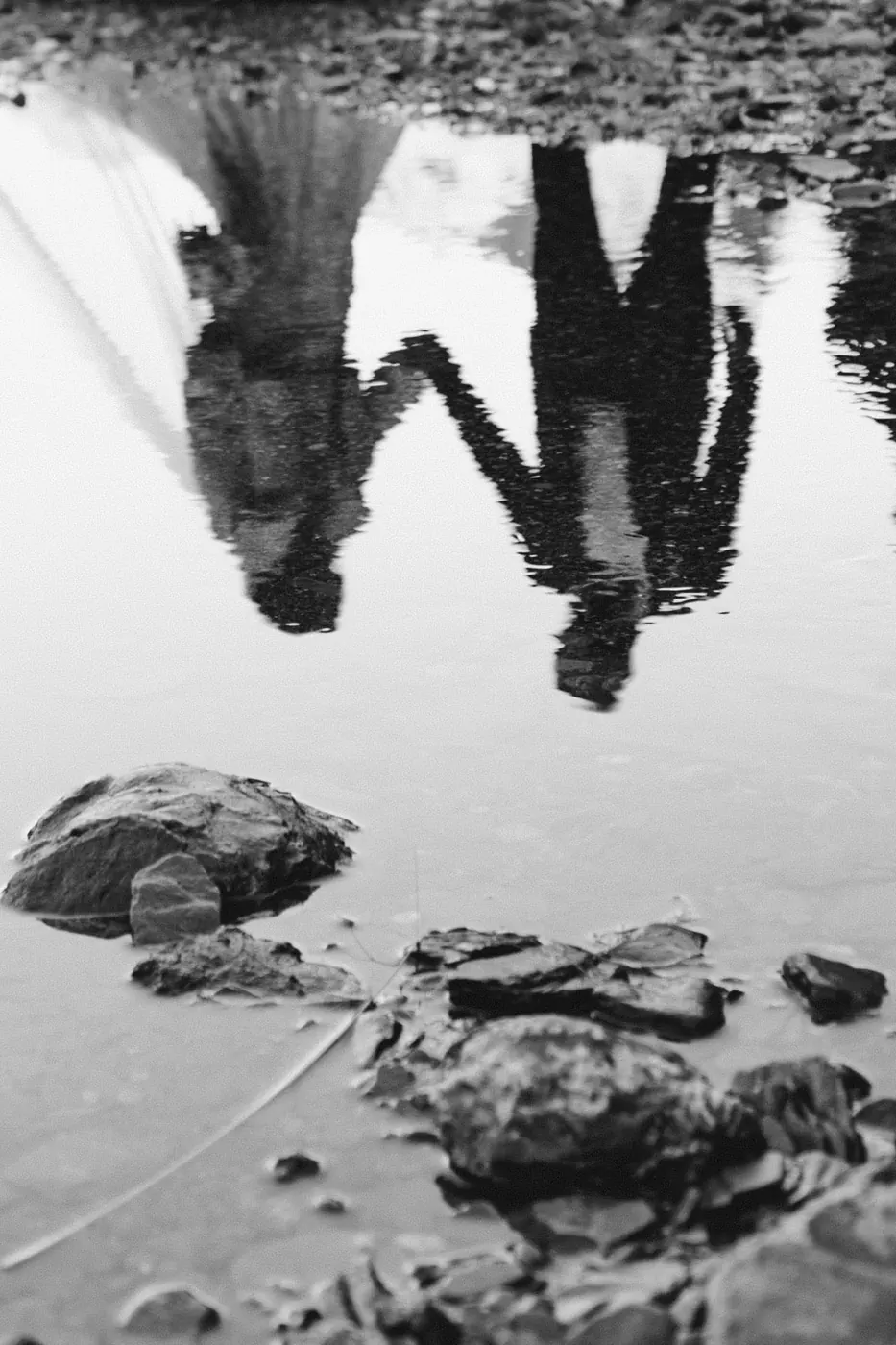
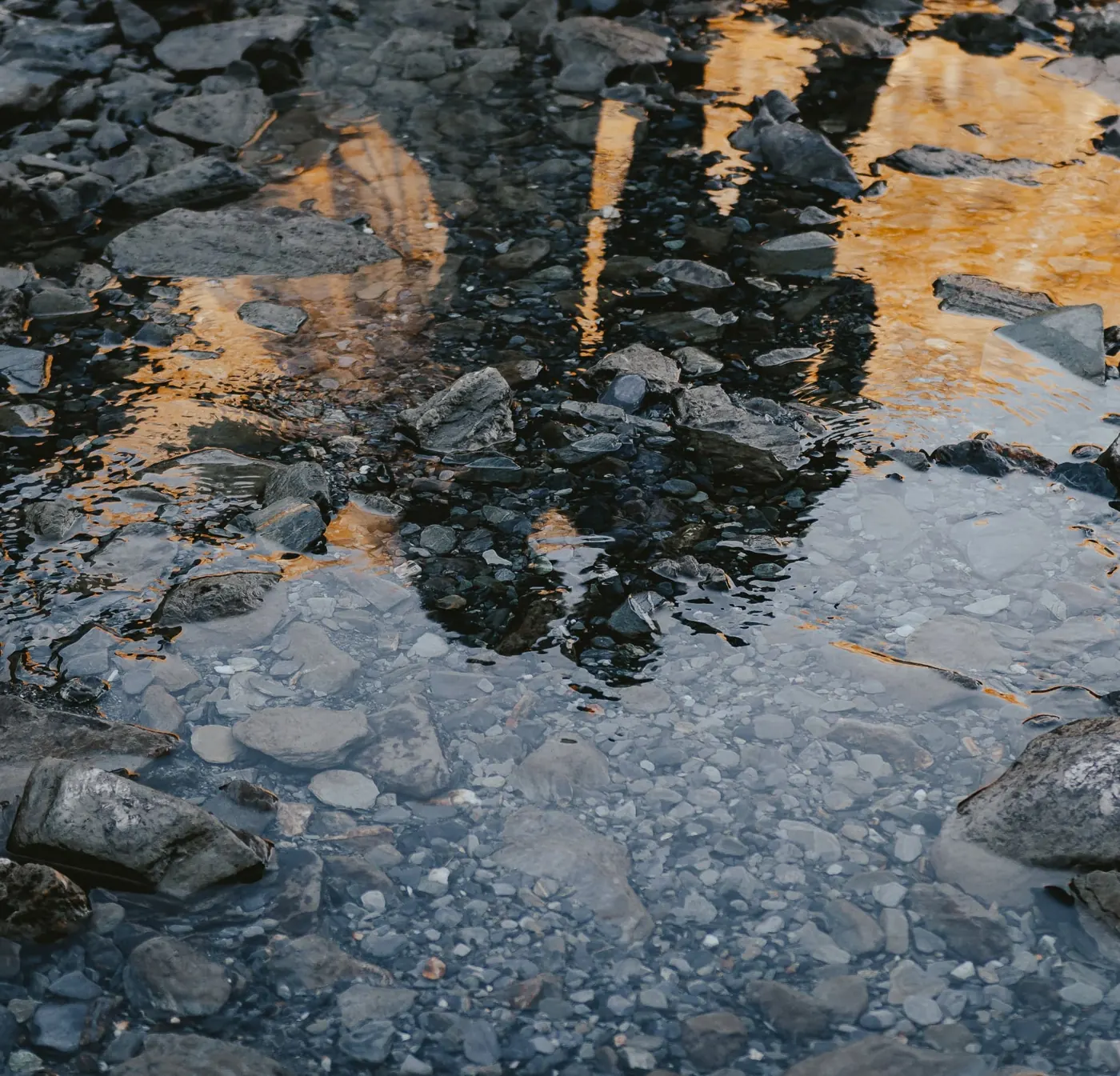
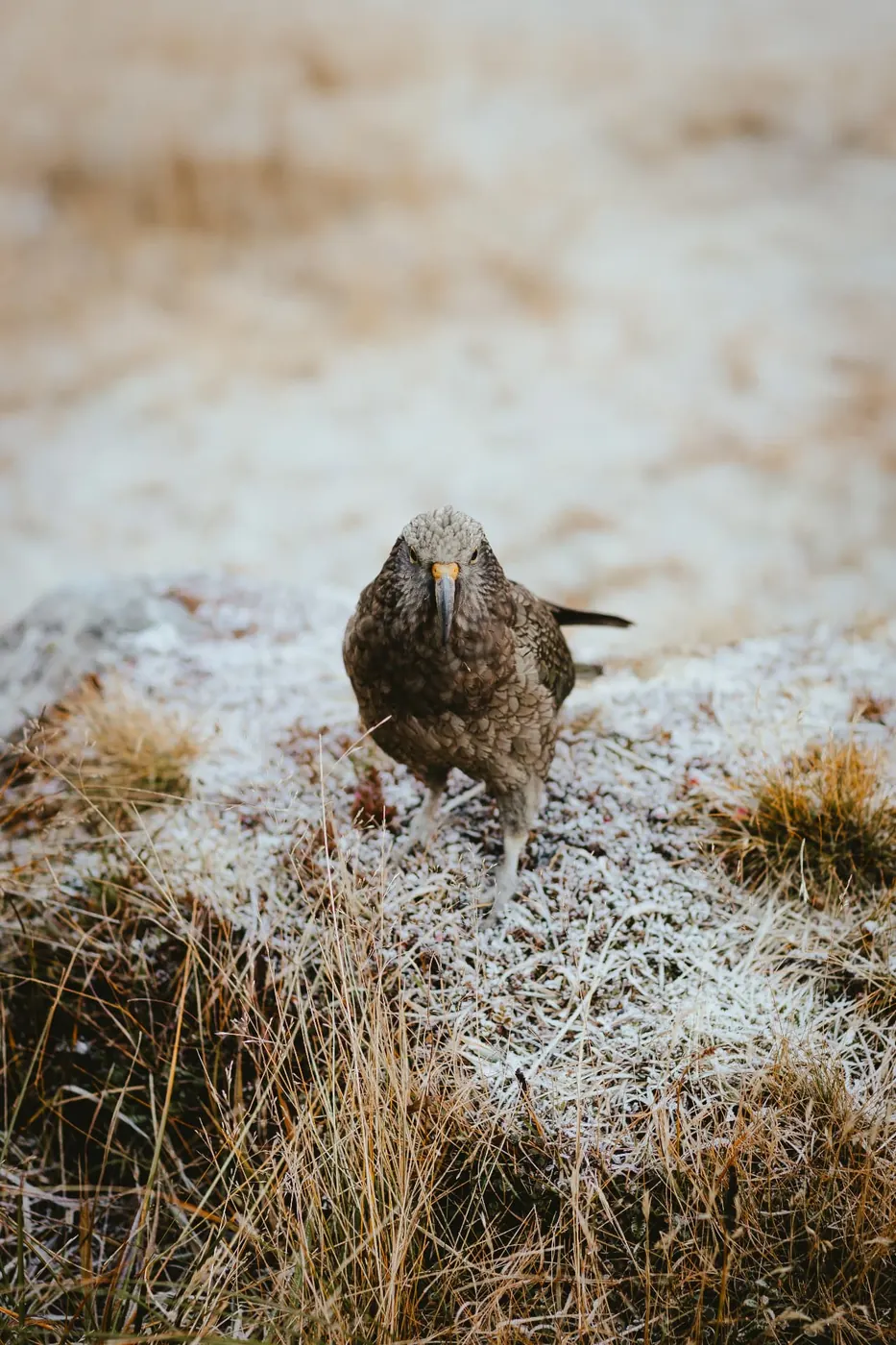
Hanging ice, dark rock walls and moving water in the same frame. Few landings we fly from Queenstown put all three in one frame, and none of it is reachable on a day walk.
The cliffs run hundreds of metres above the ceremony spot. Wide shots place you as two small figures in a working glacial valley, which is exactly what most couples are picturing when they say adventurous.
Because the valley is enclosed, most couples fly it as one of two landings. Earnslaw Burn for the drama, then a ridgeline or lake terrace for open light and long views.
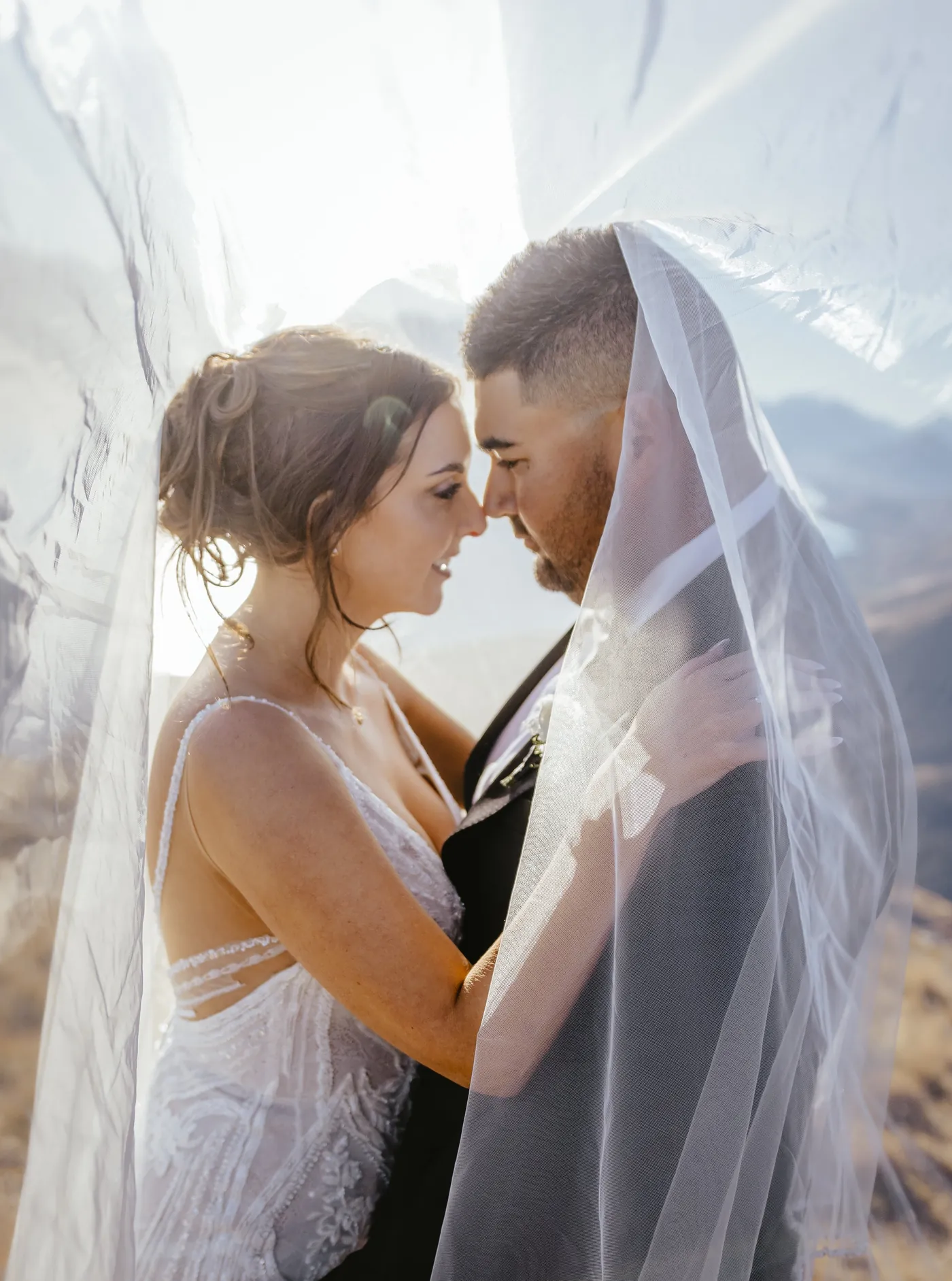
You get ready wherever you are staying and meet us at the heliport for the safety briefing about half an hour before the lift.
North over Lake Wakatipu, past Glenorchy and into the Rees valley. The basin only opens up in the last minute of the flight.
The pilot sets down on open ground within a short walk of the ceremony spot, then lifts out or stands by depending on the plan for the day.
Your celebrant flies with you. Vows against the falls, then portraits through the boulder field and along the stream while the light moves down the walls.
Most Earnslaw Burn days finish somewhere open. Mt Crichton above Glenorchy or a Wakatipu ridgeline, so the gallery carries both drama and long views.
The valley changes more between seasons than any ridgeline we fly, because the waterfalls are driven by melt.
Peak melt and the strongest waterfall flow of the year, with snow still sitting on the shelf above. The most photogenic season, and the one we recommend first.
Long days, the latest golden hour and the warmest valley floor. Flow eases back but the basin stays green and the light lingers late on the walls.
The most settled air of the year, which matters in an enclosed valley. Clear, still mornings and the highest chance the day runs exactly as planned.
Not recommended for the main wall. Little sunlight reaches the valley and the falls freeze over, so we land at the lower waterfall about 3 kilometres before the main wall, the only one still flowing.
Earnslaw Burn is almost always flown as part of a multi-landing day. These are the combinations that work best from a Queenstown base.
Sheltered clearings and beech forest edges overlooking Glenorchy, the reliable partner when the tops are windy, and the standard backup if the valley closes in.
Snowfields and sharp rock minutes from town. Pairs the enclosed valley with a high, exposed summit for maximum contrast in one day.
Tussock shoulders straight across Lake Wakatipu, with long lake views back over Queenstown for the open, golden end to the day.
Cecil Peak guideFamily photos on the ground, then a private two-landing flight to Earnslaw Burn and Mt Crichton.
Six landings across two days, finishing in the Earnslaw Burn valley.
History, names and tracks
The glaciers above your ceremony have guarded pounamu routes, defeated early climbers and given their name to Queenstown's famous steamship. Here is the story of the mountain, checked against Te Ara, DOC and local sources.
Pre-European
Pikirakatahi is a landmark on the pounamu trail, with staging camps at the base of the mountain.
1860s
Surveyor John Turnbull Thomson names the mountain Earnslaw, after his father's home village in Berwickshire, Scotland.
1882
Rev. William Spotswood Green makes the first major attempt on the summit.
16 March 1890
Guide Harry Birley reaches East Peak, the first ascent of the mountain.
1912
The steamship TSS Earnslaw, named after the mountain, is launched for Lake Wakatipu.
1914
H. F. Wright and J. Robertson make the first ascent of West Peak.
1998
Pikirakatahi becomes a Tōpuni under the Ngāi Tahu Claims Settlement, recognising its special value to Ngāi Tahu.
Māori name: Pikirakatahi
As recorded in the Ngāi Tahu Settlement, the origins of the name have been lost to time. The mountain was of great importance to the pounamu (greenstone) trade, and it is seen as a guardian of pounamu.
English name: Mount Earnslaw
Given by surveyor J. T. Thomson after Earnslaw, a village in Berwickshire, Scotland, that was his father's hometown. The name is usually said to mean Eagles Hill.
Earnslaw Burn
Burn is the Scottish word for a stream, so Earnslaw Burn is simply the stream that flows out of the glacier basin beneath Mount Earnslaw.
Yes. DOC's Earnslaw Burn Track starts off Lovers Leap Road, a turn off the Glenorchy to Paradise road about 20 minutes from Glenorchy. It takes 4 to 6 hours one way to the forest edge, and the waterfalls are about another hour beyond.
DOC lists it for experienced trampers only: it is rough, poorly marked, has river crossings, windfall and slips, and there is no mobile coverage. The upper valley is private land. For a wedding, the helicopter is the only realistic way in.
01
F. Muir went only part of the way, so Harry Birley finished the 1890 first ascent of East Peak on his own.
02
Queenstown's coal-fired TSS Earnslaw, launched in 1912, is named after this mountain and still sails Lake Wakatipu today.
03
Mount Earnslaw has twin summits, East Peak and West Peak, among the highest peaks in Otago.
04
Seen from above, the massif is roughly H-shaped, with Earnslaw Burn cut into it from the south.
05
A large hanging ice field on the south face looks straight down over the Earnslaw Burn basin.
06
The valley is a classic U-shape, carved by glaciers.
Sources: Te Ara: Earnslaw, Mount (1966), DOC: Earnslaw Burn Track, ODT: More than a mountain, ClimbNZ, NZ History: TSS Earnslaw, LINZ: Earnslaw Conservation Resources Report.
We don't recommend the main Earnslaw Burn wall in the winter months. The valley gets very little direct sunlight and the waterfalls freeze over. When that happens, the only flowing waterfall is one about 3 kilometres before the main wall, so winter couples land there among the snow instead. For a full waterfall wall, plan for the warmer months.
Surveyor J. T. Thomson named it after Earnslaw, a village in Berwickshire, Scotland, that was his father's hometown. The name is usually said to mean Eagles Hill. Its Māori name is Pikirakatahi, a mountain closely linked to the pounamu trade.
Guide Harry Birley reached East Peak on 16 March 1890, after an earlier attempt by Rev. W. S. Green in 1882. West Peak was first climbed in 1914 by H. F. Wright and J. Robertson.
Yes. The coal-fired steamship launched on Lake Wakatipu in 1912 is named after the mountain at the head of the lake.
Earnslaw Burn is a glacial valley north of Glenorchy, well beyond the end of the road and reached on foot only by a rough, poorly marked DOC tramping track. It sits directly beneath the hanging glaciers of Mount Earnslaw / Pikirakatahi.
DOC maintains the Earnslaw Burn Track, so the valley can be walked in (4 to 6 hours one way for experienced trampers, often done as an overnight trip), but that is not a realistic option in wedding clothes. Every elopement we run there arrives by helicopter and lands on the valley floor within walking distance of the ceremony spot.
Mount Earnslaw / Pikirakatahi rises to around 2,830 m at its East Peak, and its twin summits are among the highest peaks in Otago. Its southern face and icefall form the head of the Earnslaw Burn valley.
The Department of Conservation lists the Earnslaw Burn Track at 8.3 km one way, about 4 to 6 hours, starting off Lovers Leap Road near Glenorchy. A helicopter lands you in the basin at the head of the valley instead.
It is a scenic flight north over Lake Wakatipu and Glenorchy, longer than the Remarkables, shorter than Fiordland. Most couples treat the transfer as part of the experience rather than travel time.
You are inside the landscape rather than on top of it. Cliffs rise on three sides and dozens of waterfalls pour off the glacier shelf above you, so the scale reads vertically in photographs instead of as a distant horizon.
Spring and early summer give the strongest waterfall flow as the snow melts. Autumn brings the most settled air and clear valley light. We don't recommend winter: the valley gets little sun and the main waterfalls freeze, so winter couples use the lower waterfall about 3 kilometres before the main wall.
More than most. The valley is enclosed and needs a workable cloud base to fly into safely. We always plan a paired alternative, usually Mt Crichton or a Wakatipu ridgeline, and make the call with the pilot on the morning.
Film
Alpine Wedding Trailer
The Southern Alps, reached by helicopter.
Earnslaw Burn flies from a Queenstown base, here is the rest of the picture.
Flight times, landing areas and how a Queenstown-based day actually runs.
Every peak, glacier and valley we can land on, grouped by landscape and region.
Compare flight times, landings and inclusions side by side.
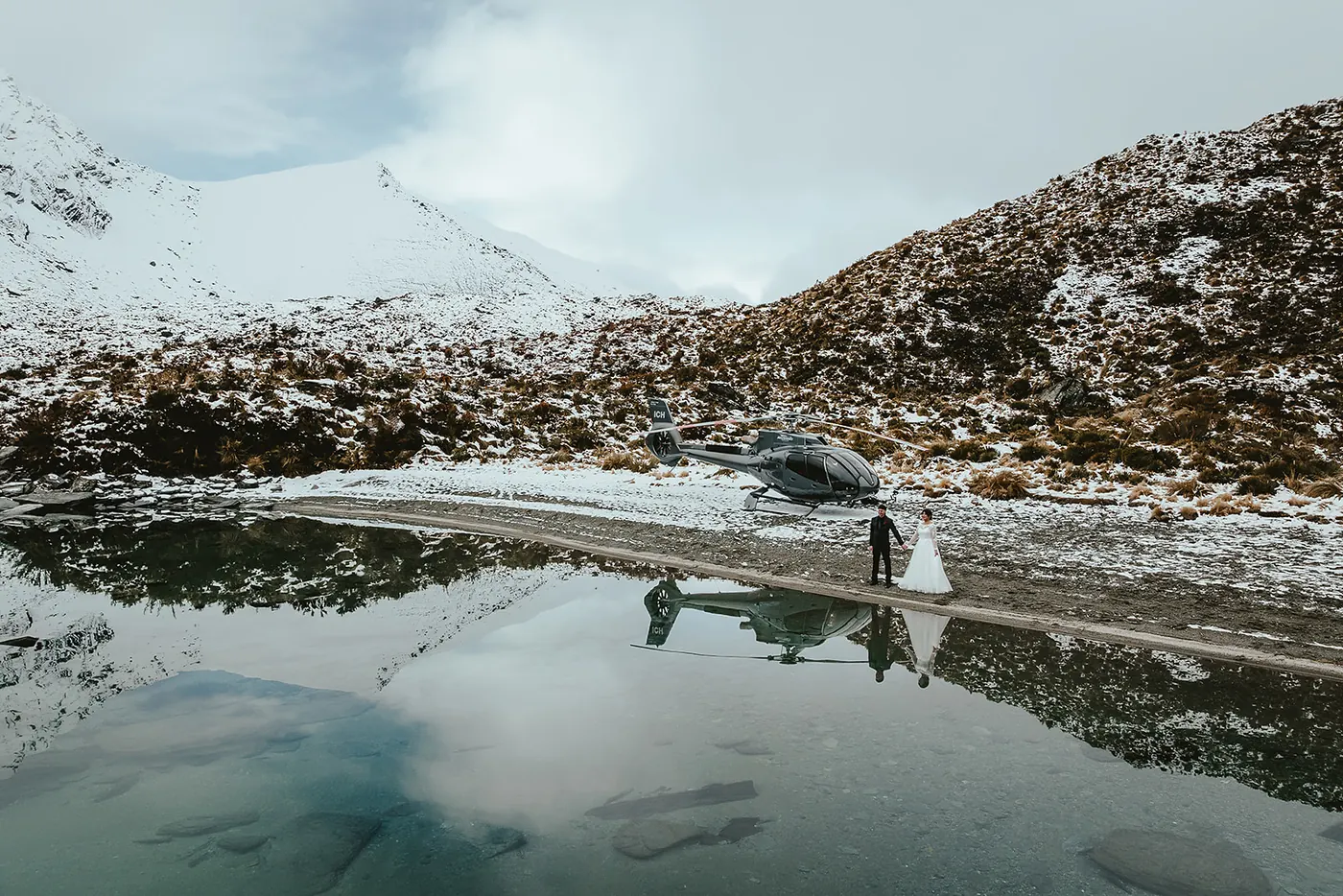
Tell us the date you have in mind and we will confirm whether Earnslaw Burn suits the season, the conditions and the shape of your day.